MATCH REPORT: Varsity Twenty20 – Kelly’s Class Too Much For Cambridge

CRICKETher reporter Ben Gardner was at Friday’s Varsity match to see a memorable innings by Oxford’s Sian Kelly.

Oxford v Cambridge, T20, The Parks, Friday 20 May

Result: Oxford won by 162 runs.

Toss: Cambridge won and elected to field

Sian Kelly produced a sustained and controlled assault on the Cambridge bowlers, paving the way for a victory by 162 runs, the margin of which did not flatter Oxford in the slightest.

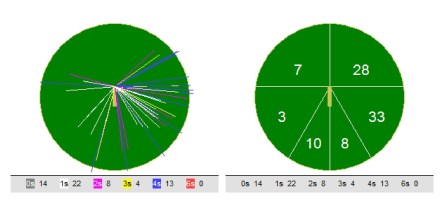
Kelly’s innings, of 102* from 61 balls, was so brutal and calculated, it seemed remarkable that it wasn’t her best; Kelly made 127* in the reverse fixture last year. From the moment she put away Holly Tasker’s first ball to the square leg boundary to when she walked off the field 61 balls and 102 runs later, she exuded control, rarely seeming troubled by the bowling.

Runs were plundered all around the ground, with the favouring of the leg side being more a result of the full tosses bowled by Cambridge, invariably pumped between square leg and midwicket, than any lack of ability through the off side, as demonstrated by perhaps her best shot, a drive behind point for four, which brought up fifty.

The pacing of Kelly’s innings too was something to behold. To begin with, she exploded. After 6 overs Kelly was 46 off 24, Oxford were 74/0, and Cambridge were chasing the game, four consecutive fours of one Holly Tasker over being a particular highlight. Then, with the Powerplay finished, she switched gears, content to push the ball around, while still picking up regular boundaries, before accelerating again, moving from 83 to 97 in just 5 balls.

This was a masterful innings, and Kelly simply was a class above the bowling. She looks ready for greater challenges, and perhaps more game time alongside her twin sister Marie, Warwickshire’s captain, awaits.

Wagon Wheel of Sian Kelly's innings

Wagon Wheel of Sian Kelly’s innings

Tina Gough, who turned over the strike well and played some excellent shots of her own, was an excellent foil for Kelly. When she was out, for 52 off 50, the scoreboard read 173/1 off 16.3 overs, and the match was almost over as a contest but Cambridge did well to keep their heads up and stick to the task.

It mattered little in the grand scheme of things, but Cambridge bounced back well to restrict Oxford to 33/2 off the last 4 overs, and on a different day, without two batters in such fine form, such a recovery could have been the difference. While the full toss and no ball counts show there is much improvement to be had, this was certainly an attack with potential.

Still, a target of 205 seemed a tall order, and Oxford put the result beyond any doubt with an immaculate bowling display, with perhaps the only disappointment being that Cambridge bettered their 36/8 against Oxford in a league match 2 weeks ago by 6 runs.

The first three bowlers used by Oxford all represent various counties, and their extra quality showed. Sam Moore moved the ball away at pace, while her Oxfordshire colleague Helen Baxendale was metronomic in her line and length. Captain and Berkshire opening bowler Immy Brown was even more impressive, picking up 3 of the top 4 batters with her skiddy pace, as well as running out the 4th.

Away from the county stars, Oxford showed impressive depth; Sarah Attrill’s loopy accurate bowling especially is so difficult to get power behind, and therefore ideal for a T20. In the field too Oxford were sharp, and though there were a couple of missed run outs, these were more a result of smart work to earn the opportunities in the first place.

However, while it would be difficult to overstate how well Oxford played, there were some simpler areas where Cambridge could have improved. Their fielding was one such, but perhaps more inexcusable was their running between the wickets. There were several occasions where they chose not to push the fielders, or to attempt to rotate the strike, which meant Oxford were under almost no pressure. The boundary balls weren’t there to be hit to be sure, but the fact that no batter had a strike rate over 50 tells its own story. This was in stark contrast to earlier in the day, when Oxford wasted no opportunity to score runs, turning the strike over regularly and always looking if the second was on.

Cambridge, it has to be said, were missing key players. Most notable was Frankie Barber, who made fifty in the Varsity match at Lords last year. She is the only full Blue currently at Cambridge. Oxford and Cambridge examinations do not take place at the same time so finding a date when one university is not unfairly disadvantaged is tricky. However, making Cambridge play away while it is their students more likely to be affected is unfair, and something you’d hope the organisers would look at for coming years.

Still, to focus on such small details would be to miss the greater joy of the day, which was of a well-trained and extremely talented team playing to their potential, and of one special batter playing an innings that will be remembered by all who witnessed it.

Laura MacLeod: A Pro At Last

On a wet Thursday evening at Bowdon Cricket Club a group of cricket loving children and adults descended on the ground to see the launch of the Lancashire County Cricket Club Thunder & Lightning Roadshow.

As part of the evening there was a question and answer session hosted by former Lancashire captain and wicket keeper Warren Hegg, himself a former international cricketer.

Hegg interviewed man-of-the-moment Liam Livingstone, a product of the Lancashire youth system who has made a sparkling start to his first class career this summer.

Seated next to Livingstone on the stage was another cricketer who, thanks to the Kia Super League, can now also be deemed to be a professional player.

Whilst all of the children present knew of Livingstone thanks to his early season exploits there were fewer that would readily have recognised his colleague on the panel despite the fact that she is a veteran of 73 One Day Internationals for England as well as 13 Test Matches.

This week in fact marks the first time that Laura MacLeod, previously Newton, has had sight of a contract that will mean that she is paid to play cricket despite the service that she has given to her country on cricket grounds all across the world.

Refreshing then that, following the questions with Hegg and during the autograph session that followed, MacLeod found herself signing as many, if not more, autographs than Livingstone.

A contemporary of recently departed England captain Charlotte Edwards, 38 year old MacLeod left international cricket in 2007 aged just 29 due to the pressures of being an amateur playing in an increasingly professional environment.

Earlier this week MacLeod found herself in the nets at Emirates Old Trafford batting alongside current England players Danni Wyatt and Kate Cross who will be two of her teammates in the Lancashire Thunder squad later this summer.

Incredibly it was the first time outside of an international fixture that the former Lancashire and England star had actually trained in the facilities at the ground.

Her teammates in the Thunder squad are, happily, growing up in a time when their presence at such venues and in the presence of coaches such as Gary Keedy is becoming normalised. MacLeod, an outstanding coach in her own right, probably appreciates the opportunity that is being presented more than most.

Her impact upon the Kia Super League is as yet unclear but whilst the competition presents an exciting road ahead for the young stars of tomorrow it is already presenting opportunities for players like MacLeod to finally get the recognition they have deserved.

Just ask those kids that were at Bowdon who their new hero is.

OPINION: James Piechowski’s Deep Cover Points – England Without Edwards:­ Analysing Robinson’s Eclipse Theory

The events of the last few days have taken many people by surprise. To say it has been an eventful week is an understatement. Whatever your own opinion on whether Edwards should have continued as captain, or at least continued playing in the England side, as by all accounts she so desperately wanted to, you have to admit that there was a growing pressure for big change. Although many had questioned her captaincy lately, the biggest criticisms seemed to emanate from the more casual observer, who are less familiar with the nuances of the team.

From that perspective, it seems unthinkable. Why would Robinson even for a minute consider forcing the person who has undoubtedly been England’s best player to exit from the side? In order to try and justify a decision which at first glance may appear ridiculous, it requires an attempt at diagnosis of the current state of affairs at the top level of England women’s cricket. Robinson has a theory, I think, and not to be too presumptive I shall call it the “eclipse theory” here, for want of a better name. Let’s start with what Edwards has said:

“Mark spoke to me quite honestly and told me how he saw the next series as an opportunity to develop players and take the team in a new direction…He said the girls are hiding behind me sometimes and that they needed to develop.”

“We have a number of younger batters who have not shown their potential at that level. Mark sees the next couple of series as an opportunity to give them a chance with a new captain as well. He thinks there is not a place for me in the team.”

George Dobell at ESPNCricinfo expressed a similar thought:

“Robinson, the coach for six months now, noted that nothing seemed to grow in (Edwards’) shade. While that is no reflection of Edwards, he knew he had to act and made what Connor, the head of women’s cricket at the ECB, called ‘a ballsy decision’.”

It’s clear that Robinson has subscribed to the theory that Edward’s excellence has prevented other players’ development. Can this theory explain the logic, if any, behind pushing Edwards out of her role?

Support for the“eclipse” theory

A good theory must at least be internally consistent and have some explanatory power. On the surface, this theory appears to be onto something. Some players have been allowed to continue playing despite not making much contribution to the side. This is my take on the theory. And please be aware, I am playing devil’s advocate for this section.

The theory goes that winning cricket matches due to many runs scored by one superb player allows other individual poor performances to be overlooked. A side without any outstanding individuals, on the other hand, relies heavily on consistency throughout the batting order for any success they achieve. The England team of recent years has benefited in the short term from a massive glut of runs from one source, and so has not needed to tap into other sources very often.

Hence, we see players with somewhat unenviable records, such as Beaumont and Wyatt, still appearing for England despite a long track record which on paper looks more akin to failure than success. The theory would say that they have only done as well as they have needed to, to stay in the squad. With England still winning most series over the past few years, there has been little opportunity for upcoming players to break into a side which has, on the surface, looked fine as it is. The introduction of professional contracts, which have seen little change since 2014, has only cemented an already static group of players. Robinson, it would appear, wants to be the irresistible force to give momentum to this immovable object.

Robinson’s theory plays heavily into a narrative that we have seen him expound from the inception of his tenure. He’s come into the training set-up and immediately noticed that there are quite a few players who should be much better than they have been. A prime example is Tammy Beaumont: a very gifted player who looks superb in the nets and yet has looked timid for England out in the middle. She has only managed averages of 17 in ODIs and 13 in T20s despite playing over 60 matches in a career stretching from 2009. The fact is, she hasn’t needed to do any better, according to this theory. Despite what’s gone before, she’s still around the team now, and with Edwards’ exit, she looks a certainty for the Pakistan series as one of very few experienced specialist batsmen left in the contracted Performance squad.

Indeed, Robinson has been nothing if not consistent. A comment on the Cricinfo web site article covering Edwards’ retirement reveals how it’s very easy to not understand Robinson’s thinking. User BRUSSELSLION asks: “Only a month ago, he (Robinson) was saying that England needed more players like Edwards, now she’s surplus to requirements. What’s changed?” But actually, I’m not so sure these ideas are in direct contradiction. Robinson clearly wants players of Edwards’ skill to evolve from the existing squad; however having just one Edwards, Lottie, who so dominated the run scoring, he viewed as more of a hindrance to the other players, a roadblock to their evolution.

If Robinson could show that the average runs gained from having Edwards in the side was likely to be less than we could have expected from other “fully developed” players, he has some justification at least. But can he show that? With Edwards struggling to take quick singles and twos these days, it’s clear that some runs are being lost, not only from her own score but from her batting partners too. Quantifying this can be difficult. I think the total runs lost to this effect is unlikely to be more than 10 or 15 per T20 innings, and that assumes that Edwards batted for most of it anyway, and probably scored 60+ in the process.

Robinson cannot expect to backfill places from the development set-up as quickly as he could in men’s cricket. On the other hand there are several Academy players long overdue for a full England debut. The definition of the phrase”ready for International cricket” may have to change, because frankly (in my opinion) those in charge of selection have become too sure about certain players not being able to rise to International play. In reality, it is very difficult to be sure how well a player may adapt to it, unless they are given a good chance to show off their talents. What Robinson has done should help shake this up. Other teams blood their promising players at much younger ages. England may need to start debuting more teenagers in the near future.

Even if this is all true, I don’t necessarily agree with Robinson’s decisions to date, or his pet theory. Let’s look at some of the problems with it.

Criticism of the “eclipse” theory

There are several areas where we could criticise Robinson’s actions. Some have already been identified in articles and comments on this site. Certainly, it is a huge risk for England to lose their best player at a time where we desperately need more runs, not less. Hopes for victory in the 2017 Women’s World Cup were real and serious whilst Edwards was in the team, particularly as it would be a home series. Now, with Edwards gone, there can be little hope of that achievement, and even a semi-final seems like it would be a good result rather than an average one.

I’m sure it wasn’t Robinson’s intention but he seems to have set himself up to be able to make excuses. If England perform poorly for the rest of the year, he can always point to the fact that Edwards is not around and he needs more time with the squad. The other side of the coin is that he must be accountable for this decision, and I’m sure there will be many looking to criticise if England start to lose overall series in the next year or two. I sure will.

Those supporting Robinson’s decision have drawn comparisons with Alastair Cook’s forced exit from the ODI captaincy of the England men’s side. He scored a lot of runs, and didn’t want to go either. And Cook’s departure was followed by a complete change in approach from the rest of the team, which has led to much more exciting play and the side enjoying renewed success, really challenging the world’s best teams and indeed coming within an over of winning the WT20 final.

This argument doesn’t really work, though. The men’s team needed a change in approach only; the side already contained experienced, confident players with strong records, and fifties and hundreds in the bank, who had to adjust their mental and technical approach, but not fundamentally raise their whole game. Many of the England Women batsmen will have to do things they have never done before, set new standards, and advance their games to entirely new levels to make up for the loss of Edwards. This is, needless to say, a huge ask, and some of them may not be able to do it as well as Robinson demands.

On the flipside of the theory, a small number of players have excelled in addition to Edwards’ excellence. So this is a big problem for the theory. For example, Sarah Taylor is a player who has generally succeeded with the bat in recent years. She and Edwards stand apart from the rest. And yet Taylor was obviously not part of Robinson’s plans for “refurbishment” of the squad. It is possible, of course, that his attempts to change the status quo could prove ironically futile this summer. Maybe Taylor will score most of England’s runs now (she’s certainly done it before), and big contributions from other players will still be few and far between. In which case, Robinson has only passed the whole problem along a step, and really achieved nothing of note, all the while forcing the exit of our finest player in far from ideal circumstances.

Perhaps the biggest issue I have with Robinson’s decision and explanation, though, is that he has already disproved it with his first few months in the job. The South Africa series saw a more attacking approach from the batting line-up, with the likes of Jones in ODIs, and Beaumont in the WWT20, coming to the fore. If anyone had been previously eclipsed by Edwards, it was Beaumont. Except, by hook or by crook, the situation seems to have been turned around for her, and quickly – with Edwards still there. If Beaumont had done as well for England since 2009 as she had in the last few months, her record would be quite impressive. If we could see the same effect for some of the other underachieving players, this whole problem suddenly evaporates and along with it, Robinson’s entire justification.

So is it possible that this whole debacle could turn out to be a complete folly after all, even stretching into the long term? Perhaps.

Let’s look at some specific details. One way to identify players who have not been subject to any eclipsing effect is by looking at who has performed well when Edwards did not. So I have checked the scores made by our main batsmen in T20Is and ODIs since the start of 2014 (to roughly coincide with “professionalism” and also because going back further starts to look pretty desperate). The scores are only counted when Edwards scored less than 20 in a T20, and less than 40 in an ODI, and the player in question scored more than 20. There are less entries than you may think. As a rule of thumb, the more a player features in these lists, the less sense the “eclipsing”argument makes for them specifically.

England T20I Cricket from 2014 onwards: Edwards scores 19 or less, batsman scores 20+

# 20+ scores Batsman Runs Strike Rate
6 Taylor 246 115
5 Knight 131 120
3 Greenway 71 79
2 Winfield 122 103
2 Sciver 75 97
2 Beaumont 41 121

Edwards scored 19 or less in 12 out of 26 matches since 2014. England’s record in these games: won 8, lost 4 (67% win ratio). England’s overall T20 win ratio is 73% (source WCB)

So this is not a particularly good start for the theory. England’s win ratio when Edwards gets a sub-20 score is not much worse than their overall win ratio. This shows that the other players, overall, are largely making up for this deficit. We see no Jones, Gunn or Wyatt in the list, however, which shows that these players have not done it for England in T20Is when needed the most.

England ODI Cricket from 2014 onwards: Edwards scores 39 or less, batsman scores 20+

# 20+ scores Batsman Runs Strike Rate
5 Taylor 295 97
5 Knight 243 69
5 Sciver 231 93
3 Greenway 148 65
2 Elwiss 86 99

(Brunt, Jones and Shrubsole also feature once each in this list, but I’ve not included them in the table.)

Edwards scored 39 or less in 8 out of 16 matches since 2014. England’s record in these games: won 4, lost 4 (50% win ratio). England’s overall ODI win ratio is 69% (source WCB)

The results from the ODI analysis support the theory better, which is strange as Robinson made his decision after a T20 competition. I had to increase the range of Edwards’ scores for ODI, as there were so few entries in the list if you go much lower! The team record is significantly poorer when Edwards did not score heavily, which shows how vital she was to England in ODIs. However, I think we can say that Sciver, Taylor and Knight have not been negatively affected, as all tended to contribute when Edwards didn’t, and all have decent overall ODI records. Indeed Sciver’s performances for England have often outmatched those for Surrey.

The effect is only slight for Greenway, and Elwiss hasn’t played enough games to make any conclusions – a problem in the selectors’ hands and not Edwards’. Jones is in the same situation. The only remaining players who could have been eclipsed by Edwards are Gunn, Winfield and Wyatt. (I have already discussed Beaumont.) Is the development of just these 3 players really worth getting rid of Edwards for?

The only justification left for Robinson would be the idea that the likes of Beaumont, Knight and Winfield would be getting hundreds every other week had they been developed correctly. They should be absolutely superb players. To prove that, you’d have to show that their batting trend lines (average, strike rate) have been decreasing since coming into the England team. That is a statistical minefield, though, as any decline is more likely to be due to improving opposition than anything else. I’m left with the distinct impression that Robinson’s decision, and the eclipse theory, has more to do with a vague feeling than any hard data. It is merely a smokescreen for bringing about the change he wants. He wants a fresh start, and is placing too much faith in the hope that players can develop far further than we have seen. Let’s hope he knows something we don’t.

The fact is, we don’t know how any of these players would have performed had Edwards not been part of the team. But that’s the problem Robinson has. We don’t know how they will do going forward either, and that is a huge risk to take when you know you could have had Edwards still playing, particularly in ODIs, for the next couple of years. The number of players potentially eclipsed by her excellence is too small, and the effect too slight, to base any big decisions on. The transition option, with Edwards still in the ODI team (and possibly the T20 team as well) but not as captain, still seems more favourable to me.

Catching Them Young: Girls Cricket in Toronto

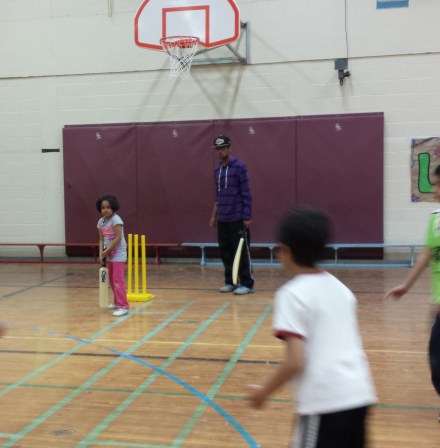
Guest writer Aparna M tells of her experiences setting up a cricket academy in Toronto.

Cold, dark, long winters. Staying indoors for almost 7 to 8 months a year. Hardly an ideal setting for the game of cricket. But at the other end of spectrum you have a large, South Asian community. Mostly new immigrants. Trying to find a footing in a new country, environment and culture.

Throw economic hardships into the mix, and what do you get? Young families with children trying to find space to play sport, to stay engaged in some physical activity, where they do not have to spend a fortune. Organized sport is largely out of question for children of new immigrants struggling to make ends meet. In this setting was established a multisport academy which began its operations with cricket only, keeping in mind the largely South Asian population in the neighborhood in Toronto.

The first year of operation saw limited numbers both for boys and girls (there was just one girl). She too dropped out after a couple of weeks. The reason given by her father was that they tried to work out the timings but without success. This could have been discouraging both for the organizers as well as for other potential girl participants. However, the efforts to bring in girls to the program did not stop.

And these efforts did not go to waste. The second year of the academy saw more girls coming along. About six of them. No, it was not a lot. But it was the beginning. Most of them tagged along with their brothers. But that was okay. What mattered was that they were enjoying their time at cricket. That they wanted to learn the sport. They wanted to learn how to hold the bat, how to move their feet, how to bowl without bending their elbow and of course, they wanted to master the art of fielding, both catching and throwing.

Toronto Article 1

It was heartening to see these little girls all excited, and being part of the games after the practice session. They were developing game awareness. You could see it in their running between the wickets. Calling for a run. Or responding to their partner’s call. Throughout the summer, they would show up every day for five days a week, for seven weeks. And their numbers too went up.

Once summer was over, and the school year started, the program shifted to once a week in the evenings. Some from the summer dropped out, but other girls joined in. While almost all of them were still tagging along with their brothers, there were a few who were coming there on their own. Because they were enjoying the new sport. They were enjoying playing cricket!

It was heartwarming to see girls enjoying the sport at such an early age. It was important to keep the environment fun, with the aim for them to develop a liking for the game – hopefully a lifelong one. While of course it is too early to say whether they would ever be able to take up the sport professionally while they are in Canada, it certainly would do no harm if they could continue their association with the sport by playing it regularly.

The program saw success in the younger age group of 5-10 year olds, but it was difficult to attract the slightly older girls in the program. Separate sessions were set up for the 12-and-up age group after initial interest was shown by some of the older girls. However, once the schedule was set the response was extremely poor.

The reason was the pressure of studies. Of assignments and exams. Of coping with domestic chores. There was the peer influence aspect as well. The girls wanted to be part of the program as a group, but once a couple of them dropped out, the group’s participation fell apart. This for sure was a setback, but hopefully things could still be turned around in future. For example, some programs could be offered during school time, or even as part of after-school programs.

However, the participation of the younger girls is a definite positive. Hopefully by the time they are 12-13 they will have a few years of cricket under their belts, and will have developed a love for the game and a desire to continue playing it, even at recreational level. With women’s T20 leagues being set up across the globe, there might even be the chance to take up the sport professionally, if these girls continue to seriously develop their skills.

MATCH REPORT: Devon v Essex at Felsted School

Devon (265-5) bt. Essex (98-10) by 167 runs.

After being inserted on a green but hard pitch, openers Amara Carr and Aylish Cranstone played positively to build a solid foundation, before Carr was adjudged lbw for 38. Jodie Dibble started in a spritely fashion before being caught out by the lack of pace and gave a simple catch for Bird at mid wicket for 13.

Cranstone and Rosalie Fairbairn rebuilt and rotated the strike after an early flurry of boundaries, and the batting powerplay added some impetus, before Fairbairn was dismissed, caught for 29, a partnership of 99.

Cait O’Keefe was positive from the start with 26 off 21 balls, before being run out in an unlucky fashion when a dropped return catch was parried onto the stumps. Cranstone continued to hit the gaps and target a short boundary, bringing up her maiden county championship century, with 15 fours and one six in her 134 not out from 140 balls.

Essex’s reply showed intent from the start but they lost their first wicket in the second over, caught by Hazelle Garton at mid on off Sophie Mackenzie. A stunning catch from Alli Kelly at point accounted for England development player Cordelia Griffith, easing some concerns over her big hitting potential.

The building clouds were a concern, with the Met Office forecasting rain at 4pm, and Devon just completed the 20th over required to constitute a game just as the first drops of rain came down. Essex were still well behind the run rate, losing their sixth wicket in the 21st over, with the score on 75.

The light rain continued, but the pressure of the constantly increasing required run rate meant wickets fell at regular intervals. Pick of the bowlers were Hazelle Garton with 4-20 and Rebecca Donohue 3-23, Cait O’Keefe 2-20, as Devon wrapped up a convincing victory in the 30th over with maximum bonus points.

Players’ Player, sponsored by Wadey Polden LLP: Aylish Cranstone.

2016 Women’s County Championship Preview

WHO’S GOING TO WIN IT?

Raf Nicholson: Yorkshire – They surprised everyone last year by breaking the Kent-Sussex domination of the County Championship honours board; and they’ve strengthened their bowling attack ahead of this season with the signing of Essex’s Beth Langston, who is rumoured to have recently clocked some of the quickest bowling times of any player in the England set-up.

Syd Egan: Kent – The shorter international window means they’ll have their England players for most of the season, and I wouldn’t bet against a repeat of 2014, when they cruised it with maximum points from their 6 completed games.

WHO’S GOING DOWN?

SE: I’m afraid Staffordshire might be this year’s Lancashire, who were relegated without winning a game last season; but who will be joining them? With 3 teams out of 9 going down over an 8 game season, honestly it’s a crapshoot – the likelihood is we’ll see 3 or 4 teams clustered around the relegation zone and it will come down to bonus points, so those are going to be critical – the whole thing could hang on someone getting one extra wicket or run to grab that additional BP.

RN: As Syd says, this is a difficult one to call, but I wonder if Surrey might find themselves in trouble – they struggled with the bat last season, being bowled out for the lowest ever total in a women’s county T20, and their bowling line-up was heavily reliant on their overseas player Rachel Candy (who won’t be returning) and Sarah Clarke (who doesn’t seem to have been included on their squad list).

WHO’LL GET PROMOTED?

RN: I think Worcestershire are in with a good shot. They finished 3rd in Div 2 last year; and they’re going into this season on the back of the introduction of new paid contracts for their players – a revolutionary step and one that can surely only increase player commitment and professionalism.

SE: I’ll be very surprised if Nottinghamshire don’t go straight back up – they’ve lost their England players, but they were pretty unlucky to get relegated by 3 bonus points last season; and I think the “ping-pong” might also extend to Lancashire – going up in 2016… and then straight back down again in 2017 when they lose three-quarters of their team to Super League!

T20 WINNERS

SE: Yorkshire look very strong for the T20s – Lauren Winfield… Katherine Brunt… Dani Hazell… Katie Levick… Beth Mooney. A lot will depend on Winfield’s batting though – she completely smashed county last season – if she can do that again, they’re going to be the team to beat.

RN: Sussex – who won the T20 Cup last year – are still looking a good bet. Of course they’ll miss Holly Colvin; but they’ve also signed up Danni Wyatt – and while she might not be able to quite rival Hol-Col with the ball, she’s certainly explosive enough with the bat to take them to victory.

BREAKTHROUGH KID?

RN: Sophia Dunkley (Middlesex) – Last season was a breakthrough one for Dunkley – selected into the England Academy squad on the back of successful performances with bat and ball. She’s just returned from the Academy tour of Sri Lanka, where by all accounts she performed well in difficult conditions, and I’m confident she’ll be one of Middlesex’s key assets in the coming season. And she’s still only 17!

SE: Sophie Luff (Somerset) – Aged 22, Luff has been one of the victims of professionalisation, in terms of England’s reluctance to look outside the contracted squad, even when they were struggling with the solidity of their batting lineup; but with Somerset promoted to Division 1, this is her big opportunity, and I’m backing her to seize it.

BEST OVERSEAS BUY?

SE: There’s a slightly second-string look to the overseas contingent this year, and let’s be honest, we all know why! (It begins with ‘M’, ends in ‘Y’, and has ‘ONE’ in the middle!) Warwickshire’s overseas is a case in point – to borrow Jimmy Ormond’s quip, she isn’t even the best player in her family; but then again when your surname is Lanning, that might not be so much of a problem! Of course Anna Lanning isn’t her sister, but she has a good cricketing brain and she could well be the difference between survival and relegation for Warwickshire this season.

RN: While she’s only here from June onwards, Yorkshire will be very happy to see Aussie Beth Mooney returning to their ranks. The depth she added to their batting order last season was crucial to their Championship success; and she joins them fresh from both a successful Women’s Big Bash stint and a call-up to the Southern Stars for the T20 World Cup.

OVERALL MVP?

SE: Heather Knight (Berkshire) – I’m just repeating what I said last year here; but I think it is even more the case now. As a batsman and as a bowler she remains the one player in the domestic game that can and will win you games single-handedly, and it feels like she really came of age as a captain in WBBL too. As a Berkshire fan, am I biased? Totally! But am I right? Yup – totally!

RN: Charlotte Edwards (Kent) – Yes, I’m also repeating myself, but I just don’t buy the criticism of Edwards which seems to have sprung up since the Ashes last summer. She’s still the best batsman in England by a country mile in my book, and her experience at county level – not to mention her captaincy ability, which has done a lot to bring on Kent’s younger players – makes her the obvious pick for MVP.

OPINION: The Curious Case of India and the Kia Super League

Guest writer Aparna M asks: why no Indian women in the Super League?

When the overseas players for the inaugural Kia Super League were announced earlier this month, there was a notable omission: players from India and Pakistan.

Why? Well, while we don’t have information about the missing Pakistan players, we did get some insights regarding why Indian women cricketers would not be part of the league. BCCI secretary Anurag Thakur said that they have not yet taken any decision on Indian women’s participation in the league – and that the BCCI was mulling over organizing something similar. 

Now, the request was sent to all the boards in January to show their interest in participating in the league. Why has it taken the BCCI so long to arrive at a decision? Earlier, they had not allowed Indian women cricketers to be part of the Women’s Big Bash League (WBBL) in Australia. The reason cited was that India’s domestic season clashed with the tournament. Fair enough.

However, there is nothing scheduled for July and August for the Indian women’s team. In fact, the next assignment for them is in November. So then why were they not allowed to be part of the KSL player pool? Not all those in this pool got picked, of course; but even if a couple of Indian players had got an opportunity to be part of the KSL, it would surely only have helped them to develop their game further.

To improve you need to play more, not less. This could have been such a great learning opportunity for Indian players, both on and off the field. It could have helped them enhance their skills by playing with players from other countries, in turn also sharing their own experiences with their international teammates. Most importantly, when they returned home, they could have shared these experiences with the rest of the national team.

The question arises whether the players were even asked for their opinion. Did they have any say in the matter? Did they get to express their desire to be part of the league and put their names forward? Going by what Thakur has to say, we can safely assume a no to these questions. If by any chance the players were asked, it would be interesting to know their answers, since we have not heard from them as yet.

As for organizing their own women’s T20 tournament, it is a welcome decision by the BCCI. It is to be hoped that they put in maximum efforts to make this a huge success. However, is it going to happen this year? If not, then it makes no sense to not allow Indian players to be part of the KSL this year.

Regarding the possibility of a women’s IPL, some immediate questions come to mind. Would it be linked together with existing IPL teams, as the WBBL was in Australia? Would it be possible in the heat of April and May to have double headers, with the women’s matches held in the afternoons or even late afternoons? While the Women’s WT20 did garner a lot of publicity for the women’s game, many of the matches were still played out to empty stands. This would not be an ideal situation for any domestic women’s league.

The BCCI must take all these things into consideration when they roll out their women’s cricket league. And given the effort that they put into IPL, let’s have no half-hearted measures, please.

Kia Super League – James Piechowski’s Deep Cover Points – Lancashire Thunder & Yorkshire Diamonds

In the last of a multi-part special, James Piechowski takes an in-depth look at the Kia Super League squads, finishing with Lancashire Thunder and Yorkshire Diamonds, before making some final predictions.

Lancashire Thunder

Batsmen: 7
Bowlers: 5
All-rounders: 5
Pace bowling options: 5
Spin options: 4 (3 OB, SLA)
Wicket Keeping options: 2
Left-Handed Batsmen: 0

Possible Team

  • Matthews, Lamb, Taylor*+, Wyatt, Dottin, Newton, Coyte, Miles, Threlkeld, Cross, Ecclestone

Strengths

  • Well balanced England and International selections
  • Powerful batting line-up which could post some big totals
  • Both pace and spin attacks look relatively strong in the wicket-taking department
  • Plenty of specialist batters and bowlers, supplemented by 3 quality all-rounders

Weaknesses

  • No Left handed batsmen – this will make it easier for opposition bowlers to maintain the line they are aiming for
  • Fragility – The likes of Taylor and Wyatt are known to give their wickets away sometimes, making the roles of Matthews, Dottin and Lamb important for stability as well as smashing runs. This could hamper their strike rate
  • Pace attack of Coyte, Cross and Dottin are known to concede a few too many runs at times, so Thunder will hope this doesn’t all happen on the same day.

Uncertainties

  • We don’t know if Taylor will take up all the responsibility of opening the batting and wicket keeping along with the captaincy. Thunder have another wicket keeper, Ellie Threlkeld, who will probably get into the side for her batting even if not wicket keeping. This could allow for Taylor to experiment with her roles, but she may choose not to anyway.

Prediction

  • One of the stronger sides on paper, Thunder definitely look set to make the finals day. They may be a bit hit-or-miss but could beat any of the other sides on their day. I think Thunder will be disappointed with not making the final, and they are strong contenders for the inaugural KSL title.

Yorkshire Diamonds

Batsmen: 5
Bowlers: 5
All-rounders: 5
Pace bowling options: 6
Spin options: 4 (2 OB, 2 LB)
Wicket Keeping options: 2
Left-Handed Batsmen: 2

Possible Team

  • Winfield*, Mooney+, Blackwell, Armitage, Brunt, Gunn, Spragg, Ismail, Hazell, Butler, Davidson-Richards

Strengths

  • “Challenger” team with some players looking to impress the England selectors. Winfield will be looking to make her case for England reselection into the T20 performance side
  • A very canny brains trust for Winfield to consult, lots of big match experience particularly from Blackwell, Gunn and Brunt
  • Generally strong and balanced squad with good mix of youth and also plenty of experience in both batting and bowling
  • Two aggressive opening bowlers Brunt and Ismail should work well in tandem and are sure to make the opposition aware of their presence. They could blow away a few in the powerplay
  • Both pace and spin attacks look strong

Weaknesses

  • There’s no denying that the Diamonds’ squad are short of specialist batting. The problem is exacerbated by there being only one batting all-rounder (Hollie Armitage) who was not exactly prolific with the bat in the recent England Academy tour. The only other KSL teams to have only five batsmen in their squads, also have more batting all-rounders to support them.
  • I think Diamonds would have liked another international batsman in their first XI line-up too. The batting order looks a little light after a strong top three. This could be a serious concern – unless the likes of Brunt and Gunn can contribute well, Diamonds may have to bring in their development bats Graves and Nicholls, and bowling options then suffer.

Uncertainties

  • Diamonds may choose to play leg-spinner Katie Levick if Hollie Armitage is not able to bowl her allocation of leg-breaks.

Prediction

  • Another strong contender, Diamonds should be able to reach finals day with a top-four finish, providing the the top three don’t give Brunt and Gunn too much work to do. Whether their batting will be strong enough to get further is another question, but they do have one of the stronger bowling attacks to limit opposition totals. I am not sure they will be able to get further but a place in the final is certainly within their reach.

Summary

Exit at Group Stage

  • Surrey Stars
  • Loughborough Lightning

Predicted Qualifiers (semi-finalists)

  • Yorkshire Diamonds
  • Southern Vipers

Finalist

  • Lancashire Thunder

Winner

  • Western Storm

Kia Super League – James Piechowski’s Deep Cover Points – Southern Vipers & Loughborough Lightning

In a multi-part special, James Piechowski takes an in-depth look at the Kia Super League squads, continuing with Southern Vipers and Loughborough Lightning.

Southern Vipers

Batsmen: 7
Bowlers: 5
All-rounders: 3
Pace bowling options: 7
Spin options: 3 (2 OB, 1LB)
Wicket Keeping options: 2
Left-Handed Batsmen: 2

Possible Team

  • Edwards*, Bates, McGlashan, Adams, Greenway, Brindle, Rudd+, Schutt, Morris, Farrant, Gardner

Strengths

  • Experience. The top six batsmen are all very experienced players, capable of constructing an innings, and know just how to pace a reply
  • One of the better pace attacks in the KSL,which should take early wickets
  • Plenty of knowledge and experience in game management, in an on-field brains trust that includes Edwards, Bates, McGlashan, Greenway and Brindle

Weaknesses

  • Lack of spin options in their International and Academy players means that Vipers will have to pick one or two more development players than other sides to get any spin options at all.
  • Academy players do not necessarily fit the team structure as well as some of their “county” players. Georgia Adams, who had a good recent Academy tour of Sri Lanka, is the only one of three such players looking certain to play
  • Batting order, although experienced, is perhaps not the most explosive in the KSL
  • Vipers may be at a risk of limiting themselves as they do not have much batting below the top six and so cannot give too many quick wickets away.
  • Inexperienced spin attack may lead to over-reliance on pace, and Vipers conceding more runs in the field.

Uncertainties

  • We don’t know if, or how much, Arran Brindle will bowl

Prediction

  • I think the Vipers’ experience will see them to the top four, and finals day, but they may struggle to progress past this point, against sides with more flexible spin bowling attacks and more aggressive batting.

Loughborough Lightning

Batsmen: 5
Bowlers: 2
All-rounders: 8
Pace bowling options: 7
Spin options: 3 (SLA, LB, OB)
Wicket Keeping options: 2
Left-Handed Batsmen: 2

Possible Team

  • A. Jones +, Van Niekerk, Perry, Devine, Elwiss*, E. Jones, Odedra, Scholfield, MacDonald, Langston, Grundy

Strengths

  • Exciting and dynamic batting line-up who won’t hold back on their shots, but also have some solidity to back it up
  • Some of the best all-rounders in world cricket
  • Plenty of wicket-taking bowling options, both in spin and particularly the pace attack
  • Most bowlers can also bat, which frees up a slot for any development player, appropriate to the situation
  • “Challenger” team with many players looking to impress the England selectors

Weaknesses

  • Relatively young and inexperienced team overall in T20
  • A glut of all-rounders, which may make it difficult to know the best XI and establish a good, stable batting order
  • Too few specialist bowlers increases the likelihood of a bad day in the field.
  • Their two main spin bowlers, Grundy and Van Niekerk both turn the ball the same way
  • Inexperienced captain in Elwiss, who may have to draw heavily on the field from a brains trust including the experience of Perry and Devine

Uncertainties

  • Lightning are in a similar position to Surrey Stars in that they probably have too many all rounders. Again, this makes it difficult to predict an accurate batting order.

Prediction

  • Lightning have a shot at a top four place. They should be able to beat anyone on their day. They could be a bit of a hit-or-miss side, and may lack the experience to go all the way in the tournament though. Getting through to finals day may be tight, but if they can do it, it will show their potential.

Kia Super League – James Piechowski’s Deep Cover Points – Surrey Stars & Western Storm

In a multi-part special, James Piechowski takes an in-depth look at the Kia Super League squads, starting with Surrey Stars and Western Storm.

Now the squads are fully announced, the key thing that strikes me is how balanced they are – the efforts to ensure a fair distribution of England Performance and Academy squad players looks to have reasonably effective. It is difficult to see, when facing conflicting interests to balance player and club interests, all the while trying to evaluate how much influence each player may provide, how the ECB could have done much better. Maybe Loughborough were left looking a bit raw in terms of experience, but they were given an extra Academy player to compensate. After being handed four strong looking England players, Yorkshire Diamonds may have looked to bolster their batting more from their imports, knowing that the other players coming in from the Academy or County could struggle to offer much with the bat. And Southern Vipers could have at least chosen an International spin bowling all-rounder knowing that they were struggling for spin options elsewhere.

It will be interesting to learn whether it turns out to be more advantageous for a team to have a strong squad all the way through, or whether the standard of the best players (the first XI) will be more important. As it is such a short competition, taking place over the course of only 3 weeks, the latter is perhaps more likely to be the case, as there is not long enough for players to acquire many injuries and squad players to come into effect. Also, the conditions are not likely to be hot enough to tire players out to the extent that resting players or fitness will be an issue.

One notable feature of the squad selections which I’ve not heard brought up yet is the lack if international spin imports. Among the players we perhaps could have expected to see, but are absent are the likes of Erin Osborne, Kristen Beams, Grace Harris, Morna Nielsen, Leigh Kasperek, Yolani Fourie and Sune Luus to name but a few. Indeed Harris would have been an ideal addition for Southern Vipers. It seems that most of the teams have decided to forgo additional quality spin options and rely chiefly on their medium pace attack. There is an exception to this, in the Western Storm, whose innovation in this regard could prove vital. Perhaps there will be higher batting scores in the league than we expect, as there will be more pace on the ball.

Surrey Stars

Batsmen: 5
Bowlers: 2
All-rounders: 8
Pace bowling options: 4
Spin options: 4 (3 OB, 1 LB)
Wicket Keeping options: 2
Left-Handed Batsmen: 1

Possible Team

  • Beaumont, White+, Lanning, Kapp, Sciver*, Morgan, Smith, Dunkley, Farrell, Marsh, Hartley

Strengths

  • Good balance of International players
  • Meg Lanning
  • Economical opening bowlers: Kapp and Farrell
  • Flexible line-up with plenty of bowling options, both medium pace and spin
  • One of the better spin attacks in KSL

Weaknesses

  • The young captain, Nat Sciver will have to draw on an on-field brains trust including Lanning, Morgan, Marsh, Kapp and more. There is plenty of experience available but any competing opinions may be difficult to manage.
  • A glut of all-rounders, which may make it difficult to know the best XI and establish a good, stable batting order
  • Too few specialist bowlers increases the likelihood of a bad day in the field.
  • Batting order may be prone to loss of quick wickets, leaving one established player to manage the last few all-rounders in scraping together a score

Uncertainties

  • We don’t know if Beaumont will take up the wicket keeping gloves or if Kirstie White will. If Beaumont does keep, it would allow the Stars to either strengthen the batting or provide more bowling options.

Prediction

  • They are not the strongest side on paper, despite the inclusion of Lanning. Their success or otherwise will largely depend on how she does and if the others can provide adequate support. The Stars may struggle to reach the top four and get into finals day, but it’s certainly possible for them. The squad will need to gel quickly, play well, and cause an upset or two to progress though.

Western Storm

Batsmen: 6
Bowlers: 2
All-rounders: 7
Pace bowling options: 5
Spin options: 4 (3 OB, 1 SLA)
Wicket Keeping options: 2
Left-Handed Batsmen: 0

Possible Team

  • Priest+, Taylor, Knight*, Wilson, Luff, Lee, Fairbairn, Dibble, Shrubsole, Westbury, Davies

Strengths

  • Batting order is both strong and long, with a good mix of aggression and stability
  • Effective, experienced spin attack looks the strongest in the KSL, with the off-breaks of Knight, Taylor and Westbury supported by left arm spin from Dibble
  • Two good pace bowlers to back them up, in Shrubsole and Davies
  • “Challenger” team with some players looking to impress the England selectors
  • Knight’s captaincy has been effective in the WBBL and she can use the experience from that, plus draw from an on-field brains trust including world-cup winning captain Taylor

Weaknesses

  • No Left handed batsmen – this will make it easier for opposition bowlers to maintain the line they are aiming for
  • Too few specialist bowlers increases the likelihood of a bad day in the field.
  • Possibly over-reliant on spin. Any injuries to their 2 main medium pace bowlers, Shrubsole and Davies, will leave the bowling reserve bench looking a little empty.
  • Davies was not one of the more successful bowlers in the recent England Academy tour.

Uncertainties

  • A difficult batting order to predict. Lee could play anywhere from three down to six, or even open; likewise Knight.

Prediction

  • Storm look a good bet to make the top four and finals day. They are one of the stronger sides on paper, with relatively few weaknesses, bar medium pace bowling backup. They have a  good chance at winning the tournament overall, and should be disappointed if they don’t make the final.