Three Cheers To 2016… Here’s To 2017

Three Cheers To 2016… 

… For giving us the first Kia Super League. This time last year, we didn’t even know who the hosts were going to be. This time last year, with each of the teams starting out from scratch, it could easily have been a flop. It wasn’t.

… For giving us Tammy Beaumont Mark Two. Whatever Mark Robinson said to her, it worked. Back in January her England career looked dead in the water; now she’s being named in ESPNCricinfo’s Women’s Team of the Year and the future looks bright. Incredible, really.

… For giving us a new captain of England who already looks a natural in the role. When her appointment was announced in June, we wondered: was she ready? How would she handle the difficult few months ahead, with the media ready to pounce should England fail to shine against Pakistan, West Indies and Sri Lanka? Three series wins later, and, well, you do the maths.

… For giving us Alex Hartley in an England shirt. ‘Nuff said.

Here’s To 2017… 

… The year of KSL 02 – hopefully even bigger and better than before, especially now we know that Finals Day will be broadcast live on Sky.

… The year of the biggest world tournament women’s cricket has ever seen. Bring on the final at Lord’s on 23 July!

… The year when we find out just how far Mark Robinson’s team are capable of going towards winning a world title at home. Fingers (and toes!) crossed…

NEWS: ECB Introduces New Two-Year Contracts

In another revolutionary move for women’s cricket, the ECB have today announced that the next wave of England Women’s contracts, which come into effect on 1st February 2017, will last for two years.

There will also be a new level of “rookie” contract for “players who sit just above the England Women’s Senior Academy squad, but who have not quite hit the level required to win a full central contract.”

Alex Hartley, having made her international debut against Pakistan this summer and followed it up with an incredible performance in the West Indies, has been awarded a full central contract, while Beth Langston has been awarded a “rookie” contract.

Unsurprisingly, Charlotte Edwards and Lydia Greenway (who both retired from international cricket earlier this year), alongside Becky Grundy, who was not selected for England’s series’ against Pakistan, West Indies or Sri Lanka, have all been removed from the list of centrally contracted players.

The contracts have also increased in value, although the ECB have given no indication of the scale of the pay rise (the top contracts were previously thought to be worth c.£50,000).

The two-year contracts will help to answer recent criticism that the short-term nature of women’s contracts makes it difficult for contracted players to feel any kind of job security.

The full list of contracted players is below:

Tammy Beaumont (Kent)

Katherine Brunt (Yorkshire)

Kate Cross (Lancashire)

Georgia Elwiss (Sussex)

Tash Farrant (Kent)

Jenny Gunn (Warwickshire)

Alex Hartley (Middlesex)

Danielle Hazell (Yorkshire)

Amy Jones (Warwickshire)

Heather Knight (Berkshire)

Beth Langston (rookie contract) (Yorkshire)

Laura Marsh (Kent)

Natalie Sciver (Surrey)

Anya Shrubsole (Somerset)

Sarah Taylor (Sussex)

Fran Wilson (Middlesex)

Lauren Winfield (Yorkshire)

Danielle Wyatt (Sussex)


NEWS: Charlotte Edwards Signs For Hampshire

Following on from the news of Charlotte Edwards’ retirement from Kent after 16 seasons, Hampshire Cricket have today announced that Edwards will, as of the 2017 season, be representing Hampshire Women.

Having captained Southern Vipers – who are based at Hampshire’s Ageas Bowl – to victory in the inaugural KSL earlier this year, as well as being recently appointed a management board director of Hampshire CCC, a move to Hampshire makes logistical sense for Edwards. It will enable her to continue to play county cricket while also committing large portions of her time to KSL.

Bob Parks, Hampshire Women’s Head of Performance and the Southern Vipers Manager, said that he was “delighted  to welcome Charlotte to Hampshire ahead of the 2017 season. She has been exceptional during her time at the Ageas Bowl so far as part of the Southern Vipers and the immense value, experience and knowledge she adds will be key in driving the improvement of women’s and girls’ cricket in Hampshire and across the Southern Vipers region.”

While Vipers triumphed in the KSL, Hampshire currently linger in Division 2 of the County Championship, and will no doubt be hoping that Edwards can spur them on to promotion next season.

OPINION: England’s Year – Win Percentage Doesn’t Tell The Whole Story

Having completed a 4-0 series whitewash against Sri Lanka last week, England have reached the end of their busiest year ever, and the time seems to have come to reflect on the preceding 12 months. The latest press release from the ECB tells us that during 2016, England have played 26 matches across all formats of the game, and won 21 of them – giving them a win percentage of 81%.

Now of course that is pretty impressive. (For the record, in 2015 their win percentage was 50% – 6 games won, 6 games lost across all formats.) But it’s also pretty obvious that a team’s win percentage doesn’t tell the whole story of their year.

For England, given that nearly half of their victories (10 games in total – about 48%) have come against teams we would have expected them to easily beat anyway (Sri Lanka and Pakistan), it’s perhaps more pertinent to look at the lost games – and particularly at the manner in which they were lost.

Of the 5 games in which England were defeated in 2016, 3 of them were lost when chasing. More significantly, all 3 of these losses were matches which, at the half-way stage in their chase, England looked on course to win easily:

1. The WWT20 semi-final. England chasing 132, and at the 10-over mark were 67-1, coasting along. They subsequently collapsed to finish on 127-7, missing out on a spot in the final by 5 runs.

2. The second ODI in the Caribbean at the Trelawny Stadium. England were chasing 148, were 56-3 after 24 overs – and collapsed to 110 all out.

3. The fourth ODI at Sabina Park. Target 224. England reached 95 before losing their first wicket. They were all out for 181.

I’ll mention one other match here which England did ultimately win: the final ODI in Sri Lanka. Nonetheless, it’s pertinent that at one point England were 58-6 in this game, following a rather embarrassing middle-order collapse. They ended up reliant on Nat Sciver and Dani Hazell to bat out of their skins in order to take them to respectable total. Against almost any other team in world cricket, being 58-6 at any point would have been fatal.

When Mark Robinson sacked his best batsman, back in May, his justification was that the rest of the team were “hiding behind” Charlotte Edwards. The argument seemed to go as follows: when Edwards gets out, the rest of the team no longer believe that they have the capacity to win the game. That’s when the collapse happens. Get rid of her, and other players will step up; get rid of her, and the problem disappears.

I never quite bought this argument. And the evidence above seems to suggest that I was right. Old weaknesses die hard, and the tendency for England to collapse in a heap doesn’t seem to have vanished quite yet.

I don’t want to put a downer on what has been a pretty positive 6 months for England – with the rise of Alex Hartley; the exciting debut of Sophie Ecclestone; the return of Fran Wilson from the wilderness; and a new captain in Heather Knight who seems to be relishing the responsibility. But ignoring a problem, pretending it no longer exists, isn’t going to make it go away. It certainly isn’t going to win you a World Cup.

The last time the Women’s World Cup was played in England, back in 1993, England had a coach – Ruth Prideaux – who knew that so much of cricket is mental. She had her players chanting “we will win”, at a time when sports psychology wasn’t even a thing. It paid off. England beat Australia, got to the final, and won it. Afterwards, most of the players recognised that believing they could do it was one of the most crucial factors in that victory.

Do England have the players at their disposal who can win a World Cup? Yes, I’d say they do. But whether they’ve got it in them mentally is another question entirely. So many of their losses in recent years haven’t been to do with talent, but with not being able to withstand the mental pressure that comes when you know you should be able to make the runs, but you just aren’t quite sure if you can do it. That’s when the collapse happens.

Unfortunately for England fans, you won’t get much greater psychological pressure over the course of a career than playing in a home World Cup. It’s going to be a stern test. If I was Mark Robinson, I know what I’d be focusing on this winter – and let’s just say it wouldn’t be cardio training.

CLUB OF THE MONTH: Woolpit Ladies Cricket Club

Here at CRICKETher, we’re passionate about women’s cricket at all levels, including club cricket. It’s our mission to offer coverage of women’s (and girls’) club cricket wherever we can! Our ‘Club of the Month’ feature will focus on one women’s or girls’ club every month (or so!), giving you the lowdown on their highs, lows, and everything in between.

If you’d like to see your club featured here, get in touch – we’d love to hear from you!

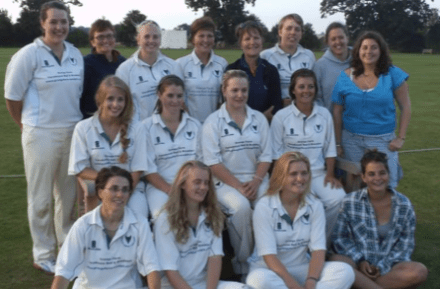
The Woolpit Ladies Cricket team was formed in 2005, led by the future Suffolk captain Alice Parker, who went on to captain the Woolpit team for a decade, winning the Two Counties League in 2013. The junior girls section was created in 2014 and currently has over 35 girls aged between 8 and 15.

Woolpit currently play on a Sunday, in the Two Counties Ladies Challenge (a 35 over league). They are lucky enough to have two pitches at home in Woolpit, allowing them to play matches alongside any one of the 3 Sunday men’s teams, resulting in a good level of support on match days.
Screen Shot 2016-10-15 at 10.39.58.png

Woolpit Ladies Cricket Club team photo – League Winners 2013. Photo Credit: Laura Moss.

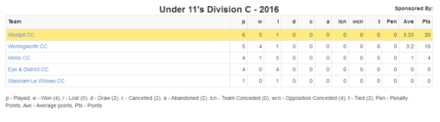
The junior girls currently take part in the U13 Girls Suffolk Junior Cricket League and the U11 Boys Suffolk Junior Cricket League Division C. The girls won all bar one of their matches in the latter league and so took the title for 2016.
screen-shot-2016-10-15-at-10-37-16


Screen Shot 2016-10-15 at 10.37.55.png

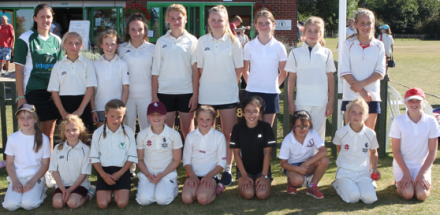
Woolpit U13 and U11 girls teams after competing in the Woolpit CC Girls Tournament 2016, with the U13’s coming runners-up on the day. Photo Credit: Steve Unwin at DE Photos.

Many of Woolpit’s players have played county cricket, with 10 having represented Suffolk or Cambridgeshire, and are now being ably followed by the juniors, 8 of whom have been called up to play age-group county cricket.

Their current junior county representatives are as follows: Elizabeth ‘Wizz’ Firman, Sophie Utteridge, Millie Gale, Sophie Kubitzek, Lily Tillbrook, Florence West, Isobel Melville-Ross and Cara Swinburn.

The current ladies captain is Natalie Samuels, who has been at the club since 2013 and took over from Alice after her retirement from playing in 2015. She also coaches at the club and will be taking on the challenge of the U15 and U14 girls teams in the upcoming season.

The ladies train on a Wednesday evening during the summer, in Woolpit’s 5 lane net facility located at the club. During the winter, the ladies train at the net facilities at the Victory Ground in Bury St Edmunds, on a Friday night. The junior girls train on a Friday evening during the summer and they alternate between training on the outfield and using the nets as this is also when the junior boys train.

As a club, Woolpit have a good social scene with special nights organised by the committee, such as quiz nights, race nights and the annual awards dinner. They also have ‘girls only’ evenings, whether it is a night in the curry house, a BBQ at the club or a trip to see England play at Chelmsford.

Screen Shot 2016-10-15 at 10.46.16.png

Dressed up watching a T20 at Chelmsford – Ladies Night Out 2014

The ladies team are very fortunate to have an array of helpers, putting the teas out at every home game and then coming to support at away games. There should also be a big thank you to Kathy Parker, for scoring for the ladies and always being the background with organising events, on top of her role as treasurer of the club and as the main sponsor for the ladies team via her business Grange Farm Bed and Breakfast.

The support for the ladies team at the club is continually improving and Woolpit are very proud of their ladies section, as they have been extremely successful over the years. Despite needing some new recruits for this season nearly all the fixtures were played, and that was down to the hard work of current ladies captain Natalie finding people to play. Their junior girls section is also going from strength to strength, and including friendly games they competed in 18 fixtures from April to August.

By the start of the 2017 season, the extension the club are having built to improve changing and kitchen facilities at Woolpit will be completed and the ladies will benefit from this. Woolpit’s aims for next season include enhancing their numbers through a mutually beneficial arrangement with Bury T20 ladies side, developing the U15 girls into a standalone team and challenging for the League title. The men’s section is setting up a 4th team on a Saturday, and this will allow ladies to play in a mixed team, giving them a greater opportunity for participation and improving their own performance through experience.

Woolpit’s annual U13 girl’s cricket tournament will run again on Friday 25th August 2017.

If you are an adult and interested in playing, please email nataliesamuels13@gmail.com. If you want to find out more about junior cricket, for girls aged 13 and under, then please contact Jo Ticehurst: jo_ticehurst@hotmail.com or 07956051992.

NEWS: Emma Lamb Called Up To England Squad

Lancashire’s Emma Lamb has been added to the England squad which will tour Sri Lanka this month, following a successful training camp in Abu Dhabi.

Coach Mark Robinson said that Lamb had impressed in the two internal warm-up games played in Abu Dhabi, as well as during the Kia Super League, when she was the only non-international player to feature among the top ten group-stage run scorers.

Though she opens for Lancashire and Lancashire Thunder, it is likely that if she makes her debut during this series – which begins with the first ODI tomorrow – Lamb will come in down the order, having batted at number 6 in the Abu Dhabi matches.

Her international call-up follows a successful Academy tour earlier this year to Sri Lanka, when she made 85 off 80 balls in a one-day game versus Sri Lanka A and 45 off 29 balls in a T20 against Australia’s Shooting Stars.

NEWS: Alex Hartley Wins Cricket Society’s Most Promising Young Cricketer Award

Four months after making her international debut, 23-year-old left-arm spinner Alex Hartley has won the Cricket Society’s Most Promising Young Female Cricketer Award.

2016 has been an exciting year for Hartley, after she fought her way back into England contention having been dropped from the Academy 7 years ago. Having impressed new coach Mark Robinson, she was called into the squad for the summer series’ against Pakistan, and took her first international wicket in the final T20 at Chelmsford, finishing with figures of 2-19.

She performed brilliantly in the inaugural Super League for Surrey Stars, ending the competition with 8 wickets, including 3-11 against Lancashire Thunder.

Most recently in England’s ODI series in the Caribbean she took 13 wickets at an economy rate of 3.4 – a record total for England in a bilateral series.

Hartley said: “I’m so excited to have won this award – thank you to everyone at the Cricket Society.”

“Looking through the names of previous recipients, it is incredible to think that my name has now been added to that list.”

“The past 12 months have flown by in a bit of a blur, but I have loved every second of it. I’m still learning so much with every match I play, and I now can’t wait to see what 2017 and the possibility of playing in a home World Cup has to bring.”

The award has run since 2002, with previous winners including Nat Sciver (2013), Heather Knight (2010) and Katherine Brunt (2004). It will be formally presented at the Cricket Society’s annual autumn dinner this evening.

Random Thoughts: West Indies v England 5th ODI

Selection

  • Both teams fielded unchanged teams again today – meaning that for England, the same 11 players contested all 3 of the Championship ODIs this series. Continuity of selection isn’t necessarily a bad thing – but all the same it’s rather baffling that, despite having been ruled fit, Beth Langston hasn’t played a single game on this tour. Why take a back-up quick bowler away on tour if, when your leading strike bowler gets injured, you aren’t going to select her? Odd.

England’s Fielding

  • It would have been easy for England to come out with their heads hanging after the disappointing display on Sunday. But in the field today they looked confident and together. Indeed it was England’s sharp fielding on the ring throughout the middle overs that kept the pressure firmly on the West Indies, and led to some rather questionable shot selection.

Alex Hartley

  • Here at CRICKETher we’ve been accused of having a pro-Hartley bias many times – right now that doesn’t feel like such a bad thing! No praise for Alex Hartley seems too high at the moment. Once again today she was bang on the money all the way through her 10 overs; someone needs to tell the West Indian batsmen that you can’t really get away with trying to slog sweep her.
  • While her record-breaking 13 wickets across the series – the most ever by an England player in a bilateral ODI series – needs to be tempered with the fact that 5-match ODI series are less common in recent years, it’s still an impressive achievement for someone who only made her international debut 4 months ago. What’s more, she’s taking crucial wickets at crucial times: she’s got Stafanie Taylor out twice this series, which is often tantamount to winning a game. We look forward to many more Hartley wickets!

Nat Sciver

  • It’s always nerve-racking to watch England chasing, even (perhaps especially?!) when it’s a low total. Today’s chase was no different – when Knight got out today, leaving England 112-3, you really did feel they were still capable of making a horlicks of it! That they didn’t was largely thanks to a calm and mature innings from Nat Sciver. She proved she was capable of changing up the tempo of her game – her natural inclination would be to play shots, but today it was all about taking it slowly, realising that the important thing was that she was still there at the end of the innings. Opening the bowling in tandem with Katherine Brunt this series has put a lot of pressure on Sciver but, with two half-centuries across the five games, she’s shown she can provide some much-needed backbone to England’s middle-order. Music to the ears of England fans ahead of next year’s home World Cup.

INTERVIEW: Stafanie Taylor On West Indies Women’s Cricket And (Finally) Winning A World Cup

What does it feel like to win a World Cup? Stafanie Taylor knows. “I was speechless,” she told us when we interviewed her over the summer, during her time playing for Western Storm in the inaugural KSL. “I couldn’t sleep at night! Every time I closed my eyes I kept thinking ‘we actually won the World Cup!’ And there were just so many messages from people back home, how they are very proud of us. It was really good to have that kind of support.”

For Taylor, who was named Player of the Tournament, her side’s victory in the Women’s World Twenty20 earlier this year has been a long time coming – the culmination of many ups and downs since she made her debut for West Indies back in 2008, aged 17. “Back then we were a fairly young team. Now I think we have evolved.”

“Over the last few years we’ve been playing against top teams and beating top teams [they’ve defeated England and India in ODI and T20 series’ since 2009]. Two times [in 2010 and 2012] we’d been in the semi-final, so I would say we’d had enough of that!”

Losing to Australia in the 2013 50-over World Cup final, she says, also spurred her team on all the more in April’s tournament final: “[In 2013] a lot of the players cried. We wanted to play Australia – it was so good to meet them in the final and come out victorious.”

It’s interesting to hear Taylor reflect on what she sees as the crucial steps on the road to the rise of Caribbean women’s cricket as a force to be reckoned with. The awarding of the first ever paid contracts to women players by the West Indies Cricket Board back in 2010, she says, was probably the most important factor:

“That was a huge step. A lot of us had been going to school and working, now we could see something coming in. It might not be much but at the end of the day we could go out and train and then after we could have a good meal.”

“Before the contracts I was going to school [university] – when you are trying to get schoolwork done and train it’s never easy.”

Better access to top-quality coaching has also been key. Taylor acknowledges that quality coaching in the women’s game was hard to obtain when she was first entering the game, but says her own development owes a lot to the appointment of ex-international Sherwin Campbell as national women’s coach between 2008 and 2015:

“He’s a wonderful guy, he knows the game inside out. He is very passionate about what he does. I remember one time when we lost a game at a World Cup his eyes filled with water. At that time when you have a coach like that you definitely want to keep them.”

And of course the Women’s Big Bash League played a role. Taylor – who represented eventual champions Sydney Thunder in the inaugural WBBL, hitting 372 runs and taking 10 wickets – laughs as she recalls the moment she found out she would be playing in the tournament:

“I got a call from Nick Cummins [Thunder General Manager]. I was actually in the bathroom! And I wasn’t going to answer the phone but I actually did! And he was like, ‘it’s Nick Cummins from Sydney Thunder. Would you be interested to come over and play?’ And I was like, “um, could you give me 10 minutes and I’ll ring you back?!” And then I called him back and we had a chat.”

Playing in Australia, she says, “has toughened me up. The way they play their cricket is a lot different to how we play it in the Caribbean. They are really tough.”

One positive outcome of the World Cup victory has been the shift in attitudes towards women’s cricket in the Caribbean. When Taylor was named the Jamaican Cricket Association’s Cricketer of the Year in 2009, having achieved the ranking of number 5 on the ICC’s list of female all-rounders within 12 months of making her international debut, there were many disgruntled voices at the time who claimed that a mere woman was undeserving of the honour. Taylor says her team’s World Cup victory has made a difference to these kind of attitudes. “For us as the older ones, we were like the pioneers. Things have changed now.”

What of the future? Taylor is excited. “This is just the start,” she says. “We have the Big Bash and the Super League, it is really good for the game, really good for female sport. And we hope that soon we will have a female CPL [Caribbean Premier League].”

For the time being, her focus will be on ensuring that West Indies win their ODI series decider against England, to be played later today. With Taylor at the helm – she made 85 and took 3-22 in the last game on Sunday – you wouldn’t bet against it.

NEWS: 2020 Twenty20 To Be Standalone

Cricket Australia has released more information on the reasons behind their decision to host the 2020 Women’s World Twenty20 separately from the men’s competition, as approved by the ICC yesterday.

The tournament was originally intended to be a double-header competition with the men’s and women’s matches played across the same period, as has been the case in previous competitions.

However, the success of the inaugural Women’s Big Bash League – which featured record crowds and peak viewing figures of over 400,000 – convinced Cricket Australia that a standalone women’s tournament was the right way forward.

The women’s tournament will now take place in February and March of 2020, with the men’s version to follow in October/November.

CA Chairman David Peever said:

“Having the ICC Women’s World Twenty20 as a stand-alone event means we can hold it in stadiums that we can fill, put on TV at prime-time and ensure it has the space to be promoted as the main event, away from the shadow of the men’s game.”

 “WBBL has taught us that there is an audience for women’s cricket both live and on prime-time television and this decision means we have the opportunity to hold the biggest women’s sporting event ever held in Australia.”

The decision comes on the back of the last joint World Twenty20 in India, which was widely regarded as disappointing for the women’s game, with many of the matches played out to empty stadiums.