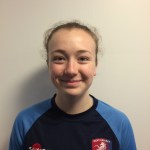
Ffion Wynne profiles some future England prospects.
Towards the end of a successful summer, notably due to the emergence of the KSL, the England Women’s Pathway introduced a few changes to their system. For what used to be called the England Women’s Development Programme, the Academy aims to prepare young and talented individuals between the ages of 14 – 19 for the Senior Academy, the KSL and hopefully for international honours.
With the professionalisation of the women’s game firmly in place, alongside securing Sky Sports coverage for the next edition for the KSL, the future is looking extremely bright for the England women’s side. With this in mind, we decided to get an insight into the life of an Academy cricketer and catch up with some up-and-coming stars from the Academy to discuss their experiences in the setup and their hopes for their futures in the game.
1. Anna Nicholls

Aged 19, Anna Nicholls is one of the Academy’s older and more experienced members, with plenty of Division One cricket under her belt for Middlesex already. However, with a recent move to Leeds to study Medicine, Nicholls has transferred to Yorkshire for the upcoming season and is hoping for first team selection in order to continue her progress at such a high standard.
A promising batsman and former pace bowler, Nicholls has been around the England set-up for nearly four years, when the Under 15 programme was still in place. “In the Under 15s, we only trained 3 weekends over the winter,” she explains, “but I’ve been in this development programme, which used to be the Under 19s, for a while now and we have camps about once a month plus a summer competition.” For Anna, the best part about the programme is being able to challenge herself against better players, and using scenario practice to improve her knowledge and tactics of the game.
In the 2016 season, her talent was evident from her selection for the Yorkshire Diamonds in the KSL, notably featuring in their final game against Western Storm. Nicholls speaks emphatically about the competition, and describes the incredible experience of being surrounded by such high profile elite cricketers, notably her teammate Alex Blackwell, and the importance of learning from them. The professional environment, and the amazement of Blackwell’s ability to create shots “out of nowhere”, succeeded in inspiring Nicholls immensely.
With an intense few years at medical school awaiting her, alongside cricketing ambitions, the future looks extremely bright for Yorkshire’s latest arrival. “There is definitely a challenge ahead,” Nicholls states, “but at the moment I’m just determined to push my cricket and medicine as far as they can both possibly go.”
2. Charlie Dean

Hampshire’s Charlie Dean has been involved at the county since she was 11 years old, and now at 16, has started her first year in the Academy programme, having progressed from the Under 15 set-up the previous winter. Alongside the monthly England camps, the talented all-rounder trains several times a week with the Hampshire Academy. Despite being a younger member of the squad, she seems unfazed by the challenge. “The environment is really positive and friendly,” Charlie says, “and I think it’s actually making me a much better player being one of the younger ones. It’s good to challenge myself against the older and more experienced girls.”
Dean’s heavy cricketing schedule is boosted by her inclusion in the Young Vipers squad, the development centre for the KSL team. The squad trains every Saturday over the winter, preparing players for long term development into the Super League. With the vast amount of winter training for Hampshire, Vipers and England, it seems that Charlie has a very exciting and promising summer ahead of her. Such promise at such a young age suggests that her progress will develop immensely over the next few years, and with aims for reselection into the Academy before hopefully progressing into the Senior Academy, it seems Dean will be a vital asset to Charlotte Edwards’ Hampshire squad this summer!