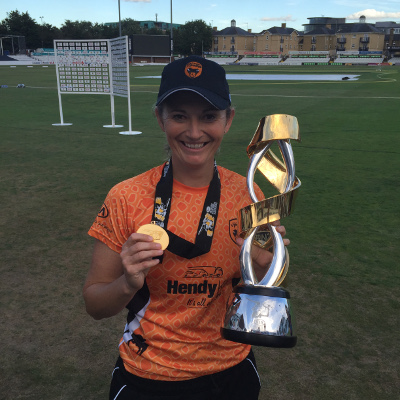
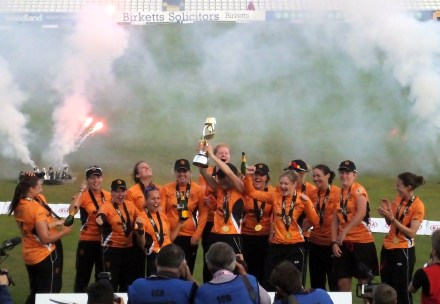
Charlotte Edwards Retirement: How Events Unfolded

When the England team returned from the T20 World Cup in India a little over a month ago, they had no inkling of events which were shortly to unfold, culminating in Charlotte Edwards’ tearful retirement at Lords today. The players were under no illusions – they knew they had let themselves down and there were “hard yards” ahead to improve their batting, their fielding, and most especially their general levels of fitness. But nonetheless, everyone still expected Edwards to remain at the wheel today… tomorrow… and through to the World Cup in 2017.

Coach Mark Robinson was, however, starting to come to the conclusion that something a bit more radical than a few extra trips to the gym might be necessary if England were going to reverse their slow decline.

Over the following few weeks, Robinson held a number of meetings with his boss – Clare Connor – having decided that England could only get the fresh start they needed with a new skipper at the helm.

For Edwards meanwhile, life was starting to get back to normal. Assuming that if she was going to be fired it would have been immediately, she appears to have genuinely thought her position was secure, as she prepared for the new season, getting things underway with a match-winning innings of 79 for Kent in the first round of the Women’s County Championship.

The following day, Kent played Sussex at Eastbourne. As is normal, Sussex encouraged their age-group girls to attend the game if possible, and one who did so was Ellie Robinson… accompanied by her father, Mark. During a 3 hour rain delay, with all the teams, press and spectators huddled into the tiny pavilion, Robinson warmly greeted all of his players… or rather almost all of them – there appearing to be one conspicuous exception to the general atmosphere of camaraderie.

In retrospect, it is hard to believe that this wasn’t playing on Edwards’ mind as she was bowled by Tara Norris for 1 off 5 balls in the second over.

Then, the following day, Edwards received a fateful text message from Clare Connor, the substance of which was simply: “We need to talk.”

The “talk”, Connor admitted today, was the hardest of her professional life – the pair had worked hand-in-hand for over two decades – Edwards was the person to whom Connor had handed over the England captaincy ten years previously; and it was now Connor’s duty to tell her friend that the decision had been made and that she had led England on to the field for the last time back in that semi-final in India.

But worse was to come.

Edwards understood and accepted the need for new leadership, but believed that she still had a lot to offer as a player. Indeed, why wouldn’t she? England might not have performed “as a team”, but Edwards herself had made 202 runs in the tournament (one more than Meg Lanning) including 2 fifties, at a Strike Rate of 115. She might not lead England into 2017, but she would still be there as a player!

However, her hopes were to be shattered as Robinson informed her that she was not part of his plans to rebuild the team, and she would not be considered for selection in the summer or autumn squads.

Devastated, Edwards realised that the time had come to face reality and begin the painful process of signing off. After informing Robinson and Connor of this, a press conference was hastily convened at Lords. Meanwhile, Edwards composed an email to her England teammates, which was sent yesterday evening – the first any of them were to find out about the situation.

Then, selfless to the last, she set off to attend a university awards evening in Southampton, to play her role as guest of honour; whilst unbeknown to her, the news of her retirement was sadly leaking on Twitter, achieving nothing but heaping extra indignity upon her situation.

Charlotte Edwards – an England “great” if ever there was one – deserved better than that.

We really will not see her like again.

NEWS: England Announce West Indies Tour Dates

The ECB have announced the dates for England’s Women’s International Championship ODI series v West Indies this autumn.

The 5-match series will take place in Jamaica in October, at Trelawny Stadium and Sabina Park, with the vital “WIC” points up for grabs in the final 3 games. England currently sit 6th in the Women’s International Championship standings, but with 3 games “in hand” against Pakistan, will hope to have returned to one of the top 4 World Cup qualifying positions by the time October rolls around.

Date Match Venue
8th October 1st ODI Trelawny Stadium, Trelawny
10th October 2nd ODI Trelawny Stadium, Trelawny
14th October 3rd ODI * Sabina Park, Kingston
16th October 4th ODI * Sabina Park, Kingston
19th October 5th ODI * Sabina Park, Kingston

Ruth Prideaux: A Remarkable Lady

Driving through Eastbourne on Monday on the way to see Sussex play Kent, I remembered the last time I had been there, almost two years ago. I remembered knocking on a door in a sunny street, and my knock being answered by a white-haired old lady.

Her name was Ruth Prideaux.

I was there to interview her as part of my PhD – to hear her memories of her time playing and coaching England. Of the many interviews I conducted, they sometimes went well, sometimes not quite so well. And some stick in the memory more than others.

This one? One of the most enjoyable, most memorable, of all. It was impossible not to warm to Ruth in the two hours or so that I spent with her, drinking tea and listening to her memories of playing and coaching the sport she loved. It was also impossible – even at the age of 83 – not to feel slightly in awe of her; and to get a sense of why the players she coached were in awe of her, too.

Ruth sadly passed away last month. I am thankful I was able to meet her before she died. She deserves all the plaudits in the world.

———

Ruth Prideaux (nee Westbrook) was a formidable lady because she had had to be. Born in Greenhithe, Kent in 1930, she learned cricket at Gravesend Grammar School, before attending Anstey College of Physical Education to train as a PE teacher. All this came after an early battle of wills with her father about the sport she loved. “My father was not pleased,” she told me. “I had three brothers at that time, and he thought they should be playing cricket and not me. He didn’t like the idea of his daughter playing cricket. And I was the only one that really wanted to!” What happened in the end? “He had to put up with it,” she recalled, her blue eyes twinkling.

By the time she was selected for England, to tour Australia and New Zealand in 1957/8, he had come round to her way of thinking! She described that tour as “wonderful” – but it was yet another struggle, both to gain leave from her teaching job, and then suffering the financial burden of having to forfeit six months of her salary (the length of Australasian tours in those days, thanks partly to the month-long boat ride there and back).

Then there was her coaching career. In 1962 – as the Times reported in their obituary – Ruth and Mary Duggan became the first women to attend an MCC coaching course, passing the advanced certificate with ease. Several male first-class county players failed. And yet when she was interviewed for the England Women coaching job in 1988 – the first time such an appointment had ever taken place – she told one of her daughters, in full knowledge that she was the best qualified candidate: “I’ll never get the job, because men always do.”

Contrary to her own expectations, she did indeed get the job.

———

That was not the end of the battle, though. By the time of her appointment, Ruth was working as a lecturer in the Sports Science department of Chelsea College of Physical Education, with radical new ideas about the way she wanted the England team to progress. She secured funding from the National Coaching Foundation for a five-year intensive training programme from 1989 to 1993, which incorporated both sport psychology and physiological testing.

Steve Bull, a colleague at Chelsea, became the team’s official sport psychologist, and worked closely with Ruth to plan the programme, which aimed to increase confidence, develop positive thinking skills, and provide team cohesiveness. There was also an intensive focus on both nutrition and physical fitness.

Ruth recalled in our interview:

I was quite determined that the whole squad, they wouldn’t be a member of the squad if they weren’t fit. And we worked a lot on fitness. They used to run up and down the beach [at  Eastbourne], on the shingle, which was tough…And then we started to introduce the importance of diet. That particular aspect was not popular, because they were very fish-and-chip girls!”

Ruth’s coaching programme was years ahead of its time; no other sport, including men’s cricket, had utilised sports psychology before. And much of Ruth’s work in these years now serves as the foundation for the elite coaching techniques which are used within both men’s and women’s cricket.

Yet it did not initially sit well with the traditionalists within the Women’s Cricket Association. It was reported in The Cricketer in 1988 that “the decision to appoint Prideaux…did not meet with universal approval within the WCA fraternity”. She recalled that:

“the [England] selectors were not a bit supportive. They thought it was all wrong. They expected them always to be doing something on the cricket line as it were, with the activities of batting, or bowling, or fielding. But they were not in any way supportive of that type of [fitness] work. So that was quite difficult.”

Yet Ruth persisted.

———

Fast forward five years to Lord’s, August 1st 1993. Jan Brittin takes the winning catch, New Zealand are all out for 128, and Karen Smithies and her team lift the World Cup, hugging each other and shedding tears of joy.

That white-haired figure looks on from the balcony, quietly satisfied at what she has achieved with her team. She knew they could do it before they could.

“We were in Australia for the semi-finals of the World Cup in 1988,” she recalled in our interview, “and we lost to Australia. And I said to the players, ‘we will NOT lose the next World Cup. We’ll beat everybody, and we’ll win it.’ They all felt, ‘oh, she’s off again!’ But actually, we did.”

It was a win that would never have been possible without Ruth’s confidence in both her innovative new coaching techniques, and in her squad of players – a confidence she instilled in a variety of ways. One of my favourite stories was about the team’s arrival at Wellington College, where the teams were put up for the duration of the tournament:

“When we arrived we arrived as a squad before anybody else, and they’d put us on the ground floor and the Australians were upstairs, above us. And I said, ‘well we’re not having that’. So before the Australians came, we settled ourselves above them, and I said, ‘remember we’re on the top here!’ 

So that was another thing that, although it sounds little, was a great contribution to their belief in themselves.”

Sure enough, England were actually left needing to beat their old enemy, Australia, in order to reach the final – and they did so in spectacular fashion, thanks to a wonderful innings from Carole Hodges, who finished on 105*.

Ultimately, England’s World Cup victory in August 1993 was largely the fruit of Ruth’s labour. Steve Bull reported that, by the time he concluded his work with the squad, “a feeling existed [among players] that success would not have been achieved without the provision of sport psychology support”.

Her pride at the achievement was still evident in our interview, 20 years after the event, as she recalled the tournament, eyes shining. It is an achievement made all the more impressive by the fact that in all her years working with the England team, she was never paid a penny.

———

Ruth retired as coach in the wake of the World Cup, but remained involved in women’s cricket, going on to become the Chairman of Sussex Women’s Cricket Association. What of her legacy? Certainly that 1993 victory helped begin to change attitudes to the women’s game in England. A few days afterward the final, then President of MCC, Dennis Silk, wrote to the Chairman of the Women’s Cricket Association: “It was the best day’s cricket at Lord’s this year and between you all, you created a magical atmosphere. You have done the whole of English cricket a great service.”

There were awards, of course – the National Coaching Foundation’s England Coach of the Year in 1993 being just one – and yet somehow I wonder if Ruth ever quite got the recognition she so deserved. Had she been a man – had she won a men’s World Cup – the whole world would know her name. Did anyone realise, I wondered as I left her house after our interview, that one of cricket’s greatest ever coaches was at that moment living in a little corner of sunny Eastbourne?

It is just one more reflection of the battle Ruth fought her whole life – the battle against being told she couldn’t do it because she was a woman.

———

The battle continues – and the impact of Ruth’s approach is still being felt within women’s cricket. I put it to her in our interview that what she had really been trying to do was bring professionalisation to an amateur game. “Yes,” she concurred. “But you wouldn’t put it like that.”

Why wouldn’t you put it like that? “Well, it would be far removed from anybody’s expectation. I mean, to become a professional was unheard of.”

Not any longer. And as Ruth herself recognised, she is partly responsible for that transformation.

“I think we supplied a good grounding for women’s cricket to develop,” she told me. “And set an example of what can be achieved. Which was all good, because it meant everything moved forward.”

That is quite some legacy, I told her. “Yes,” she agreed.

“I’d rather leave that legacy than any other.”

MATCH REPORT: Devon v Essex at Felsted School

Devon (265-5) bt. Essex (98-10) by 167 runs.

After being inserted on a green but hard pitch, openers Amara Carr and Aylish Cranstone played positively to build a solid foundation, before Carr was adjudged lbw for 38. Jodie Dibble started in a spritely fashion before being caught out by the lack of pace and gave a simple catch for Bird at mid wicket for 13.

Cranstone and Rosalie Fairbairn rebuilt and rotated the strike after an early flurry of boundaries, and the batting powerplay added some impetus, before Fairbairn was dismissed, caught for 29, a partnership of 99.

Cait O’Keefe was positive from the start with 26 off 21 balls, before being run out in an unlucky fashion when a dropped return catch was parried onto the stumps. Cranstone continued to hit the gaps and target a short boundary, bringing up her maiden county championship century, with 15 fours and one six in her 134 not out from 140 balls.

Essex’s reply showed intent from the start but they lost their first wicket in the second over, caught by Hazelle Garton at mid on off Sophie Mackenzie. A stunning catch from Alli Kelly at point accounted for England development player Cordelia Griffith, easing some concerns over her big hitting potential.

The building clouds were a concern, with the Met Office forecasting rain at 4pm, and Devon just completed the 20th over required to constitute a game just as the first drops of rain came down. Essex were still well behind the run rate, losing their sixth wicket in the 21st over, with the score on 75.

The light rain continued, but the pressure of the constantly increasing required run rate meant wickets fell at regular intervals. Pick of the bowlers were Hazelle Garton with 4-20 and Rebecca Donohue 3-23, Cait O’Keefe 2-20, as Devon wrapped up a convincing victory in the 30th over with maximum bonus points.

Players’ Player, sponsored by Wadey Polden LLP: Aylish Cranstone.

MATCH REPORT: Super Sussex Klobber Kent

On a day in which “Sunshine Capital of England” Eastbourne distinctly failed to live up to its name, Sussex were left celebrating a 42-run win over old rivals Kent, after an entertaining cameo from their number 7 batsman Izzy Noakes allowed them to set a competitive total of 173.

The match – delayed by the kind of mizzly, freezing rain which is more generally found in the Highlands of Scotland – did not start until 2.10pm, with the overs reduced to 30 a side. With the sky overcast and the pitch damp, Kent chose to put Sussex in to bat. While they started well, with a stylish half-century from Georgia Adams helping them reach 99-3 at the halfway stage, a mini-collapse ensued, as Hannah Phelps (4), Izi Collis (14), Ellen Burt (7) and Abbie Freeborn (1) all fell cheaply.

Cue the entrance of Noakes, and an innings which combined scrappy inelegance with middle-of-the-bat power-hitting, including two spectacular sixes in the penultimate over, which sailed over a 10-foot fence into the next door football ground. Perhaps on another day, one with a sharper Kent fielding performance, it might not have come off – but come off it did, and it was met with delight by the watching crowd, which included England coach Mark Robinson.

Noakes’ dismissal in the 30th over, bowled by Charlotte Pape for 38, saw Sussex all out for 173. She had enabled her side to add 40 runs for the 9th and 10th wickets – ultimately the difference between the two sides.

Kent’s innings began with the cheap dismissal of Charlotte Edwards, bowled by Tara Norris for 1, but Tammy Beaumont (49) and Lydia Greenway (33) then shared an 82-run partnership. For Kent, however, with rain clouds hovering ominously overhead, the issue was always keeping up with the required run rate, which they rapidly fell behind. After the dismissal of Beaumont, caught by Sally Clarke off Burt in the 19th over, the pressure told; and a combined effort from the Sussex bowlers saw them bowled out for 131.

Sussex were visibly delighted with the result, in a match which clearly had added spice after last year’s encounter between the two sides, which controversially ended in a tie after Sussex snatched a run off the last ball. Captain Georgia Elwiss, speaking to CRICKETher after the game, said that she was happy about the way her team responded after their 6-wicket loss to Warwickshire on Sunday:

“We had to turn up today and completely write yesterday off, and draw a line under it and learn from it. I’m really proud of the way the girls played today. It was a real team effort to get us over the line.”

“We knew [173] would be a decent score. With the short boundary and the players that they’ve got it was never going to be plain sailing, but we kept it tight and kept the pressure on, and as soon as wickets started to fall that’s when we really got into the game.”

“It’s a massive fixture for us…it’s the best winning’s felt for a while!”

MATCH REPORT: Hartley The Hero As Middlesex Mash Surrey

A Fran Wilson half century might have been the dominant entry on the scorecard on a sunny spring day at Eastcote CC, but it was actually a pair of cameos from Alex Hartley which turned an otherwise well-balanced game into a one-sided walk in the park for Middlesex.

Put into bat, Middlesex lost Dunkley (3) early, playing on as she tried to cut Nat Sciver, but Tash Miles and Fran Wilson rebuilt, taking the score to 47 before Miles (14) became the first of Cecily Scutt’s five victims. Wilson looked to push on, dominating partnerships with Anna Nicholls (3) and Beth Morgan (7) to take them to 102-4.

However, the collapse that followed was one of which England would have been proud, as Middlesex lost their next 5 wickets for 11 runs, including a magnificent catch by Sophie Pout to dismiss Wilson for 63, leaving them on the brink at 113-9, with only Alex Hartley to come.

Hartley is a self-confessed “tail-ender” and initially looked quite the part as a couple of streaky edges went through the vacant slip area; but as she grew in confidence, she began to find her shots as her and Naomi Dattani put on 52 for the final wicket – not only changing the course of the game, but grabbing a potentially crucial extra batting bonus point as they passed 150.

In reply, Surrey were soon under the cosh as Middlesex’s overseas, South African-born New Zealander Holly Huddleston, bowling with real pace and good length, removed Kirstie White (3) and Nat Sciver (5) cheaply. Surrey continued to lose wickets at regular intervals, but nevertheless at 70-5, with Bryony Smith well set on 23, a victory still felt like a possibility until Hartley intervened once again.

Changing ends, looking for the ball to turn with the slope, Hartley and skipper Izzy Westbury set an attacking field with a slip and a gully, and were rewarded with two wickets in two balls – both caught by Westbury at gully. Suddenly there was no way back for Surrey, and they subsided to 99 all out, as Middlesex celebrated what could prove to be a very important 17-point win.

Afterwards, Alex Hartley told CRICKETher: “I’ve been working over the winter on my role as a tail-ender, getting off strike and getting the ‘in’ batter back on strike. I felt a bit of panic when I came in – I’ve never been in that situation before, coming in with 22 overs to bat – but I just had to play my own game and today it came off – my highest score!”

OPINION: KSL – Winning the Phoney War

Guest writer Richard Clark on the importance of the countdown to the Kia Super League.

So we know the “hosts”, we know where the England players are allocated, we know where the overseas signings have gone, we know the full squads, and we know the fixtures. All this after a well-orchestrated two or three weeks of “drip, drip” style announcements from the ECB and the KSL.

And now? Well, now we must wait. There are, give or take, three months until the start of “KSL1” (if that is what we are to call it). Three long months. Of waiting…

Except wait is the last things the hosts and the ECB should be doing. These three months are, in some ways, more important than the competition itself, because to a certain extent KSL1 will not stand or fall on the quality of the cricket. In a competition that lasts only three weeks (and only two for a couple of the teams) there will be little time for the cricket to make an impact. By the time people make their mind up as to whether it’s worth watching… it will be all but over.

No, KSL1 will succeed at least in part if it “gains traction” in the public consciousness, if it pulls in punters on opening night, if it catches the eye of the media. On that score, so far so good, by and large. The process of gradually unveiling the set-up has been well handled and the “franchises” have generally bought into the need to shout about it. Interest has been piqued, and followings have tentatively been established [see our previous piece on Twitter impact].

Over the next three months, though, nothing much is happening, and it is now – through what you might term the “Phoney War” – that the ECB and the hosts need to earn their corn in terms of turning what I referred to above as “followings” into something more tangible as “fan-bases”.

Nearer the time, there will no doubt be personal appearances by players at events and coaching days close to the host venues, but how about in the meantime?

Marketing departments have got to work overtime in the coming weeks to ensure that they get their message out there. To an extent the mainstream media will not want to know at the moment (What’s the story? Oh, you’ve got a game in three months’ time? Come back and see us then…), so a lot of publicity is going to have to be self-generated.

Social Media will be key here. It will not be enough to put a page on a website and expect that to do the job. Via Twitter and other social media channels the hosts need to get themselves embedded into cricket fans’ minds. Each host has its own dedicated Twitter feed (with the exception of Surrey Stars – a serious mistake in my view). They need to use them daily to worm their way into their followers lives. And remember, it’s not just their followers they are aiming in – never underestimate the power and reach of the re-tweet!

The players too must be tweeting about it constantly – Twitter can be a dangerous world for the sportsman or woman, but the positives here should outweigh the negatives. If this is a “War”, then it needs to be fought with total commitment, and with every weapon available.

And KSL has some weapons – the likes of Edwards, Taylor (both of them!), Lanning, Perry, Matthews… These are potential superstars for my daughter’s generation, and they have to be used as tools in the coming months to make sure KSL1 opens with a bang.

Kia Super League: Thunder & Lightning Are Twop of the Twitts!

The Kia Super League might still be 3 months away, but off the pitch the battle is already hotting-up online between the marketing teams of the five* Twittering franchises hosts.

As a bit of fun we’ve powered-up the super-computer, run the big numbers, and calculated a sophisticated(!) “Impact Score” for each of the five* official Twitter accounts. (List here!)

Team Followers Tweets Impact Score
Lancashire Thunder 1,084 353 382,652
Loughborough Lightning 679 237 160,923
Yorkshire Diamonds 1,247 66 82,302
Southern Vipers 751 49 36,799
Western Storm 605 43 26,015

It’s early days of course, but already it is looking like Lancashire Thunder might have this one sewn up… unless Loughborough Lightning can pull something out of the bag? Or perhaps it will be Yorkshire Diamonds making a late run for the (ahem…!) Twitle?

More seriously though… kudos to the folks at Lancashire and Loughborough. The Super League will only be a success over the longer-term if it connects with the fans and Twitter is a great way of making that happen – keep up the good work guys!

————-

* Surrey don’t have an independent “Surrey Stars” Twitter account, so we’ve put them aside for the purpose of this analysis!

OPINION: The Curious Case of India and the Kia Super League

Guest writer Aparna M asks: why no Indian women in the Super League?

When the overseas players for the inaugural Kia Super League were announced earlier this month, there was a notable omission: players from India and Pakistan.

Why? Well, while we don’t have information about the missing Pakistan players, we did get some insights regarding why Indian women cricketers would not be part of the league. BCCI secretary Anurag Thakur said that they have not yet taken any decision on Indian women’s participation in the league – and that the BCCI was mulling over organizing something similar. 

Now, the request was sent to all the boards in January to show their interest in participating in the league. Why has it taken the BCCI so long to arrive at a decision? Earlier, they had not allowed Indian women cricketers to be part of the Women’s Big Bash League (WBBL) in Australia. The reason cited was that India’s domestic season clashed with the tournament. Fair enough.

However, there is nothing scheduled for July and August for the Indian women’s team. In fact, the next assignment for them is in November. So then why were they not allowed to be part of the KSL player pool? Not all those in this pool got picked, of course; but even if a couple of Indian players had got an opportunity to be part of the KSL, it would surely only have helped them to develop their game further.

To improve you need to play more, not less. This could have been such a great learning opportunity for Indian players, both on and off the field. It could have helped them enhance their skills by playing with players from other countries, in turn also sharing their own experiences with their international teammates. Most importantly, when they returned home, they could have shared these experiences with the rest of the national team.

The question arises whether the players were even asked for their opinion. Did they have any say in the matter? Did they get to express their desire to be part of the league and put their names forward? Going by what Thakur has to say, we can safely assume a no to these questions. If by any chance the players were asked, it would be interesting to know their answers, since we have not heard from them as yet.

As for organizing their own women’s T20 tournament, it is a welcome decision by the BCCI. It is to be hoped that they put in maximum efforts to make this a huge success. However, is it going to happen this year? If not, then it makes no sense to not allow Indian players to be part of the KSL this year.

Regarding the possibility of a women’s IPL, some immediate questions come to mind. Would it be linked together with existing IPL teams, as the WBBL was in Australia? Would it be possible in the heat of April and May to have double headers, with the women’s matches held in the afternoons or even late afternoons? While the Women’s WT20 did garner a lot of publicity for the women’s game, many of the matches were still played out to empty stands. This would not be an ideal situation for any domestic women’s league.

The BCCI must take all these things into consideration when they roll out their women’s cricket league. And given the effort that they put into IPL, let’s have no half-hearted measures, please.

Kia Super League – James Piechowski’s Deep Cover Points – Lancashire Thunder & Yorkshire Diamonds

In the last of a multi-part special, James Piechowski takes an in-depth look at the Kia Super League squads, finishing with Lancashire Thunder and Yorkshire Diamonds, before making some final predictions.

Lancashire Thunder

Batsmen: 7
Bowlers: 5
All-rounders: 5
Pace bowling options: 5
Spin options: 4 (3 OB, SLA)
Wicket Keeping options: 2
Left-Handed Batsmen: 0

Possible Team

  • Matthews, Lamb, Taylor*+, Wyatt, Dottin, Newton, Coyte, Miles, Threlkeld, Cross, Ecclestone

Strengths

  • Well balanced England and International selections
  • Powerful batting line-up which could post some big totals
  • Both pace and spin attacks look relatively strong in the wicket-taking department
  • Plenty of specialist batters and bowlers, supplemented by 3 quality all-rounders

Weaknesses

  • No Left handed batsmen – this will make it easier for opposition bowlers to maintain the line they are aiming for
  • Fragility – The likes of Taylor and Wyatt are known to give their wickets away sometimes, making the roles of Matthews, Dottin and Lamb important for stability as well as smashing runs. This could hamper their strike rate
  • Pace attack of Coyte, Cross and Dottin are known to concede a few too many runs at times, so Thunder will hope this doesn’t all happen on the same day.

Uncertainties

  • We don’t know if Taylor will take up all the responsibility of opening the batting and wicket keeping along with the captaincy. Thunder have another wicket keeper, Ellie Threlkeld, who will probably get into the side for her batting even if not wicket keeping. This could allow for Taylor to experiment with her roles, but she may choose not to anyway.

Prediction

  • One of the stronger sides on paper, Thunder definitely look set to make the finals day. They may be a bit hit-or-miss but could beat any of the other sides on their day. I think Thunder will be disappointed with not making the final, and they are strong contenders for the inaugural KSL title.

Yorkshire Diamonds

Batsmen: 5
Bowlers: 5
All-rounders: 5
Pace bowling options: 6
Spin options: 4 (2 OB, 2 LB)
Wicket Keeping options: 2
Left-Handed Batsmen: 2

Possible Team

  • Winfield*, Mooney+, Blackwell, Armitage, Brunt, Gunn, Spragg, Ismail, Hazell, Butler, Davidson-Richards

Strengths

  • “Challenger” team with some players looking to impress the England selectors. Winfield will be looking to make her case for England reselection into the T20 performance side
  • A very canny brains trust for Winfield to consult, lots of big match experience particularly from Blackwell, Gunn and Brunt
  • Generally strong and balanced squad with good mix of youth and also plenty of experience in both batting and bowling
  • Two aggressive opening bowlers Brunt and Ismail should work well in tandem and are sure to make the opposition aware of their presence. They could blow away a few in the powerplay
  • Both pace and spin attacks look strong

Weaknesses

  • There’s no denying that the Diamonds’ squad are short of specialist batting. The problem is exacerbated by there being only one batting all-rounder (Hollie Armitage) who was not exactly prolific with the bat in the recent England Academy tour. The only other KSL teams to have only five batsmen in their squads, also have more batting all-rounders to support them.
  • I think Diamonds would have liked another international batsman in their first XI line-up too. The batting order looks a little light after a strong top three. This could be a serious concern – unless the likes of Brunt and Gunn can contribute well, Diamonds may have to bring in their development bats Graves and Nicholls, and bowling options then suffer.

Uncertainties

  • Diamonds may choose to play leg-spinner Katie Levick if Hollie Armitage is not able to bowl her allocation of leg-breaks.

Prediction

  • Another strong contender, Diamonds should be able to reach finals day with a top-four finish, providing the the top three don’t give Brunt and Gunn too much work to do. Whether their batting will be strong enough to get further is another question, but they do have one of the stronger bowling attacks to limit opposition totals. I am not sure they will be able to get further but a place in the final is certainly within their reach.

Summary

Exit at Group Stage

  • Surrey Stars
  • Loughborough Lightning

Predicted Qualifiers (semi-finalists)

  • Yorkshire Diamonds
  • Southern Vipers

Finalist

  • Lancashire Thunder

Winner

  • Western Storm