T20 WORLD CUP: England v Bangladesh – “It’s not going to be sexy all the time”!

England ground out the ugliest of ugly wins – Heather Knight admitting post-match that “it’s not going to be sexy all the time” – in their first match of the World Cup in Sharjah, beating Bangladesh by 21 runs.

England 118-7 v Bangladesh 97-7 #T20WC

CRICKETher (@crickether.bsky.social) 2024-10-05T16:57:54.727Z

Having chosen to bat, England got off to a decent start – 47 is by a fair distance the most runs scored in the powerplay in the 4 matches to have taken place so far at Sharjah. Maia Bouchier showed a willingness to go on the offensive in tough conditions – she looked disappointed after getting caught on the ring, but 23 off 18 balls was job done for her.

England 118-7 v Bangladesh #T20WC

CRICKETher (@crickether.bsky.social) 2024-10-05T15:27:31.515Z

But England then seriously slumped thereafter, making just 44 runs in the following 10 overs as Bangladesh’s spinners pegged England back. Wyatt-Hodge battled her way to a run-a-ball 41, but struggled to get value for her shots. With long boundaries in place for this tournament, and the ball plugging in the outfield, anything that bounced more than a couple of times was running out of breath before it got to the rope.

The openers aside, the rest of England’s batters couldn’t deal with Bangladesh’s spinners, who kept them stuck in the crease – unable to move their feet much, and oddly reluctant to sweep.

Alice Capsey in particular looked like she was playing a game of The Floor is Lava in reverse (The Floor is Glue?) fending delivery after delivery back to the bowler, before being caught off a reverse sweep by one of the not-one-but-two fielders in place for that shot.

This isn’t entirely her fault though – coming in at 5 really isn’t where she is going to be at her best. I understand why England do this – to try to ensure that Nat Sciver-Brunt is batting in the overs in which she is likely to be at her most productive, after the powerplay, but while the ball is still newish. NSB has no doubt the right to have others juggled around to accommodate her; and to be fair, Capsey has repeatedly insisted that it isn’t a problem for her; but it leaves her in her own personal No Man’s Land in the middle order where she obviously isn’t comfortable, and her coming in earlier might have averted that middle overs slump.

Fortunately for England, they were able to up the rate in the final phase, helped by a Sophie Ecclestone Special – 8 off 2 balls, after hitting her first ball for the only 6 of England’s innings.

The interesting aspect to this game for England was going to be how the bowling went, with the decision to go with 4 specialist spinners, including Linsey Smith playing her first World Cup game since the group stages of the 2018 tournament in the West Indies, and her first England game not against New Zealand since 2019. In contrast with her other recent outings for England, Smith had the chance to operate in her preferred role, getting the new ball in the powerplay.

She didn’t quite find her rhythm in her first over, but she then switched ends and things fell into place. The ball that got Rani wasn’t the best Smith has ever bowled – it invited a shot that Rani just didn’t quite have the power to cash in on, caught by Ecclestone at mid off – but what followed was 5 tight deliveries to complete a wicket maiden, and set the pattern for Smith to fully justify her selection as she finished with 2-11 off 4 overs – half the Economy Rate of the rest of England’s attack.

England 118-7 v Bangladesh 97-7 #T20WC

CRICKETher (@crickether.bsky.social) 2024-10-05T16:58:24.328Z

Bangladesh’s innings was a mirror image of England’s – after a limp powerplay, they outscored England 59-44 in the middle overs, but still left themselves with too much to do at the death to be in with a shot of winning, and they ended up shutting-up shop a bit towards the end. What they did achieve was getting close enough that their Net Run Rate didn’t take too much of a hammering, unlike Sri Lanka against Australia earlier in the day.

England will need to do better than they did today if they are going to beat South Africa and top the group, which (now that India have already lost a match) will presumably be the way to avoid Australia in the semi-finals; but for now it is a win and 2 points and that’s what matters.

NEWS: Cheshire Women’s Cricket League 2024: Title regained by Leigh

By Martin Saxon

Leigh, who last won the title in 2022, won their second Cheshire League title in three years, seeing off a challenge from last year’s winners Didsbury, who finished 12 points behind; and Nantwich, who were a further eight adrift. Both of the challenger clubs at least had the consolation of winning a senior T20 trophy during the year.

We’ll never know what might have happened had there not been three washed out matches between the top three during the year. This included a cancellation of the potential winner takes all final match between Leigh and Didsbury.

There has now only been one occasion in the last 14 years where a club has retained the league championship.

Leigh’s star players included Kirsten Smith with the bat and Sophie Heaton with the ball, but it’s highly likely that they wouldn’t have claimed top spot without the close season acquisition of Ellie Mason, who hit 672 runs at an average of 112 and added 18 wickets at 17 apiece for good measure. 

Didsbury’s Pooja Singh was the leading wicket taker with 22.

In the early weeks of the season, it seemed that newly promoted Lindow might be strong challengers, but they eventually faded to finish fourth. Their opener Heidi Cheadle finished as the top run scorer in Division 1 with 674, two more than Mason’s final total.

Four times title winners Appleton drop out of the top flight for the first time after a difficult season, and will be replaced by Leyland. After two third placed finishes in 2022 and 2023, Leyland stormed to the Division 2 title, ending with a 100 percent record, while all of their potential challengers lost at least three matches.The only other divisional winners with an unblemished record were Elworth in Division 5 South and Romiley in Division 5 East.

This is the final list of winners and runners-up across the CWCL competitions.

 WINNERSRUNNERS UP
Division 1 LeighDidsbury
Division 2 LeylandUpton
Division 3 West Nantwich 2nd XIAlvanley
Division 3 East Didsbury 2nd XIStockport Georgians 2nd XI
Division 4 WestOakmere 2nd XIKingsley
Division 4 EastStockport Georgians 3rd XIStockport
Division 4 South EastMacclesfieldNew Mills & High Peak North
Division 5 West Old ParkoniansNeston
Division 5 East RomileyMacclesfield 2nd XI
Division 5 Mid CheshireRuncornNorthwich
Division 5 SouthElworthChristleton
T20 Divisional Competition Nantwich VipersLindow
Senior Knockout Cup Didsbury SwordettesLindow
Development Knockout Cup Didsbury 2nd XIChester BH 2nd XI
Softball Knockout CupOld Parkonians & Neston
(Final not completed)
 

NEWS: Twenty20 Community Cricket Launch New Girls’ “Transitioning To Hardball” Programme

“My daughter Lola has thrived under Darren’s coaching, had fantastic opportunities and made fantastic friends. We are so glad she found Darren and Twenty20 Community Cricket.” Louise, mum of Lola

Twenty20 Community Cricket are launching a brand-new coaching programme for girls, specifically designed to plug the gap in the development pathway for those curious about transitioning from soft to hardball cricket. The programme comes hot on the heels of MD and Founder Darren Talbot winning the Outstanding Contribution to Coaching award at the recent Surrey Cricket Foundation Cricket Collective event at the Kia Oval.

It is a course Darren dreamt up after much time spent in and around the girls’ cricket coaching environment, during which he noticed how female players are underserved in comparison with their male counterparts.

“Boys typically play cricket from a young age,” explains Talbot, “and come into a club environment where there is a long-standing progression pathway through which they can travel. In many cases for girls, those pathways are still being constructed, and though it is fantastic that the quantity of females coming in through the likes of the All Stars programme is so high, many drop off when faced with the proposition of hardball training.”

The Twenty20 Community Cricket “Transitioning to Hardball” programme is designed to entice these very players to stay in cricket, allowing them to make an informed choice in an environment tailored towards their needs. It takes place each Friday evening at RGS school in Guildford, running until December 13 and followed up with matches across the summer over and above club games, which take priority.

It is a logical extension of the girls’ development programmes that Twenty20 Community Cricket have delivered so successfully over recent years, as acknowledged at the aforementioned Surrey Cricket Foundation awards event. The Outstanding Contribution to Coaching award recognises those who have gone above and beyond in the county of Surrey, in the name of expanding reach and opportunity for people to play this great game of ours. 

“I am very proud of the work we’ve undertaken to drive girls’ participation,” explains Darren. “Whilst the award is recognition for all of the hard work put in by the team, it is important that we recognise that there is more to do to truly level the playing field.” 

The premise of Twenty20 Community Cricket is to bring quality cricket coaching to state school educated children, at a time when such provision has dwindled beyond recognition. The programme has now expanded to include the participation of over 50 girls across the 11-18 age range. Success has come not just in strength of numbers though; whilst several have gone on to play at county age group level and in adult cricket, Darren and his team also manage the MCC Foundation Guildford Hub, for which the girls won the national tournament at Lords in both 2023 and 2024. 

More can be heard from Darren in a forthcoming exclusive interview on the Community Cricket Podcast from Tuesday 1 October: https://pod.link/CommunityCricketPodcast

Find out more here: https://www.twenty20cricketcompany.com

OPINION: Modi Rubbishing of Hundred Valuations Shows Where The Power Lies

Lalit Modi, the India businessman who kick-started the IPL, has publically rubbished the ECB’s valuations of The Hundred teams in a post on The Social Network Formerly Known As Twitter, backing up his arguments by publishing the confidential team-by-team revenue projections issued by the ECB.

Modi writes that the ECB’s revenue projections are “disconnected from reality” and argues that the teams are worth only between £5m and £25m – less than half of what the ECB are believed to be holding out for.

Modi believes that increasing the projected earnings from domestic TV deals from £58m to £85m is “plausible” but that the expected income from overseas TV rights is unrealistic, and that the idea that there could be a big increase in sponsorship income is “wishful thinking”.

There’s a lot to digest here, but let’s start with possibly the only thing Modi is wrong about: domestic TV revenues. Given the state of the UK economy,which is projected to become poorer than Poland in terms of per-capita income by the end of the decade, it feels unlikely that Sky will have that kind of additional money to throw at a sport where they are likely to be the only serious bidder. If the rights end up increasing by even half of the 50% Modi is suggesting is “plausible” (and to be fair, he only says “plausible” and not “likely”) that would be a huge surprise.

On overseas TV rights Modi is almost certainly correct – the networks aren’t going to pay big bucks for a franchise comp that has no big stars in the men’s tournament. The ECB might argue that once they get the money from the sale, they will be able to afford some more superstars, but that’s a chicken-and-egg argument: they can only afford the big stars if they sell the teams for a lot of money; but if there are no overseas stars, the teams won’t be worth that much, and they won’t be able to afford those top players.

As for sponsorship, the ECB is constantly struggling to keep its current sponsors on-board – the idea that someone is going to come along and give them “Barclays” Premier League kind of money is for the fairies.

It is worth bearing in mind that Modi may not be a disinterested party here – he could be “just commenting”; but he (or friends of his) could also stand to gain from low-balling the ECB on the team sales if they are planning to invest nonetheless.

Whatever the case, the ECB needs to wake up and realise that these are the kinds of people you are trying to get into bed with – people who will publically throw cold water on your proposals by shamelessly leaking confidential documents and daring the ECB to do anything about it. Of course – sources leaked the tender documents for Tier 1, including to us; but they did it anonymously, because they realised that they were taking a risk by doing so. But Modi knows he is taking no such risk – it was a power move – Modi is saying: ‘I can leak your confidential documents and there is nothing you can do about it!’ The ECB should sue, but won’t. In which case, we know where all the power lies if we continue down this road and (clue!) it isn’t with the ECB.

RHF TROPHY FINAL: Sunrisers v Stars – The Sun Rises at the Sunset of the RHF

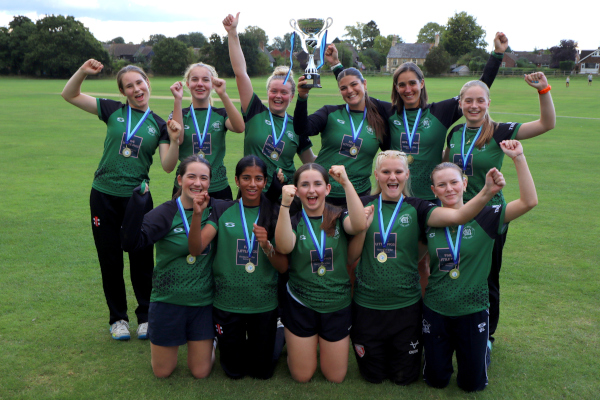
After 5 seasons of Regionals, the Final Final ended in a deluge of rain with a win by 27 runs for Sunrisers on DLS.

Champions 🏆

CRICKETher (@crickether.bsky.social) 2024-09-21T15:42:01.085Z

The team that won no 50-over games in 2020; none in 2021; and none in 2022 – changing captains and coaches along the way – started to turn things around in 2023, getting their first RHF Trophy win against reigning champions Vipers on the opening day of the season. But it wasn’t until they appointed their 4th captain at the back end of 2023 that the gears really began to shift.

Grace Scrivens was just 19 when she was appointed captain in September 2023, but had already skippered Kent and England A. Leaders like Scrivens don’t come along very often – the last one that came from Essex caused the Romans a bit of bother back in AD61, burning Colchester to the ground in the process. Fortunately for the rest of us, Scrivens kept her warfare on the cricket pitch, with Sunrisers winning their last 4 games of the 2023 season to finish in 4th place, missing out on a semi-final place by just 5 points.

To say that ‘The tide had turned’ however would not be accurate – it would imply a degree of inevitability which in reality did not exist. In the group stages Sunrisers only just won more games than they lost – winning 7 and losing 6, and scraping into the semi-finals at the last gasp. But what they did do was win the games that mattered – the final ‘must-win’ group game against Vipers; a tough semi-final versus Diamonds; and now the final against Stars. Those are the games that you win by believing you can win; and that comes from leadership.

Of course, leadership alone isn’t enough – you have to back that up on the pitch as well, and Scrivens did so today – bowling 8.2 overs  at an Economy Rate of 2.5 and then adding a cool, calm 39* before the rains came to finish the game. But in neither case was Scrivens quite ‘leading from the front’. Asked about her style of captaincy following the trophy presentation, she had this to say:

“You’ve got to back your players and try and build good relationships with them, set roles and stick with them. It’s about sticking with players, and then they come out and deliver. Giving belief into players and trusting in them.”

She did that today, with Cordelia Griffith – allowing her to take the initiative from the moment she entered the fray in the second over.

Stars 212 v Sunrisers 121-3 (T: 95) #RHF

CRICKETher (@crickether.bsky.social) 2024-09-21T15:23:33.915Z

Griffith reached 50 having faced twice as many balls as Scrivens, with the captain happy to turn over the strike to the player in form, putting Sunrisers well ahead of the rate required to maintain a “lead” on DLS, even if they lost a couple of wickets, which they ultimately did.

Remarkably, Griffith said afterwards that she wasn’t even aware that rain was threatening: “I had no idea rain was coming – it just so happened that I was given enough balls to put away and get ahead of the rate early.” You can bet that Scrivens knew though – the DLS par was after all literally writ-large in front of their faces, on the big electronic scoreboard in the corner of the ground. But again, that’s true leadership – Scrivens wasn’t shouldering the strike, but she was carrying the responsibility of worrying about the rain and keeping that from her partner so that she was free to play her game without those worries.

Another crucial player for Sunrisers, both today and through the season, was Lissy MacLeod. MacLeod has been around the block a few times – she won the first ever Kia Super League with Vipers, back in 2016 (and the second with Western Storm the following year) and has now added a winner’s medal in the final RHF Trophy, 8 years later. The weight of runs she scored this season (just over 200) might not be up there with Scrivens (553) or Griffith (420); but without the 50 she made in the de-facto quarter-final against Vipers, Sunrisers would not even have been here.

Equally, a 12 not out today from Macleod might not seem much, but at the stage she came in the most important things were a) support Scrivens, the set batter; and b) not get out, which would have made the DLS a lot closer. And she did both (a) and (b).

With the ball, both Kate Coppack and Jodi Grewcock finished the tournament with 19 wickets for Sunrisers; with the former starring today, getting a bit of swing early on, and a little (just enough) bite off the pitch later, to take 4-27. Getting rid of Alexa Stonehouse, and newly capped England player Paige Scholfield early-doors, combined with the run out of Bryony Smith (which goes down on the scorecard as ‘Run Out (Villiers)’ but should really be ‘Run Out (Bryony Smith)’ such was her own culpability) meant that the big hitters in Stars’ lineup – the ones that could have got them to a much more intimidating 250+ – were eliminated from the equation. Alice Davidson-Richards did a magnificent job, and was rewarded afterwards with the Player of the Tournament medal from the PCA’s MVP computer, but she is the anchor not the cannon, so without the big hitting going on around her, Stars ended up well short of par.

Stars 212 v Sunrisers #RHF

CRICKETher (@crickether.bsky.social) 2024-09-21T12:22:25.198Z

Stars will no doubt lament that if the rain hadn’t come, they could have… would have… should have… worn Sunrisers down, and might have been able to bowl them out, which is realistically what they’d have needed to do – the required rate at 25 overs was under 4, so Sunrisers would have made it unless they’d been dismissed. But… them’s the breaks – the rains came, leaving the players watching puddles forming from the dressing room balcony before officials finally confirmed the abandonment and the result. The yelps of delight from the Sunrisers players could be heard from across the ground in the press box. They might not have been the best team through the season, but they won the games that mattered. That’s how competitions work, and for that reason their joy was thoroughly deserved.

LONG READ: T20 Performances – Who’s Hot & Who’s Not

By Josh Cockburn

While England men seem to pick their teams primarily on height and vibes, the increased use of data in cricket means that we do have a lot more information that we can rely on to assess players. Of course there are lies, damned lies and statistics and you need to watch games not just scorecards and spreadsheets to judge players, but over time I’d rather have the batters with the best strike rates not the best looking cover drives.

I have combined all performances from the Women’s Hundred, WBBL, WPL and CWPL as well as international matches played by England, Australia, India, West Indies, South Africa and New Zealand in the last 12 months (from August 2023 to August 2024). I’ve not included Pakistan, Bangladesh or any other country with no representation in those leagues as we only have their international averages which are easily available. I’ve not done Sri Lanka either, but I have done Chamari Athapaththu given the amount of cricket around the world she has played.

I’ve not included the Charlotte Edwards Cup, WNCL, SuperSmash or any other leagues which are overwhelmingly competed for without high quality overseas players. There are some issues with comparing between leagues – the WPL was considerably faster scoring than the CPL, but broadly speaking the standards are similar – the CPL might have had the weakest overseas player contingent, but the international players who did compete there didn’t do substantially better there than they did in the other leagues – because it was lower scoring the bowlers tended to improve their figures while the batters saw theirs deteriorate. It’s less useful for analysing players who haven’t played international cricket and only played in one franchise league – especially those who did very well in that league like Lauren Smith or Amy Edgar in the WBBL or Freya Davies in the Hundred.

For the international data I’ve included all players who have batted or bowled at least 12 times or though I’ve included a few players in the national discussions with slightly less appearances.

England

SquadInningsRunsBallsAvgSR
S Ecclestone1915310613.91144.34
D Gibson2635325120.76140.64
A Jones3658542520.17137.65
D Wyatt2257742527.48135.76
N Sciver-Brunt2096773153.72132.28
H Knight40100580338.65125.16
M Bouchier3872259219.51121.96
S Dunkley3149142116.93116.63
A Capsey46104692423.24113.20
B Heath2322520111.25111.94
F Kemp181311208.73109.17
C Dean1313012614.44103.17


Contenders


P Scholfield819013827.14137.68
C Griffith101007710.00129.87
T Beaumont2553144922.13118.26
G Scrivens815713919.63112.95
G Adams1310111211.2290.18
H Armitage862697.7589.86
B Smith201922209.6087.27
SquadInningsBallsRunsWicketsAvgER
S Glenn295775654113.785.88
S Ecclestone286126684016.706.55
L Smith224705162818.436.59
A Capsey212963431621.446.95
C Dean275166042623.237.02
H Knight13150180536.007.20
L Bell214165002619.237.21
N Sciver-Brunt284916092524.367.44
D Gibson355887602530.407.76
F Kemp12173271930.119.40


Contenders


F Davies81401321112.005.66
R Slater8105114522.806.51
L Filer132472761027.606.70
M Villiers9132149624.836.77
K Levick71291541015.407.16
So. Smale9151181920.117.19
C Pavely7135162918.007.20
G Adams15188227925.227.24
E Gray10135164918.227.29
R MacDonald-Gay9140175821.887.50
H Baker7110141435.257.69
G Davis81401801018.007.71
E Arlott71351851116.828.22
M Corteen-Coleman8135186631.008.27
K Cross10170235829.388.29
K Gordon8140194364.678.31

England’s batting problems are fairly obviously at the top of the order. Wyatt’s figures are fine, but neither Bouchier or Dunkley have great figures – you’d probably be tempted to go with Bouchier as the marginally faster scorer. Tammy Beaumont has very similar figures to them both, I guess England have gone for Dunkley’s room to improve over Beaumont’s experience. Winfield-Hill had a poor 12 months, and doesn’t look like she’s in line for a comeback. Then Alice Capsey at 3 where a player renowned for fast scoring has spent a year with the lowest SR of any front line batter. England really need her to rediscover some of that uninhibited hitting as they don’t need solidity from number 3, they need dynamism.

Sciver-Brunt’s brilliance goes without saying at number 4. Knight’s had the best 12 months of her T20 career in my opinion, able to score fast as well as heavily. Previously you’d be reassured by her coming in at a crisis but not excited by her coming in with the run rate needing boosting, but she’s fulfilled both roles this year. From those who haven’t been selected, Paige Scholfield has much the best record and probably should be next in line for a batting place.

Amy Jones has done really well and has exactly the sort of figures you’d hope for from your number 6. For the all rounder slot, Danni Gibson outperforms Freya Kemp by a mile in batting terms (we’ll come to bowling shortly).

Also worth noting is that Ecclestone’s SR is one of the best in the world. Stats can be deceiving, and we’ve seen occasions when she’s been promoted and she’s looked a bit hapless, but her boundary striking ability shouldn’t be underestimated – she clearly doesn’t herself judging by when she’s come in to bat for Originals this summer.

Looking at the bowling, it’s clear why England have gone spin heavy, and it’s not just anticipating spin friendly pitches in Bangladesh then UAE. With the exception of Davies and Filer (neither of whom made the squad), basically every spinner that England might choose from (including Georgia Adams and Katie Levick who aren’t really part of the conversation as well as Capsey’s part-time spin) is more economical than the seamers. This isn’t something inherent to T20, brought about by fast bowlers bowling more in powerplays and at the death or something, it’s not the case for India or Australia. For whatever reasons, England’s spinners are better than their seamers at T20 currently.

Ecclestone and Glenn have world class figures – especially Glenn who is in the top 5 in the world for both average and economy. I don’t think Glenn gets enough recognition for the quality of her performances, hopefully she can demonstrate it on a global stage at the World Cup. Linsey Smith clearly outperforms Charlie Dean for the third spinner. Dean being an off spinner may count ahead of playing a second left armer, but Capsey actually has better figures than Dean if England just need an offspin option for particular matchups.

As for the faster bowlers, Davies was very economical for the Fire in the Hundred, it’s a shame she didn’t play any international cricket or other franchise leagues to give us more data to judge her current level, and she didn’t have a great Charlotte Edwards Cup. Otherwise, in the choice between Lauren’s for the new ball, Bell has a much better average than Filer, and although Filer has the better economy rate you can see why England would value Bell’s ability to get wickets early on. Filer would clearly be a useful option to have and I’d be very surprised if she hadn’t been picked if a 16 player squad had been chosen. Kate Cross can’t have any complaints at her exclusion on her T20 form this year. Sciver-Brunt is a bit more expensive than you’d want as a second seamer, assuming she’s fit to take on that role. England had better hope she is, as neither Gibson or Kemp have figures that inspire confidence, both averaging over 30 this year and with high economy rates, (stratospheric in Kemp’s case) as well as their own fitness issues. Spin to win for England then.

Australia

SquadInningsRunsBallsAvgSR
G Harris3079551131.80155.58
G Wareham3157540926.14140.59
A Healy2054339828.58136.43
B Mooney421397104843.66133.30
A Sutherland2857343323.88132.33
P Litchfield3776858824.77130.61
E Perry401297100741.84128.80
T McGrath3062452524.96118.86
A Gardner3966657718.50115.42
A King1613212314.67107.32


Contenders


L Harris121226010.17203.33
J Jonassen3346235214.00131.25
M Lanning3078564127.07122.46
K Mack1545238130.13118.64
G Redmayne2758956023.56105.18
SquadInningsBallsRunsWicketsAvgER
K Garth245075481732.246.49
M Schutt265646123020.406.51
A Sutherland377177804019.506.53
S Molineux133003281818.226.56
A King234645292620.356.84
E Perry263654193113.526.89
G Wareham4384110093925.877.20
A Gardner4286610815121.207.49
T McGrath222913771722.187.77
G Harris17191252736.007.92


Contenders


L Smith81501461113.275.84
A Wellington244494583313.886.12
L Cheatle214434732816.896.41
A Edgar152863222016.106.76
H Graham213965032520.127.62
J Jonassen387809705218.657.46

For Australia, the two main talking points have been the inclusion of Brown and Vlaeminck despite practically no top-level cricket in the last year and the exclusion of Jess Jonassen. As this article is primarily a statistical analysis of top-level cricket in the last year, I can’t assess Brown and Vlaeminck’s inclusion except to note that at their best they are very dangerous bowlers and the do allow Australia that fabled point of difference. More crucially, the fact Australia have 6 other bowlers who conceded less than 7 runs an over in the last year, plus Wareham, Gardner and McGrath means that they have plenty of alternatives if the gamble doesn’t pay off.

On statistical grounds, Jonassen can’t really complain about her omission. Her economy rate is 23rd among all the Aussie bowlers in the sample, below 7 bowlers in the squad, and only above Gardner and McGrath. Her average is much better – only worse than Perry and Molineux in the squad, but only marginally better than her rivals for a place in the squad. Wellington has a much better claim to be in the squad/team for her bowling and although her batting isn’t as good, it’s perfectly fine for a number 8 or 9.

For the batting, Healy and Mooney are certain of their places and both had good seasons. Perry has had a really strong season too, speeding up her scoring while maintaining a high average. Depending on how many all-rounders Australia play, they may only choose one of Grace Harris or Litchfield. If that is the case then I suspect they might go for the younger player, though Harris probably has been the outstanding T20 batter of the year, one of only two batters to have a SR of over a run and a half per ball, while maintaining a decent average of 31. The only batter with a higher SR was her sister, Laura managing over 2 runs a ball which basically puts her on a different level to the rest of the women’s game at the moment. However, Laura Harris only just averaged over 10 and that’s not enough runs to get picked however fast they are scored, especially for Australia. There’s no-one else from out of the squad who has produced the sort of elite performances that would warrant inclusion as a batter – even Meg Lanning.

What I would question is whether either Tahlia McGrath or Ashleigh Gardner is worth their places in the team. Both are top all rounders of course, but in the past year they have been substantially out- performed by Perry, Sutherland and Wareham in both batting and bowling. McGrath is vice-captain and Gardner obviously has masses of credit in the bank so I’d be surprised if they don’t play, but on form I think Australia’s team should have looked something like this (assuming they include one of Brown or Vlaeminck). Cheatle and Schutt basically have identical economy rates over the year, but Cheatle has a better average.

Healy
Mooney
G Harris
Perry
Litchfield
Sutherland
Wareham
Wellington
Molineux
Cheatle/Schutt
Brown/Vlaeminck

India

SquadInningsRunsBallsAvgSR
R Ghosh2761643532.42141.61
Sh Verma3089464934.38137.75
S Sajana101178619.50136.05
J Rodrigues2866351236.83129.49
D Sharma2157244971.50127.39
D Hemalatha1530124025.08125.42
S Mandhana3599980831.22123.64
Y Bhatia924019726.67121.83
H Kaur3586373831.96116.94
P Vastrakar161001179.0985.47


Contenders


K Navgire81107513.75146.67
A Kaur11896617.80134.85
S Meghana616814933.6112.75
S Sehrawat710810615.43101.89
SquadInningsBallsRunsWicketsAvgER
D Sharma377978204418.646.17
R Yadav224384883215.256.68
R Singh255226002128.576.90
P Vastrakar295426303120.326.97
S Patil203814572915.767.20
A Sobhana132222671616.697.22
A Reddy122433041127.647.51
H Kaur11107136915.117.63


Contenders


T Sadhu9162147916.335.44
T Kanwar122702831125.736.29
S Pandey143093631327.927.05
S Ishaque122102701419.297.71
R Gayakwad10203265929.447.83
M Singh8144242548.4010.08

For India, Ghosh and Verma are their fastest batters and both average over 30 so they are obvious selections. Deepti has had an astonishingly good year in franchise cricket averaging over 100 and scoring at 134. International form has not been nearly as good, dragging her down to a mere average of 71 and SR of 127, but that’s still elite figures – it is bemusing that no-one picked her up in the WBBL draft. The rest of their batting is all very similar with SRs in the 120s (compared to the Aussies who are mainly in the 130s). Harmanpreet has only managed 116.94 so it’s less surprising she was passed over in the WBBL, though Mandhana is only slightly quicker. There’s not many alternatives out of the squad who have performed better. Kiran Navgire might have been worth a place as she scored at 146 even with a low average.

Among the bowlers, Sadhu is one of a handful of bowlers to have conceded less than a run a ball in T20 this year, and probably deserves a place. Tanuja Kanwar also put up some very good figures, but the competition for places among Indian bowlers is fierce. Deepti is world class again. Radha Yadav, Renuka Singh and Pooja Vastrakar all went at under 7 rpo, with Yadav having the best average. Patil and Sobhana were more expensive but still have very good averages. Probably the luckiest bowler to get in is Reddy but there’s not a huge queue of Indian seamers behind her – indeed Meghna Singh who might have been in the running in the past had a very poor tournament for Gujarat. Shihka Pandey could have come in for her though. India’s main issue is that (Deepti apart) they lack allrounders. Harmanpreet is the only batter who has bowled much this year, and only Vastrakar of the bowlers has had much batting. Vastrakar has traditionally been called upon when a bit of tail end hitting is required but she’s had a very bad season with the bat, averaging below 10 and scoring at below a run a ball.

West Indies

SquadInningsRunsBallsAvgSR
H Matthews271403114934.22122.11
D Dottin511910923.80109.17
S Taylor921621127.00102.37
A Alleyne3011412110.3694.21
Q Joseph1015116115.1093.79
S Campbelle2824326022.0993.46
C Henry2149629.8079.03
C Nation15941249.4075.81
SquadInningsBallsRunsWicketsAvgER
Q Joseph10192173919.225.41
A Fletcher112142351614.696.59
A Alleyne152682961519.736.63
C Henry11144159722.716.63
H Matthews4794911245620.077.11
K Ramharack132462951029.57.2
S Connell111622211022.108.19
Z James996151275.59.44

You don’t need recourse to statistics to know the West Indies have problems with batting – but they do lay bare how deep the problems are. Taking Matthews out of the equation (and while her figures are fine they are a bit short of the best batters globally), none of their batters who have played enough qualifying innings manage to score at over a run a ball, and Campbelle is the only batter among them to average over 20. No surprise then that they are hoping Taylor and Dottin can roll back the years. The bowling looks much better, Fletcher and Joseph have fine figures, and Alleyne, Henry, Matthews and Ramharack are reasonably economical. The only qualifier is that a lot of those figures come from the low scoring CPL plus a middling international calendar (5 matches vs Pakistan, 3 apiece against Australia and Sri Lanka), only Matthews has been playing in the other leagues.

New Zealand

SquadInningsRunsBallsAvgSR
S Devine4399077126.05128.40
J Kerr1388709.78125.71
A Kerr3594076832.41122.40
I Gaze1011110213.88108.82
S Bates3158057920.00100.17
M Green1519019919.0095.48
B Halliday1116217416.2093.10
SquadInningsBallsRunsWicketsAvgER
F Jonas142943391130.826.92
E Carson7132162723.147.36
J Kerr11230292473.007.62
A Kerr346998963029.877.69
L Tahuhu111802581025.808.60
S Devine345367732728.638.65
H Rowe9114181536.209.53

New Zealand have obviously slipped in recent years with their great players retiring or declining and not being adequately replaced. Devine and Amelie Kerr both have respectable figures, but neither can manage the 130 SR that seems to be the elite level for women’s T20 at the moment. Bates sadly has dropped to mediocrity with a SR of just a run a ball and would surely be in line for being replaced was anyone else doing better, but the three other qualifying NZ batters (Gaze, Green and Halliday) all average sub-20 and only Gaze scores at (marginally) above a run a ball. Only Jonas averages under 7 rpo among the bowlers and Tahuhu, Devine and Rowe all average above 8.5. Carson and the Kerr sisters return respectable economy rates in the 7po range but nothing that would frighten the opposition. Jess Kerr may want to claim bragging rights for being above her sister for both SR and ER.

South Africa

SquadInningsRunsBallsAvgSR
N De Klerk1315411325.67136.28
C Tryon3359246521.93127.31
M Kapp3672056824.83126.76
L Wolvaardt421378112637.24122.38
A Bosch1232626727.17122.10
T Brits1652744335.13118.96
S Luus1317615919.56110.69
Unavailable


L Lee1340928037.18146.07
M Du Preez1738230923.88123.62
SquadInningsBallsRunsWicketsAvgER
M Kapp398258033622.315.84
C Tryon345716342822.646.66
N Mlaba17300353939.227.06
M Klaas142483051030.507.38
N De Klerk142693571327.467.96
T Sekhukhune7132186726.578.45
A Khaka102123093103.008.75


Unavailable


S Ismail296406193517.695.80

South Africa with all their players available would be a very dangerous side. Kapp is probably the best T20 quick bowler in the world right now, averaging 22 and conceding less than a run a ball, but there’s not much penetration elsewhere. Mlaba, Tryon and Klaas are economical enough, but don’t take enough wickets (Tryon’s figures got a big boost by taking 8 wickets for 66 runs in the WCPL) while de Klerk, Sekhukhune and Khaka are all pretty expensive. Add Ismail’s 17.69 average and 5.8 ER and things suddenly would look much better.

In batting, Wolvaardt averages 37 and has shown improvements in scoring quicker but a strike rate of 122 makes her a good anchor, but needing runs to come fast at the other end. However, only de Klerk scored at faster than 130 with Tryon, Kapp and Bosch all in the 120s. Luus struggling with a SR of 110 and a sub 20 average doesn’t help. Getting Lizelle Lee back who averaged 37 with a SR of 146 in the WBBL surely would.

Conclusion

Now putting all the data together to find the most effective players in world T20 over the last year. Players in bold are in the World Cup squads.

Best Strike Rate


BatterNatInnsRunsBFAvgSR
1L HarrisAus121226010.17203.33
2G HarrisAus3079551131.80155.58
3L LeeSA1340928037.18146.07
4S EcclestoneEng1915310613.91144.34
5R GhoshInd2761643532.42141.61
6D GibsonEng2635325120.76140.64
7G WarehamAus3157540926.14140.59
8Sh VermaInd3089464934.38137.75
9A JonesEng3658542520.17137.65
10A HealyAus2054339828.58136.43
11N De KlerkSA1315411325.67136.28
12D WyattEng2257742527.48135.76
13H GrahamAus1927620421.23135.29
14C KnottAus2031523319.69135.19
15B MooneyAus421397104843.66133.30
16A SutherlandAus2857343323.88132.33
17N Sciver-BruntEng2096773153.72132.28
18J JonassenAus3346235214.00131.25
19P LitchfieldAus3776858824.77130.61
20J RodriguesInd2866351236.83129.49

Dominated by Australians who fill half the top 20, England have 5 representatives, India 3.

Best Average


BatterNatInnsRunsBFAvgSR
1D SharmaInd2157244971.50127.39
2N Sciver-BruntEng2096773153.72132.28
3B MooneyAus421397104843.66133.30
4E PerryAus401297100741.84128.80
5H KnightEng40100580338.65125.16
6L WolvaardtSA421378112637.24122.38
7L LeeSA1340928037.18146.07
8J RodriguesInd2866351236.83129.49
9E VillaniAus1232427936.00116.13
10T BritsSA1652744335.13118.96
11A AthapaththuSL511615131735.11122.63
12S VermaInd3089464934.38137.75
13H MatthewsWI471403114934.22122.11
14R GhoshInd2761643532.42141.61
15A KerrNZ3594076832.41122.40
16H KaurInd3586373831.96116.94
17G HarrisAus3079551131.80155.58
18S MandhanaInd3599980831.22123.64
19K MackAus1545238130.13118.64
20T WilsonAus1332327329.36118.32

This is much more widely spread around geographically and is probably closer to what most people would say are the best batters in women’s cricket, but it is debatable how useful it is to a T20 team to average over 30 if you are scoring at under 120. The best batters at the moment, appearing on both lists are Grace Harris, Richa Ghosh, Shafali Verma, Beth Mooney, Nat Sciver-Brunt and Jemima Rodrigues.

Best Economy Rate


NatInnsBallsRunsWktsAVGER
1S IsmailSA296406193517.695.80
2A WellingtonAus295635463814.375.82
3M KappSA398258033622.315.84
4S GlennEng295775654113.785.88
5D SharmaInd377978204418.646.17
6A AthapaththuSL437457783721.036.27
7T KanwarInd122702831125.736.29
8S BatesAus14312330566.006.35
9L CheatleAus214434732816.896.41
10K GarthAus245075481732.246.49
11M SchuttAus265646123020.406.51
12A SutherlandAus377177804019.506.53
13S EcclestoneEng286126684016.706.55
14S MolineuxAus133003281818.226.56
15L SmithEng224705162818.436.59
16J BarsbyAus12168186726.576.64
17C TryonSA345716342822.646.66
18R YadavInd224384883215.256.68
19L FilerEng132472761027.606.70
20A EdgarAus152863222016.106.76

The depth of Australian cricket illustrated here, with 5 bowlers here who didn’t make the squad, in addition to 4 who did. Again England come in second with 4 bowlers.

Best Average


NatInnsBallsRunsWktsAVGER
1S DayAus142943372712.486.88
2E PerryAus263654193113.526.89
3S GlennEng295775654113.785.88
4A WellingtonAus295635463814.375.82
5R YadavInd224384883215.256.68
6S PatilInd203814572915.767.20
7A EdgarAus152863222016.106.76
8H DarlingtonAus132643652216.598.30
9A SobhanaInd132222671616.697.22
10S EcclestoneEng286126684016.706.55
11L CheatleAus214434732816.896.41
12S IsmailSA296406193517.695.80
13S MolineuxAus133003281818.226.56
14L SmithEng224705162818.436.59
15D SharmaInd377978204418.646.17
16J JonassenAus387809705218.657.46
17L BellEng214165002619.237.21
18S IshaqueInd122102701419.297.71
19N HancockAus173734462319.397.17
20A SutherlandAus377177804019.506.53

A bit of a theme developing as Australia dominate once more with 10 representatives, 7 of whom don’t make the squad. Averaging under 20 makes you a very useful bowler whatever your economy rate, but only Darlington and Ishaque went at over 7.5 an over.

The elite performers, appearing in both lists, Shabnim Ismail, Amanda Wellington, Sarah Glenn, Deepti Sharma, Lauren Cheatle, Annabel Sutherland, Sophie Ecclestone, Sophie Molineux, Linsey Smith, Radha Yadav and Amy Edgar.

ENGLAND v IRELAND – 2nd T20: They Think It’s Orla Over!

Despite battling a bleeding hand, Orla Prendergast took two wickets and then hit a wonderful 80 off 51 balls to give England a big black eye in the final match of their tour of Ireland – the hosts winning with 1 ball to spare at Clontarf Cricket Club in Dublin.

England 169-8 v Ireland 170-5 #IREvENG

CRICKETher (@crickether.bsky.social) 2024-09-15T16:47:05.805Z

Having initially cut her hand playing for the Blaze in the RHF Trophy in England earlier in the month, the wound has literally been a running sore for Prendergast all week, and today it opened up again while she was fielding. With blood pouring out of her palm, the umpires insisted that she received treatment, and there was a lengthy delay whilst the medical staff patched her up before she was able to resume bowling.

To then come out and bat the best part of 20 overs showed her fighting spirit; to win the game for Ireland showed her class as a cricketer. Prendergast hit 13 fours, the majority through extra cover and mid off, manipulating the field as she went.

England 169-8 v Ireland 170-5 #IREvENG

CRICKETher (@crickether.bsky.social) 2024-09-15T16:48:04.384Z

The key to Ireland’s victory was the 17th over – the biggest of the game – bowled by Charis Pavely. Going into the over, Ireland needed an increasing unlikely sounding 42 from 24 balls. After hitting a 4 off the second ball, Leah Paul turned the strike over to Prendergast with a single, and Prendergast stepped up to strike the last 3 balls of the over for boundaries. The first of those deliveries was a gimmie from Pavely – too short and too wide; but the second was only turned into a half-volley by brilliant footwork from Prendergast; and the third was just a very clean strike down the ground. Suddenly the ask was a much more realistic sounding 25 from 18, and the game was afoot.

Ireland didn’t make it easy for themselves though – keeping the fans watching on free-to-air TV on the edge of their sofas, Prendergast was bowled trying to cut a yorker from Kate Cross, leaving it once again a contest between Mady Villiers bowling the final over for England, and Ireland’s tail, just as it had been in Belfast when Ireland won the 3rd ODI.

Villiers stepped up, just as she had done earlier in the week, by applying the KISS principle – Keep It Simple, Stupid! Targeting the stumps, keeping her head as both Sarah Forbes and Ava Canning tried to charge her, she had them both bowled, leaving Ireland still needing 2 off 2, with the new batter – Christina Coulter-Reilly – at the crease.

Coulter-Reilly pulled the penultimate delivery straight back to Villiers with no power in the shot, and then set off for the single, having presumably been instructed to “Just Run”. Then, in echoes of the conclusion of the Sunrisers game at Chelmsford in 2022, which finished in a win for Western Storm after a wild overthrow from Villiers went for 4 off the final ball, Villiers hurled the ball at the stumps – it missed, there was no one backing up close enough to cut it off, and the crowd roared a roar far in excess of their actual number (a few hundred) to urge the batters to turn back for the second run and win the match.

Despite her frustrations, thumping the ground in disappointment, Villiers probably did the right thing – England needed the wicket if they wanted to win the game; and besides, England were only still in it thanks to the two wickets she had taken in the two previous deliveries. That’s the bit England should take note of, and as I wrote yesterday, Villiers should still have an England future based on her performances this tour.

For a couple of others, it looks likely that this was their final game for England. Paige Scholfield finished the tour on which she made her debut on a little high, with her highest score for her country – 34 off 21 balls – and if she finishes her career with just those 5 England caps, it is still 5 more caps than I (or most other people) ever got – she should be proud. Ditto Georgia Adams, who looked more settled today, making 23 off 15, as she made her second (and again presumably, final) appearance in an England shirt.

I continue to think that Seren Smale has more caps in front of her than anyone else on this tour, but she had an error-strewn day behind the stumps which made us once again realise how much we’ll miss Amy Jones when she hangs up her gloves. For almost 20 years, England have gone into most matches with the best wicketkeeper in the world – first Sarah Taylor, then Jones. Whether her successor is Smale or Bess Heath, or Ann Nicola Other, they just aren’t going to be that, at least at first, and we’re all going to have to get used to it!

But we shouldn’t lose sight of the fact that a tough defeat to take for England was a glorious moment for Ireland, and I genuinely think their players reacted with more joy to the win than Australia’s did when they won the last T20 World Cup! They’ve taken a couple of beatings recently – from Scotland in the T20 World Cup qualifier (denying them a spot on the plane to the UAE), and from England in the 2nd ODI and yesterday’s T20; but they have bounced back bravely, come out fighting, and come out winners again today. As I write this, I can still hear whoops of celebration coming from the nearby pavilion bar at Clontarf Cricket Club. They are thoroughly deserved.

The CRICKETher Weekly – Episode 234

This week:

  • Ireland’s famous win
  • Have Bryony Smith & Seren Smale earned call-ups to the main England squad?
  • Vipers out of the RHF: has Charlotte Edwards lost her touch?
  • Our views on the 2025 English schedule

ENGLAND v IRELAND – 1st T20: Ireland Battered By Brilliant Bryony

England squished Ireland in the first of two T20s at Clontarf Cricket Club in Dublin, winning by 67 runs as they bowled Ireland out for 109, having earlier posted 176.

Ireland v England at Clontarf

CRICKETher (@crickether.bsky.social) 2024-09-14T14:53:45.271Z

The day began with another lengthy cap ceremony, including a debut for 30-year-old Georgia Adams. Exactly 4 years ago, after Adams had scored a record 154 in a match for Southern Vipers v Western Storm, I wrote the following:

Georgia “Gads” Adams’ 154 not out for the Vipers yesterday against the Storm, was one of the great innings in the history of domestic women’s cricket. It was the highest score ever made in top-level domestic cricket in England by an uncapped player, and although it is not beyond the realms of possibility that Gads will go on to play for England, she’ll be 27 next month, so it does look as though her appearances for England Academy will be as close as she’ll come to wearing an England shirt.

Not for the first time… and surely not for the last… I was wrong!

Adams’ appearance today therefore marked the end of a long journey, from coming up through Sussex where her father Chris had become something of a legend, through a stint at Lightning in the KSL days, then on to Vipers, winning 3 RHF Trophies and 2 Charlotte Edwards Cups as captain in the regional era. She won’t be adding a 6th regional trophy to that list – whilst she was out on the field for England, Vipers were losing their RHF Trophy semi-final to South East Stars – but she has now at last got the England cap that was the one thing missing from her CV.

The other debutantes were Paige Scholfield, who of course had made her ODI debut last weekend in Belfast, and Charis Pavely and Seren Smale, playing their first games for England, having both represented England U19s in the U19 World Cup in South Africa just last year.

Both had decent outings, indicating promising futures ahead of them. Bess Heath is fortunate that England’s squad for the World Cup was effectively picked months ago, because on form right now, I’d take Smale over Heath as a keeper-batter backup for Amy Jones. Smale made 25 off 19 balls, and kept tidily; whilst Pavely took 3-19 – albeit with some fortune in the case of the wicket of Rebecca Stokell, who would surely have been reprieved on review if DRS had been available – given out caught behind, but with replays showing clear daylight between bat and ball as it went past the edge.

But the star of the day was Bryony Smith, who got England off to a massive start with a 24-ball 50 – the (joint) 14th fastest of all time. Smith admitted afterwards that she had been disappointed not to get a game in the ODI series, as England persisted with a woefully out-of-nick Emma Lamb. But handed her opportunity today, Smith came out with all guns blazing. There are players who hit the ball sweeter, but there are few who hit it harder, and when she comes off like she did today, she can take the game away from you in a heartbeat.

England 176 v Ireland #IREvENG

CRICKETher (@crickether.bsky.social) 2024-09-14T15:04:30.527Z

Tammy Beaumont was largely a spectator through the powerplay – Beaumont was on 8 as Smith passed 50 in the 6th over – as England set off at more than 10 an over, probably putting the game beyond Ireland within half an hour of the start. Smith did get badly dropped by Gaby Lewis on the ring, and a better fielding team might have cut off some of the drives down the ground; but Ireland were not that team, and Smith punished them for it over and over, to the tune of 12 fours. Inevitably, she was eventually caught at cow corner, but she’d done the job she came here to do, and surely sent notice to England that should a gap open up at the top of the order, her hat is in the ring.

At one stage, it looked like England were on for a really big score; but a poor Late Middle phase held them back, as they lost wickets, and were eventually bowled out off the final ball. Despite her heroics of 4 years ago, Georgia Adams is more of a bowler who bats a bit these days, and she looked slightly off the pace with the bat, not only compared to Smith, but also to Smale and Mady Villiers, who has had a decent last couple of games on this tour.

Villiers contributed 35 off 15 to get England back on track towards the death; and later took 1-9 with the ball. She would probably need to make another step up with her batting if she’s ever to become an England regular, but the role she ends up occupying could perhaps be the one Georgia Elwiss occupied for years – that of specialist travelling reserve, especially given that she remains one of the best fielders in the world, so would be a useful player to have on the bench for fielding sub duties.

England 176 v Ireland 109 #IREvENG

CRICKETher (@crickether.bsky.social) 2024-09-14T16:28:03.421Z

Ireland have never chased anything like 176 in a T20 – their best effort being 152 v Bangladesh in 2018 – so the result felt like a foregone conclusion, and so it proved with only Orla Prendergast (52) and Ava Canning (25) reaching double-figures. Prendergast really does look a cut above everyone else, and is perhaps the most talented player Ireland have produced since… well… since anyone – she’s Kim Garth with batting, and if she can carry this form into WBBL then the world is her oyster. At 22, she could still go down the route Garth took, and try to qualify for Australia or England; but with Ireland now a fixture in the ICC Championship, it would mean missing out on Ireland opportunities that Garth just wasn’t getting when she was pondering that move 7-or-8 years ago, and I’m not convinced she needs to in order to have a fulfilling career, so I hope she sticks with Ireland.

Good as she is though, she can’t do it all herself, and with little support, Ireland subsided to 109 all out. England were efficient rather than brilliant with the ball. Wong did bowl a lovely wobble-seamer which moved a mile off the pitch to dismiss Gaby Lewis; but Laurens Bell and Filer won’t be having sleepless nights over her performance, or that of Mahika Gaur, who looked fine, but might have been better coming back into domestic cricket rather than the heat of a full international, having (I think) slightly tweaked her action whilst she’s been away.

With the game being shown live on free-to-air TV, on the Irish equivalent of Channel 4, it was important for the game as a whole that Ireland acquitted themselves well, and they didn’t entirely do that, but they didn’t totally embarrass themselves either. A slightly better day at the office tomorrow would be good though, as we return to Clontarf for the final match of this tour.

The Future of Domestic Women’s Cricket – Part II: Where are we?

By Andy Frombolton

Imagine you ran a small restaurant business and planned to expand. You might have a vision to have twenty or fifty restaurants across the UK in 5 years and a strategy for how to achieve your goal. But you’d also recognise that things won’t always go as planned and consequently you’d need to review progress and revise along the way.

Two factors: the public’s appetite for your product, and your ability to maintain standards as your business grows, will primarily determine how things turn out – hopefully better, possibly worse.

However, provided you’ve not expanded ahead of demand and you’ve maintained the quality (to keep existing customers happy), the end state will be a viable business. Conversely, if supply exceeds demand or if quality is compromised by being spread too thin then you risk the whole chain going bust, taking with it any viable sites and any loyal customer base.

In this example, for the entrepreneur to ordain exactly how many restaurants they’ll have in 2 years and where they’ll be – based on speculative future demand and requiring expansion beyond their hitherto-proven ability to maintain quality – would clearly be madness.

The ECB has mandated that there will be eight Tier 1 counties in 2025. Each will employ 15 full-time professionals. There will be 9 Tier 1 counties in 2026 and 10 in 2027. Can you see the problem?

In fact, the only thing which could make this scenario worse would be not to know (or to deliberately obfuscate) the current state of your business.

In my example, the aspiring restaurant owner will know how successful their business is. Beyond overall sales and profit figures, they will also understand how loyal their customers are, the impact and effectiveness of promotions, pricing flex points, etc.

Unfortunately, women’s cricket has very little equivalent data – and the ECB has prioritised positive optics and narratives over every opportunity to collect it. Marketing spin prevails to the exclusion of anything which challenges their messaging, notwithstanding that to plan effectively for growth obviously requires an honest and objective assessment regarding the current popularity of the women’s game.

Attendance at international matches? There were good crowds at many of the international matches, particularly at those venues with a tradition of strong support for women’s cricket. But, let’s be honest, ticket prices were much lower than for a Blast match (with thousands of free tickets also given away). The result may have been a great atmosphere and good optics – but the ECB has no idea as to what value these spectators place on attending these games.

Viewing figures? The ECB and Sky were eager to publicise record viewing figures for last year’s WAshes, but similar press releases haven’t been forthcoming for this year’s Pakistan and New Zealand series and it’s reasonable to assume they did less well.

Broadcast rights? Historically, the broadcasters haven’t had to pay for women’s cricket separately. This is beginning to change and ICC and several boards plan to run separate auctions for men’s and women’s cricket going forward. Having to pay for something which was previously ‘free’ (or almost free) will force broadcasters to put a price on the product – and these figures won’t be determined by good intentions but by a hard-nosed assessment of how much a broadcaster’s advertisers and subscribers will pay. Looking for positives, Viacom paid $112m for 5 years of the WIPL (although any read-across from the Indian market might be limited?) whilst, less encouragingly, FIFA hoped to get over $300m for the recent Women’s World Cup but in the end narrowly avoided broadcast blackouts when it settled for a figure around $50m.

The Hundred? This is the ECB’s principal platform for promoting women’s cricket. Virtually every game this year seemed to be accompanied by announcements for new record attendances at a women’s game. But viewing figures for the Hundred were down across both men’s and women’s games (except for the men’s final) – a dramatic 41% for the women’s matches on Sky (and 2% overall for the women’s games shown by the BBC but with the women’s final down 20%). A widely-touted explanation was the lure of the Olympics, but the Olympics were on throughout the day and evening and so this doesn’t explain the relatively-sharper decline in viewers for the women’s matches. Moreover, if this argument is true, it shows a worrying lack of loyalty amongst cricket spectators when presented with other options.

And, how accurately does the number of people in the ground halfway through the women’s game reflect an interest in the women’s game which could be monetised? A cynic might posit that you wouldn’t use a similar metric to determine the popularity of a men’s game. Surely a true fan wants to see every ball?

So, whilst there were unquestionably good numbers from the first ball of the women’s game at many grounds this year, many spectators arrived later. Why was this?

  1. Were they genuine fans of women’s cricket unable to make the start time?
  2. Were these people who enjoyed watching some of the women’s game and appreciated the skills on display, but watching the men’s game was the primary reason for attending?
  3. Compared to The Blast many fans have to travel further to Hundred host grounds and a single match (completed in under three hours) might be too short to justify the journey, whilst a double-header constitutes a ‘good day out’?
  4. Some might have no interest in the women’s game, other than as a backdrop to eating, drinking or meeting friends? Or they wanted to ensure they got to the ground in good time?

I obviously have no idea what the respective percentage for each category is, but more importantly nor does the ECB – nor seemingly does it want to. Because if they did, it would be easy to design a series of matchday scheduling / pricing permutations [combined with spectator surveys] to better establish “Where We Are Today” in terms of the fanbase for women’s cricket, their loyalty and their willingness to pay. The downside is that establishing these data points could be expensive, could result in some negative optics and would probably be opposed by both Sky and the host clubs who risk losing viewers and footfall respectively.

Some of the considerations could be:

  • Ticket prices for Hundred matches during the Commonwealth Games weren’t reduced – even though spectators only got to watch a men’s game. This created a cognitive anchor that the women’s game is a ‘free’ bonus.
  • Hundred tickets could be sold providing access to either both games or just the second game. (Obviously, a stadium couldn’t be cleared of people who only wanted to watch the first match.) This would thus allow a separate value to be assigned to the first match.
  • Grounds could host 2 men’s games or 2 women’s games (rather than the current double headers).
  • The women’s game could be played second more often. (Although past evidence suggests this impacts attendance and viewing figures especially for weekday games; reducing ticket revenue and impacting on-site food and drink sales, in addition to not looking good.)

Whilst these different permutations still wouldn’t generate a comprehensive data set, it would be far better than what we have today. And it would be real-life data, not PR nor the projections of a marketing consultancy, with no consequences for whether they’re right or wrong as to the popularity of the women’s game and the value which viewers and spectators assign to it.

Now, there’s talk of hosting double headers for the T20 Blast next year. (NB Whilst it would be possible to align the home teams, the women’s opposition would often be a different team.) Why do this? This would simply replicate the issues seen in The Hundred. At some stage, the women’s game needs to become financially sustainable – and core to this is growing a loyal fan base which is attractive to sponsors, advertisers and broadcasters. This is a chance for everyone who complains how the women’s game is currently marketed to come forward with their proposals. Women’s double headers? Weekend festivals (4 games over a weekend)? Selling the broadcast rights to a different company with a compelling vision for women’s sport? Focussing on the digital aspects and engaging with younger, new customers in a different way?

To end, let’s return to our example of the ambitious restauranteur.

It’s good to have dreams. And to aim to be better and bigger.

But it’s stupid to pre-ordain outcomes. Be flexible. Be good at what you do. Leave customers wanting more. Never lose control of quality control. Understand what differentiates you from your competitors. Don’t just copy another chain which offers a similar product. And (eventually) revenue must always exceed costs.

If you do all those things, the outcome will be the best it can be. A sustainable product with customers who love it.