STATS: Women’s International Championship Batting Rankings

Australia’s 3-0 series victory versus South Africa this week brings to a close the largest international cricket tournament ever staged – 84 matches* played over 2½ years – offering the perfect opportunity to pull-together some pretty definitive rankings for batsmen, bowlers and all-rounders.

There will be little surprise as to who tops the batting rankings – Wisden’s 2014 women’s award winner, Meg Lanning, who scored 5 centuries and another 5 fifties in the championship, amassing well over 1000 runs in total.

The good news for the opposition though is that if you get Lanning out… in walks Ellyse Perry, ranked at No. 3 on our list! Martin Davies from WCB commented to us the other day that Perry is becoming more and more a batsman who bowls a bit, and there is little doubt that she would merit selection in anyone’s World XI, even if she didn’t bowl at all.

Only one batsman finished the tournament with a Strike Rate over 100 – Nat Sciver – the highest-ranked England player at No. 7. Though a few tail-enders also achieved a Strike Rate of 100+ on a handful of innings, Sciver did it across 16 innings, scoring 533 runs in total, including 6 fifties.

Also worth a mention are Chamari Atapattu and Javeria Khan, ranked at 14 and 15 respectively – it is one thing to score your runs against Pakistan and Sri Lanka (76% of Tammy Beaumont’s runs came against those two bottom-placed sides) but arguably more impressive to score them for those sides against the higher-ranked teams. (For the record, just 27% of Atapattu’s runs came against Pakistan, and only 27% (sic.) of Javeria’s runs were scored v Sri Lanka.)

Player Runs Strike Rate
1. Meg Lanning (AUS) 1232 95.28
2. Suzie Bates (NZ) 978 82.25
3. Ellyse Perry (AUS) 985 77.86
4. Amy Satterthwaite (NZ) 763 79.39
5. Stafanie Taylor (WI) 857 69.84
6. Nicole Bolton (AUS) 817 71.35
7. Nat Sciver (ENG) 533 102.89
8. Rachel Priest (NZ) 688 73.89
9. Lizelle Lee (SA) 616 82.35
10. Tammy Beaumont (ENG) 543 92.19
11. Heather Knight (ENG) 642 68.22
12. Deandra Dottin (WI) 592 71.67
13. Alex Blackwell (AUS) 513 80.28
14. Chamari Atapattu (SL) 591 65.66
15. Javeria Khan (PAK) 605 62.69
16. Smriti Mandhana (IND) 494 73.51
17. Hayley Matthews (WI) 478 69.98
18. Lauren Winfield (ENG) 480 69.16
19. Bismah Maroof (PAK) 546 60.26
20. Mithali Raj (IND) 535 61.07
21. Charlotte Edwards (ENG) 476 67.51
22. Mignon du Preez (SA) 529 59.1
23. Sophie Devine (NZ) 431 71.59
24. Trisha Chetty (SA) 482 62.92
25. Marizanne Kapp (SA) 418 71.45
26. Dane van Niekerk (SA) 460 59.89
27. Georgia Elwiss (ENG) 277 91.72
28. Harmanpreet Kaur (IND) 417 59.82
29. Prasadani Weerakkody (SL) 441 54.44
30. Kycia A Knight (WI) 372 57.49
31. Merissa Aguilleira (WI) 359 58.66
32. Shikha Pandey (IND) 239 87.54
33. Veda Krishnamurthy (IND) 290 69.37
34. Sarah Taylor (ENG) 223 81.68
35. Asmavia Iqbal (PAK) 249 70.53
36. Sana Mir (PAK) 333 49.92
37. Eshani Lokusuriyage (SL) 212 75.71
38. Elyse Villani (AUS) 237 64.93
39. Jhulan Goswami (IND) 203 73.28
40. Chloe Tryon (SA) 198 75
41. Dilani Manodara (SL) 261 55.76
42. Britney Cooper (WI) 207 66.99
43. Sune Luus (SA) 238 53.24
44. Nain Abidi (PAK) 231 53.59
45. Shemaine Campbelle (WI) 224 53.08
46. Marina Iqbal (PAK) 218 50.23
47. Shaquana Quintyne (WI) 187 55.16
48. Shashikala Siriwardene (SL) 199 51.28
49. Nipuni Hansika (SL) 186 52.99
50. Chamari Polgampolai (SL) 199 45.43

Ranking = Runs * Strike Rate

* In theory at least – though of course a few of those matches weren’t actually played! The next largest was the 1997 ICC Trophy – 82 matches, excluding warm-ups – thanks to Peter Griffiths of cricketarchive.com for the info on this!
OPINION: England’s Year – Win Percentage Doesn’t Tell The Whole Story

Having completed a 4-0 series whitewash against Sri Lanka last week, England have reached the end of their busiest year ever, and the time seems to have come to reflect on the preceding 12 months. The latest press release from the ECB tells us that during 2016, England have played 26 matches across all formats of the game, and won 21 of them – giving them a win percentage of 81%.

Now of course that is pretty impressive. (For the record, in 2015 their win percentage was 50% – 6 games won, 6 games lost across all formats.) But it’s also pretty obvious that a team’s win percentage doesn’t tell the whole story of their year.

For England, given that nearly half of their victories (10 games in total – about 48%) have come against teams we would have expected them to easily beat anyway (Sri Lanka and Pakistan), it’s perhaps more pertinent to look at the lost games – and particularly at the manner in which they were lost.

Of the 5 games in which England were defeated in 2016, 3 of them were lost when chasing. More significantly, all 3 of these losses were matches which, at the half-way stage in their chase, England looked on course to win easily:

1. The WWT20 semi-final. England chasing 132, and at the 10-over mark were 67-1, coasting along. They subsequently collapsed to finish on 127-7, missing out on a spot in the final by 5 runs.

2. The second ODI in the Caribbean at the Trelawny Stadium. England were chasing 148, were 56-3 after 24 overs – and collapsed to 110 all out.

3. The fourth ODI at Sabina Park. Target 224. England reached 95 before losing their first wicket. They were all out for 181.

I’ll mention one other match here which England did ultimately win: the final ODI in Sri Lanka. Nonetheless, it’s pertinent that at one point England were 58-6 in this game, following a rather embarrassing middle-order collapse. They ended up reliant on Nat Sciver and Dani Hazell to bat out of their skins in order to take them to respectable total. Against almost any other team in world cricket, being 58-6 at any point would have been fatal.

When Mark Robinson sacked his best batsman, back in May, his justification was that the rest of the team were “hiding behind” Charlotte Edwards. The argument seemed to go as follows: when Edwards gets out, the rest of the team no longer believe that they have the capacity to win the game. That’s when the collapse happens. Get rid of her, and other players will step up; get rid of her, and the problem disappears.

I never quite bought this argument. And the evidence above seems to suggest that I was right. Old weaknesses die hard, and the tendency for England to collapse in a heap doesn’t seem to have vanished quite yet.

I don’t want to put a downer on what has been a pretty positive 6 months for England – with the rise of Alex Hartley; the exciting debut of Sophie Ecclestone; the return of Fran Wilson from the wilderness; and a new captain in Heather Knight who seems to be relishing the responsibility. But ignoring a problem, pretending it no longer exists, isn’t going to make it go away. It certainly isn’t going to win you a World Cup.

The last time the Women’s World Cup was played in England, back in 1993, England had a coach – Ruth Prideaux – who knew that so much of cricket is mental. She had her players chanting “we will win”, at a time when sports psychology wasn’t even a thing. It paid off. England beat Australia, got to the final, and won it. Afterwards, most of the players recognised that believing they could do it was one of the most crucial factors in that victory.

Do England have the players at their disposal who can win a World Cup? Yes, I’d say they do. But whether they’ve got it in them mentally is another question entirely. So many of their losses in recent years haven’t been to do with talent, but with not being able to withstand the mental pressure that comes when you know you should be able to make the runs, but you just aren’t quite sure if you can do it. That’s when the collapse happens.

Unfortunately for England fans, you won’t get much greater psychological pressure over the course of a career than playing in a home World Cup. It’s going to be a stern test. If I was Mark Robinson, I know what I’d be focusing on this winter – and let’s just say it wouldn’t be cardio training.

NEWS: ICC India v Pakistan Ruling – India Forfeit Points + NRR – World Cup Qualifiers Confirmed

The ICC’s Technical Committee has ruled that India are responsible for not playing their Women’s International Championship series with Pakistan – awarding Pakistan all 6 points, and mandating that India’s Net Run Rate be adjusted to award 0 runs from 50 overs in each of the 3 “missing” matches.

The series was supposed to have been played earlier this year, with Pakistan hosting; but the BCCI are currently unwilling to participate in bilateral series with Pakistan, in either the men’s or women’s games, due to the ongoing geopolitical situation between the two countries, and India are understood to have simply never replied to Pakistan’s invitation to play the matches in the UAE.

Perhaps unsurprisingly, the BCCI are reportedly not happy with the outcome, and according to the web site news18.com, are making threatening noises about the (men’s) Champions Trophy, also taking place in England next summer, with a BCCI spokesperson quoted as saying: “If ICC does not backtrack, the men’s team in solidarity with our women’s team won’t play in [the] Champions Trophy.”

Assuming that the decision is upheld, it confirms the final standings in the Women’s International Championship, with Australia, England, New Zealand and the West Indies going directly to the World Cup in England next year; whilst South Africa, India, Pakistan and Sri Lanka will join Ireland and Scotland, plus Zimbabwe, Bangladesh, Papua New Guinea and Thailand, in a qualifying tournament in Sri Lanka next February to decide the other 4 teams who will compete in England.

NEWS: This Week In Brief

England

  • Having sealed their World Cup qualification with a win in the first game, England went on to complete a 4-0 ODI series win against Sri Lanka.
  • Things looked dicey for England in the final ODI, as they collapsed to 58-6, before a century-stand between Nat Sciver and Dani Hazell dug them out of the hole. England then bowled their hosts out for 78, with Laura Marsh taking 4-21.

New Zealand

  • The White Ferns completed a whitewash of their own against Pakistan, with a 5-0 series victory, which guaranteed their qualification for the World Cup.
  • After her recent success in South Africa, Amy Satterthwaite took just 6 wickets in this series…
  • But on the other hand she did finish it with a series batting average of 197! Satterthwaite scored 3 centuries, all at well over a run-a-ball, to finish the calendar year with a massive 977 international runs, having also chipped-in with 21 wickets.

India v West Indies + South Africa

  • There was yet another whitewash in the India v West Indies series – 3-0 to India; but it looks like it will still be West Indies heading directly to the World Cup.
  • Even if the ICC decide later this week that the points should be shared from India’s unplayed series versus Pakistan, leaving both India and West Indies on 21 points, West Indies will go through on games won, and India must play the qualifying tournament, along with South Africa, who forfeited their outside chance of direct qualification, losing the 1st ODI to Australia.

WNCL

  • The final weekend of round-robin matches saw Queensland Fire and New South Wales Breakers qualify for December’s final.
  • With the Southern Stars occupied against South Africa, it was up to the domestic squads to step up. For the Fire, Beth Mooney hit a century (146 off 144 balls) as they beat Vic Spirit to finish top of the table; whilst for the Breakers Sarah Aley took 3-33, as they bowled-out the ACT Meteors to win their shoot-out by 13 runs and grab the other final spot.

OPINION: Operation Wyatt – Mark Robinson’s Biggest Challenge Yet

When Mark Robinson was appointed England coach, pretty-much exactly one year ago, Tammy Beaumont’s international career was in the doldrums. With 58 caps, and a (combined formats) batting average of just 12, the Kent opener freely admits that she had started contemplating what to do when she inevitably lost her England contract.

With the press (including us) calling for Beaumont’s head, one man still believed in her… and that man was Mark Robinson, who assured us that what he’d seen in the nets at Loughborough could be translated into success on the international field.

And how right he was. In the Robinson era, Beaumont has scored 917 runs in 23 matches, at an average of 44 – in ODIs she averages over 55 – only Suzie Bates and Amy Satterthwaite have scored more international runs in this calendar year. (Though Meg Lanning could insert herself into that list v South Africa in the next few days.) In simple terms, TB’s career hasn’t so much done a u-turn as a triple-back-flip-with-double-pike-and-a-cherry-on-top!

Another player in a similar boat to Beaumont this time last year was Danielle Wyatt – 92 caps and a batting average of 14. But here the stories diverge somewhat – Wyatt has played 26 internationals under Robinson (2 more than TB, though they have batted the same number of innings) and averages a miserable 12.

There are some extenuating circumstances for Wyatt – she has largely come in down the order, towards the end of the innings, facing pressure to score quick runs – and a Strike Rate of 92 isn’t terrible.

But on the recent tour to Sri Lanka this hasn’t been the case – she has had 3 golden opportunities, coming in with plenty of time and probably the least tension you could ever hope for in international cricket – facing a low-ranked side in an empty stadium.

And she made scores of 4, 4 and 0.

What is so puzzling is that Wyatt has all the talent – she is probably the most naturally gifted athlete in the current England squad – others have sweated blood to get where they are, but for Wyatt it all just came naturally. She has always been a brilliant fielder – always been able to score runs for fun in county cricket – because somehow, she understands the ball, and the ball understands her.

She isn’t all just “bish, bash, bosh” either – only a few weeks ago, we watched her score a masterfully patient hundred for Sussex on the County Ground at Hove.

There was even a hint recently in the West Indies, in the 1st ODI there, that she might finally be turning things around internationally, with a career high England knock of 44; but in 7 innings since, she has averaged just 6.

For all the problems though, it is clear that as with Tammy Beaumont, Mark Robinson still believes in Danni Wyatt – he has persisted with her, and despite Emma Lamb waiting in the wings, he gave her another chance in the final ODI in Sri Lanka.

Robinson is not a man who likes to be be beaten, and he will take it personally if he can’t turn Wyatt around. He’s done it before with Beaumont – he can do it again with Wyatt… but it may be his biggest challenge yet!

NEWS: Ireland’s Garth & Lewis + Scotland’s Bryce Selected for WBBL Rookie Program

Ireland’s Kim Garth and Gabby Lewis, plus Scotland’s Kathryn Bryce, have been selected for this year’s WBBL Associate Rookie Program, which gives players from the “minor” nations the sponsored opportunity to be part of a professional cricket setup for a couple of weeks during the competition – benefiting from the same coaching and facilities as the “full time” players on the team.

Irish bowling all-rounder Garth was part of last year’s program – spending a month in Hobart under the wing of Hurricane’s coach Julia Price, and was full of praise for the scheme when she spoke to us last summer:

“[Hobart] was pretty intense – it was training four or five times a week plus gym work [and] I got a good opportunity to work quite closely with Julia Price, who is a brilliant coach, so I did a lot of one-on-one with her on my [batting] technique.”

Garth is headed to the Sydney Sixers this year; whilst her colleague – batting all-rounder Gabby Lewis – is off to Hobart.

Meanwhile Scotland’s Kathryn Bryce – an opening batsman, who has also opened the bowling on occasion – is set to be a Melbourne Star, alongside Meg Lanning!

The three join players from China, Hong Kong and Papua New Guinea on the program.

NEWS: Dani Hazell Becomes England’s 22nd Captain

With England suffering a bit of an injury crisis in Sri Lanka, Dani Hazell is the surprise choice as stand-in skipper, becoming the 22nd woman to captain England across all formats.

With Heather Knight (left hamstring) and Katherine Brunt(left thigh) ruled-out, coach Mark Robinson has turned to the Yorkshire off-spinner to lead the team.

It is an interesting choice – prior to this tour Hazell hadn’t played an ODI since South Africa back in February, missing the series against Pakistan and West Indies, though she played all 3 T20s in the summer; so this might be seen as partly a reward for loyalty over a period when she has had to spend a lot of time on the sidelines.

However, with 3 Super league captains – Georgia Elwiss, Nat Sciver and Lauren Winfield – in the team, might we not have expected one of them to be given the job? Perhaps, but by giving it to Hazell, Robinson effectively avoids a difficult choice which might have been seen to “anoint” a potential successor to Heather Knight in years to come, and left the other two thinking – why not me?

As we write, Hazell has taken her first captain’s wicket too – bowling opener Nipuni Hansika for 29 – you can follow the game here.

NEWS: This Week In Brief

New Zealand v Pakistan

  • After her success in South Africa, it has been another good week for Amy Satterthwaite, who hit two centuries in the 2nd and 3rd ODIs as the White Ferns took a 3-0 series lead against Pakistan.
  • The first two ODIs were easy wins for the Kiwis, as Pakistan simply failed to score runs; but there were signs of things coming together a bit for the visitors in the 3rd ODI, as a century stand between Javeria Khan and Bismah Maroof provided the foundation for a total of 263-6.
  • As things stand, New Zealand still need one more win to assure qualification for England 2017 – they have that opportunity on Thursday.

India v West Indies

  • West Indies went into this series needing just one win to wrap-up their qualification; but thus far it has been India all the way, and they currently lead the series 2-0.
  • In both ODIs, West Indies batted first, but failed to put enough runs on the board (131 in the 1st ODI, 153 in the 2nd) and India chased them down easily.
  • West Indies have another chance to qualify again on Wednesday; but…
  • There is still a slim hope for India of direct qualification – if they win well on Wednesday and the ICC’s committee decrees that they share the points from their “missing” series with Pakistan, they could directly qualify at West Indies’ expense. UPDATE: Games Won counts before NRR, and West Indies are well ahead on this.

Sri Lanka v England

  • This has been a difficult one to follow, with only a barely-live scorecard and the ECB’s official Twitter feed providing information; but we know obviously that England have done the job they went to Sri Lanka to do – qualify for their own tournament with a win in the 2nd ODI – the 1st “Championship” match.
  • Although England won the 2nd ODI by a huge margin (over 100 runs) they did get bowled out, albeit off the final ball of the 50 overs, but still clearly questions remain over the fragility of the batting, and it will be interesting to see if Emma Lamb gets a couple of games now that the pressure is off for the last 2 matches.

And Finally…

CLUB OF THE MONTH: Woolpit Ladies Cricket Club

Here at CRICKETher, we’re passionate about women’s cricket at all levels, including club cricket. It’s our mission to offer coverage of women’s (and girls’) club cricket wherever we can! Our ‘Club of the Month’ feature will focus on one women’s or girls’ club every month (or so!), giving you the lowdown on their highs, lows, and everything in between.

If you’d like to see your club featured here, get in touch – we’d love to hear from you!

The Woolpit Ladies Cricket team was formed in 2005, led by the future Suffolk captain Alice Parker, who went on to captain the Woolpit team for a decade, winning the Two Counties League in 2013. The junior girls section was created in 2014 and currently has over 35 girls aged between 8 and 15.

Woolpit currently play on a Sunday, in the Two Counties Ladies Challenge (a 35 over league). They are lucky enough to have two pitches at home in Woolpit, allowing them to play matches alongside any one of the 3 Sunday men’s teams, resulting in a good level of support on match days.

Screen Shot 2016-10-15 at 10.39.58.png

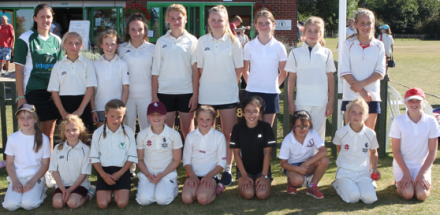
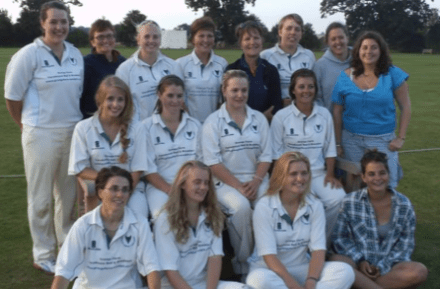
Woolpit Ladies Cricket Club team photo – League Winners 2013. Photo Credit: Laura Moss.

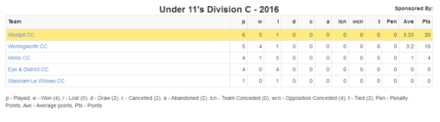
The junior girls currently take part in the U13 Girls Suffolk Junior Cricket League and the U11 Boys Suffolk Junior Cricket League Division C. The girls won all bar one of their matches in the latter league and so took the title for 2016.

screen-shot-2016-10-15-at-10-37-16


Screen Shot 2016-10-15 at 10.37.55.png

Woolpit U13 and U11 girls teams after competing in the Woolpit CC Girls Tournament 2016, with the U13’s coming runners-up on the day. Photo Credit: Steve Unwin at DE Photos.

Many of Woolpit’s players have played county cricket, with 10 having represented Suffolk or Cambridgeshire, and are now being ably followed by the juniors, 8 of whom have been called up to play age-group county cricket.

Their current junior county representatives are as follows: Elizabeth ‘Wizz’ Firman, Sophie Utteridge, Millie Gale, Sophie Kubitzek, Lily Tillbrook, Florence West, Isobel Melville-Ross and Cara Swinburn.

The current ladies captain is Natalie Samuels, who has been at the club since 2013 and took over from Alice after her retirement from playing in 2015. She also coaches at the club and will be taking on the challenge of the U15 and U14 girls teams in the upcoming season.

The ladies train on a Wednesday evening during the summer, in Woolpit’s 5 lane net facility located at the club. During the winter, the ladies train at the net facilities at the Victory Ground in Bury St Edmunds, on a Friday night. The junior girls train on a Friday evening during the summer and they alternate between training on the outfield and using the nets as this is also when the junior boys train.

As a club, Woolpit have a good social scene with special nights organised by the committee, such as quiz nights, race nights and the annual awards dinner. They also have ‘girls only’ evenings, whether it is a night in the curry house, a BBQ at the club or a trip to see England play at Chelmsford.

Screen Shot 2016-10-15 at 10.46.16.png

Dressed up watching a T20 at Chelmsford – Ladies Night Out 2014

The ladies team are very fortunate to have an array of helpers, putting the teas out at every home game and then coming to support at away games. There should also be a big thank you to Kathy Parker, for scoring for the ladies and always being the background with organising events, on top of her role as treasurer of the club and as the main sponsor for the ladies team via her business Grange Farm Bed and Breakfast.

The support for the ladies team at the club is continually improving and Woolpit are very proud of their ladies section, as they have been extremely successful over the years. Despite needing some new recruits for this season nearly all the fixtures were played, and that was down to the hard work of current ladies captain Natalie finding people to play. Their junior girls section is also going from strength to strength, and including friendly games they competed in 18 fixtures from April to August.

By the start of the 2017 season, the extension the club are having built to improve changing and kitchen facilities at Woolpit will be completed and the ladies will benefit from this. Woolpit’s aims for next season include enhancing their numbers through a mutually beneficial arrangement with Bury T20 ladies side, developing the U15 girls into a standalone team and challenging for the League title. The men’s section is setting up a 4th team on a Saturday, and this will allow ladies to play in a mixed team, giving them a greater opportunity for participation and improving their own performance through experience.

Woolpit’s annual U13 girl’s cricket tournament will run again on Friday 25th August 2017.

If you are an adult and interested in playing, please email nataliesamuels13@gmail.com. If you want to find out more about junior cricket, for girls aged 13 and under, then please contact Jo Ticehurst: jo_ticehurst@hotmail.com or 07956051992.

ANALYSIS: Spin City & The Pace Problem In The Women’s Game

A recent piece on Women’s Cricket Blog asked Do the Aussies have a seam problem? Basically concluding… yes they do – their pace options are limited and apparently ineffective!

In fact, looking at the stats for the Women’s International Championship, it might be argued that EVERYONE has a “pace problem”.

Just 4 of the top 10 wicket-takers in the Championship are pacers, with spinners occupying the first 3 spots:

Player Bowling Wickets
1. Jess Jonassen Spin 29
2. Heather Knight Spin 29
3. Anisa Mohammed Spin 25
4. Anya Shrubsole Pace 24
5. Shabnim Ismail Pace 22
6. Kristen Beams Spin 21
7. Marizanne Kapp Pace 21
8. Sune Luus Spin 20
9. Hayley Matthews Spin 20
10. Katherine Brunt Pace 20

And across the entire Championship, spin dominates – it takes more wickets than pace, more economically, and at a better Strike Rate:

Bowling Wickets Economy (Avg) Strike Rate (Avg)
Spin 58.02% 3.81 37.04
Pace 41.98% 4.19 40.22

Contrast this with the situation in the men’s game where, looking at ODIs over the past 2 years, spin has its place in keeping the runs down, but it is pace bowling which takes wickets and has the edge in Strike Rates:

Bowling Wickets Economy (Avg) Strike Rate (Avg)
Spin 32.36% 5.26 49.69
Pace 67.64% 5.90 46.02

The $64,000 question is why?

Here’s a theory:

At junior, club, and even at county level in the women’s game, pace can be intimidating, so it is an effective weapon by itself; but by the time you get to international level, the players are used to facing bowling machines which hurl it down, so international batsmen aren’t intimidated any more, leaving the pace bowler with two options.

One option, increasingly common in the men’s game, is to bowl it fast enough that actually seeing the ball becomes a problem, due to the limitations of the human eye; but to do this, you need to be touching close to 90mph, and no one in the women’s game is anywhere near close to this.

The other option is to add “something else” to the pace armoury – swing (e.g. Anya Shrubsole) or control of movement off the pitch (e.g. Katherine Brunt) – but that isn’t easy to do, especially if you are only suddenly confronted by this need when you reach the pinnacle of the system.

Add to this conditions around the world which often seem to favour the tweakers over the twerkers, and it is Spin City in the women’s game, as the spinners take the glory, whilst the pacers increasingly struggle to make an impact.