Rushden & Higham

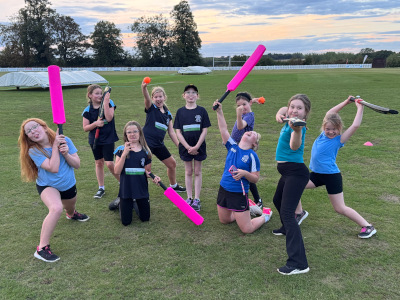
CLUB OF THE MONTH: Rushden & Higham Town Under 11 Girls

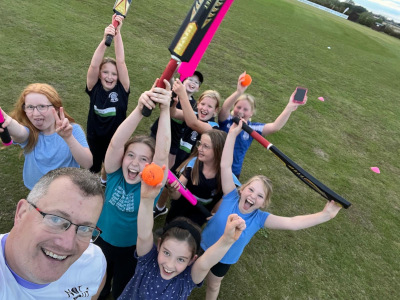
Congratulations to the Under 11 Girls of Rushden & Higham Town, whose first season has just concluded. It was certainly an eventful one, including helping provide a guard of honour at the Northamptonshire County Ground, growing from 4 members to 12, and winning their last game of the season (against Earls Barton CC) by a single run!

The girls’ section was formed by Ben and Lisa Hodges. Ben had been coaching the under-9s for a couple of seasons and volunteering as an All Stars Activator, and could see that more girls were coming through but could also see that they were sometimes intimidated by the loud and over-confident boys. It was clear that there were girls with talent, but they needed their own space to find it.

The girls play at Short Stocks in Rushden, featuring an astroturf wicket, an astroturf net and a nice bar – always appreciated by parents during the Friday night training sessions!

Ben and the girls threw themselves into the deep end by entering a league in their first season, playing in the Corby and District Youth U11 League (East). Sadly one of the teams dropped out and fixtures were a bit erratic this season, but they held their own.

“Music and dance play a big part in the team!” says coach Ben Hodges. “Cartwheels in the outfield between overs can often be seen. We are fortunate (or unfortunate sometimes when we are trying to get the girls to focus) that six of our girls all dance together at Starlight Dance in Rushden. So, whatever the latest song is that they are dancing to, you can guarantee that it will be heard and the six will be doing their best to teach the others the moves.

“Special mention to Jennifer, who during one training session was practicing singing her part as Anne Boleyn for her school’s performance of the musical ‘Six’ while bowling at her teammates.”

They were fortunate to be mentored by the Northants County Cricket Club Steelbacks in the Community Team who assisted with putting on the fixtures, including providing some of their girls from the Young Leaders programme to act as scorers and umpires.

They were also lucky to be successful in bidding for a Metro Bank Girls in Cricket Fund award this season, which funded 20 hours of mentoring from community coaches from Steelbacks in the Community. A big thanks to Liam, Patricia, Beth and Louise.

Meanwhile Ben continues to coach and manage the team and has secured funding through Northamptonshire Sport to top up his coaching qualifications before next season.

Ben says that his season highlight was the team’s first victory, which came against Earls Barton when Jess Hambleton-Clark hit a six in the final over: “It was the last game of the season and the victory felt incredible. Seeing how chuffed the girls were and seeing how hard they had worked all season, and it was finally paying off.”

He also wants to give a shout out to the Committee at Rushden & Higham Town Cricket Club for supporting and embracing the girls team this season, and to all the parents for ferrying their daughters to matches, helping set up, and adding to a great family atmosphere at the club.

Aims for 2026 include developing a women’s softball team, doubling the number of girls playing, and perhaps playing some hardball cricket. Good luck to all involved!

If anyone is interested in joining the club, they should contact Ben Hodges on womenandgirls@rushdenhighamtowncc.com

ONE-DAY CUP SEMI-FINAL: Hampshire v Surrey – A Hampshire Heist

Hampshire pulled off the heist of the decade, winning their semi-final against Surrey by four wickets despite being behind the DLS par score for the vast majority of the run-chase.

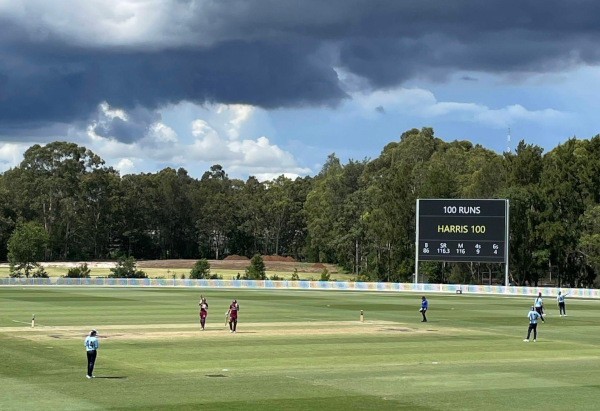
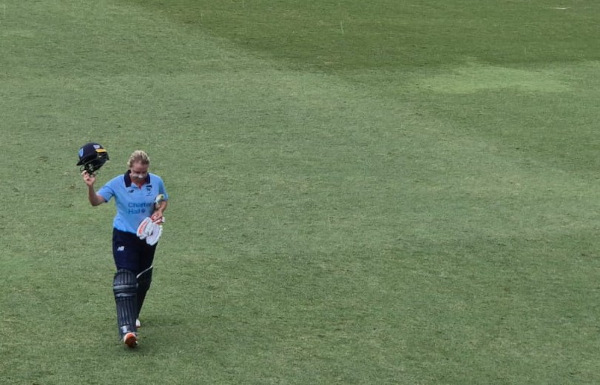
Battling driving rain, fading light, and a pitch which eventually resembled the Somme, Georgia Adams and Mary Taylor shared a winning 104-run partnership which propelled their team into Sunday’s final against Lancashire.

Adams’ unbeaten century will win all the plaudits, but the more remarkable effort was from Hampshire’s no.8 Taylor, who struck a maiden List A fifty (her previous highest List A score was just 21), driving, flicking and pulling.

Crucially, she achieved a strike rate of 100, ensuring that by the time she was hit on the elbow by a ball from Alice Monaghan which reared up at her, Hampshire were within touching distance of their target:

“The physio said, do you want any painkillers? I said no, let’s crack on,” she told CRICKETher. “I was in the zone and I didn’t want to disrupt that in any way. I probably would have batted with my arm falling off!”

Taylor had joined the fray with Hampshire six wickets down and still requiring 102 to win: Surrey would have felt they were into the Hampshire “tail”. But Adams and Taylor were able to gradually whittle down the required runs, first getting ahead of DLS and then – when it became apparent that the umpires were going to see this one through to its end, come what may – managing to overhaul their mammoth 288-run target.

Hypocaust points out that several other record run-chases have been achieved in 50-over women’s cricket this season:

That was the sixth highest successful women's List A run chase in England.In a remarkable season that has completely transformed the concept of a chaseable target, five of the top six highest have occurred in Metro Bank League 1 this year.

Hypocaust (@hypocaust.bsky.social) 2025-09-17T17:26:14.513Z

Perhaps the key difference is that the other four record-breaking run chases of 2025 took place amid a baking hot summer which has now vanished. Today’s effort from Hampshire was achieved despite, not because of, the prevailing conditions.

“I was a bit cold [coming out to bat],” Taylor said. “Gads [Adams] said, ‘play straight and hit the sight screen, hit the gaps and we’ll try and run twos’. That proved quite difficult when the mud started clogging up our shoes.”

Surrey had opted to bat first after winning the toss, in spite of the weather forecast – a choice which surprised everyone, going against the general cricketing wisdom that if rain is forecast then it is always better to chase and know exactly what you need to do to stay ahead of DLS.

Today, however, that wisdom did not quite apply, due to a very unfortunate issue with the electronic scorecard, which flickered off in the first over of the Hampshire chase and never came back on. Energy company Utilita’s slogan “Life With Power”, which adorns the scoreboard, appeared a brilliant trolling exercise at the expense of the hosts.

Eventually, the club found a temporary solution in the form of the old-style scoreboard above the groundskeeper’s cubbyhole:

Scoreboard problems at the Bowl 🏏

CRICKETher (@crickether.com) 2025-09-17T15:55:43.182Z

Ten overs in, Hampshire had reached 73-2 – exactly par with DLS. That was largely thanks to Freya Kemp, who brought up a 26-ball fifty in the 11th, after clobbering seven fours and two sixes – almost all between midwicket and long-on.

But when Kemp swung, missed and was bowled by Kalea Moore, the DLS par suddenly took a flying jump. It took another one when Abi Norgrove sent a catch straight into the hands of short midwicket; seconds later, the umpires were pulling the players off the field with Hampshire on 103-4, 20 runs behind DLS par.

It looked like it might all be over… but the shower was brief and 20 minutes later, the umpires brought the players back on.

Hampshire then lost Nancy Harman in the 20th over, leg-before to Phoebe Franklin, and seemed to be falling even further behind DLS – but, intriguingly, Win-Her saw the situation differently, putting Hampshire at a 63% chance of winning:

Surrey 287 v Hampshire 153-5 #ODC 🏏

CRICKETher (@crickether.com) 2025-09-17T15:37:25.880Z

At this point I was so disillusioned with our Win Calculator that I suggested we might rename it Put-It-In-The-Bin-Her. How wrong I was!

As time ticked away and the chase went from unthinkable to possibly-reachable, nerves ratcheted up around the ground. Martin from Women’s Cricket Blog could be seen pacing up and down, Freya Kemp refused to move from her seat for 25 long minutes, while next-woman-in Freya Davies – whose metronomic bowling and three wickets at the death had been critical in preventing Surrey reaching 300 – had to wrap her bat in a towel as she sat for 45 long minutes waiting to see if she would be required.

The overwhelming feeling from everyone when Adams scored the winning runs, just two overs after bringing up her hundred, was therefore relief – as well as knowing that the real job isn’t yet done. “I’m trying to stay level because we’ve got to play the final yet,” Taylor admitted.

Whatever happens on Sunday, this semi-final will live long in the memory.

EXCLUSIVE: Middlesex To Go Pro By 2029

Middlesex Director of Cricket Alan Coleman has told CRICKETher that the club intend to self-fund professional contracts by 2029, in order to ensure they are best-placed to progress into Tier One.

Last year, Middlesex failed in their bid to host a Tier One side, meaning they will be locked out of the top tier of women’s domestic cricket for at least the next 4 years.

But the club have embarrassed the ECB with their results this season, winning 18 of their 21 matches, beating Yorkshire twice, and finishing as inaugural champions in the Tier Two Women’s Vitality Blast.

“The game at Northants where we won the T20 was an astounding effort – I’ve never seen a team go through a whole Finals Day without losing a wicket,” Coleman said.

“It’s a challenge that the team have embraced, being amateurs, against professional teams – not only Yorkshire but Glamorgan, who are going to be Tier One in 2027.”

Middlesex’s challenge now is how best to keep together and develop a team of amateurs, many of whom are doing demanding full-time jobs – as typified by all-rounder Gaya Gole, who works long hours as a Management Consultant in the City.

For Coleman – who was present at Middlesex’s semi-final against Yorkshire on Sunday – the answer is for the club to directly invest in their women’s squad.

“Middlesex are incredibly ambitious and desperately want to invest in our women’s team,” he said. “There’s no greater deserving team for that investment.”

“Our challenge is to keep improving and keep developing across this period to ensure that we are as ready as possible for Tier 1 cricket as and when hopefully the ECB decide to open it up.”

“This is year 1 of a 4-year plan to be professional at the end of that period. And we almost want to, without sounding arrogant, take it out of the ECB’s hands and say, ‘You have to make us professional because of the performances that our players have put in, in Tier 2’.”

“So that’s the plan, and a part of that will be ensuring that our players are rewarded for the cricket that they play.”

The club are still working out exactly what that looks like, but we shouldn’t be surprised if we see the first tranche of part-time contracts awarded ahead of next season.

“We need to continue to invest in this very, very talented group of players to ensure they get the opportunity they deserve,” Coleman added.

THE HUNDRED: Brave v Fire – Fire’s Batters Burn Out At The Bowl

Southern Brave will go into Sunday’s Hundred final with an unbeaten record of 8 wins from 8 matches, after pulling a rabbit out of a hat to defend 106 at the Utilita Bowl.

It makes them the first team in the history of the competition to finish the group stages undefeated. When Brave won the tournament previously, back in 2023, their one loss in 8 games came against Fire at home in Southampton – but Fire couldn’t spoil their party again today.

Meerkat Match Hero Lauren Bell added to her chart-topping wicket-tally (19 at 7.47) with extraordinary figures of 4 for 6, including a third set during which Tammy Beaumont and Jess Jonassen both holed out to fielders in the deep.

But Bell was the beneficiary of a team bowling effort in which Brave’s four spinners – Chloe Tryon, Tilly Corteen-Coleman, Georgia Adams and Mady Villiers – put a stranglehold on Fire’s chase. Even before the wickets started to fall, Fire’s lack of runs had swung the Win-Her dial in Brave’s favour:

Brave 106-8 v Fire 77-9 #The100 🏏

CRICKETher (@crickether.com) 2025-08-28T16:40:26.724Z

“It was a tricky pitch,” Bell said afterwards. “We chatted about it before we went out, that dots were going to be massive, almost as important as wickets, and as soon as the run rate got above a run a ball on that pitch we knew it would be a tricky chase. Mads [Villiers] and Coco [Corteen-Coleman] and Gads [Adams] bowled some really important sets.”

Bell gave the credit to her teammates but the fact that Fire scored just 47 runs in their first 50 balls, despite only being 1 wicket down, is symptomatic of just how miserable their efforts with the bat have been this season. Between them, Fire’s top five batters have managed two half-centuries this season – both scored by one Sophia Dunkley. Hayley Matthews – who was talismanic for Fire in their 2024 campaign – has barely scraped a run together, averaging 19.

Today, she was scratchiness personified, managing just a single boundary before failing to get the necessary elevation to clear Villiers at deep midwicket. With Matthews in a slump-spiral as deep as this, it’s perhaps a good thing that West Indies won’t be featuring in October’s World Cup.

Brave had themselves struggled with the bat, sinking to 14 for 2 early on after Fire put them in to bat on a pitch made sticky with rain. With Sunday’s final looming, Brave chose to fiddle around with their middle order to offer chances to Freya Kemp, Chloe Tryon, Villiers and Georgia Adams, who have had very little to do with the bat this season. Adams, for example, had faced just 11 balls prior to today’s match; but her elevation to number 6 against the Fire gave Brave’s skipper (who finished 30 not out from 26 balls) to bat herself into a modicum of form.

Not only did that ensure Brave got to a total which was (just about) defendable, it could end up mattering a lot on Sunday if the final proves to be a tight match.

T20 BLAST: Warwickshire v Lancashire – How Do You Pronounce A Name Like Kesteven?

As we departed Taunton at an ungodly hour on Sunday morning, we knew the journey up the M5 to Edgbaston would be worth it. We were at last going to reveal one of the great mysteries of women’s cricket… how to pronounce Tilly Kesteven’s last name.

The answer? Ker-steven.

Tilly herself was only too happy to provide the answer, after scoring 29 from 37 balls for Lancashire in their 5-run win against Bears – although we did have to hare around the outfield at Edgbaston to ensure we caught her just before she disappeared into the dressing room!

Bears v Lancashire at Edgbaston

CRICKETher (@crickether.com) 2025-06-08T13:53:25.110Z

Despite the result, if we’d been asked to name a Player of the Match today, I’d have chosen Nat Wraith, who finished unbeaten on 58 from 34 balls. With Bears reduced to 101 for six in the 14th over, it seemed like the match was all-but over, but Wraith’s innings at least made a game of it, taking the equation down to 14 runs required from the final over.

Nat Wraith has had an interesting few months. In October, the perennial Western Storm wicketkeeper unexpectedly signed for Bears, saying that she was excited to “be part of a new environment“. So far, the move has proved Somerset’s loss: Wraith has already helped Bears achieve a record run-chase (the highest ever in women’s List A cricket in England).

Here, she did something which none of the England batters managed over the winter, and found the measure of Alana King, effortlessly lofting the leg-spinner over deep midwicket for six before doing the same thing to Sophie Morris two overs later. Fi Morris did shell her in the deep on 41*, in a move that for a while looked like it might have cost Lancashire the game.

Had Wraith’s ramp shot off the first ball of Grace Potts’s final over made it to the boundary, it still might have done… but the aforementioned Kesteven (Ed: remember, it’s Ker-steven) dived to cut it off, and instead, Wraith and Hannah Baker ran two.

Wraith found the boundary next ball, pulling through midwicket to leave the equation 8 from 4… but a wily Potts then spotted Wraith moving back across her stumps and followed her, meaning her cut was not quite clean enough to pierce the ring.

A dot ball was worth its weight in gold at that point – it meant Wraith felt compelled to run on the next ball, leaving Baker on strike, who miscued a catch to cover.

With one ball remaining of the innings, Potts sent down a leg-side wide and the crowd held their breath… until Potts sealed the deal with another dot ball, after a huge swing-and-a-miss from Hannah Hardwick yielded nothing. Wraith, stranded at the other end, could only watch on in frustration.

For the Bears, the real issue was their failure to capitalise on an excellent start, having reduced Lancashire to 37 for 4 at the end of the powerplay. Emma Lamb, having herself hot-footed it over from Taunton early this morning (Ed: we might even have passed her on the motorway!), lasted just 4 balls before being bowled through the gate by Issy Wong, while Abbey Freeborn took an excellent leaping catch to snaffle Morris’s attempted cut.

Lancashire 162-7 v Bears #T20Blast 🏏

CRICKETher (@crickether.com) 2025-06-08T12:46:09.152Z

But – not for the first time in this competition – Lancashire’s middle-order bailed them out: Kesteven and Ailsa Lister shared a 69-run partnership for the fifth wicket, before Alana King and Tara Norris enabled Lancashire to add 43 runs from the last four, despite a 20-minute rain interruption between the 19th and 20th overs.

In reply, Davina Perrin got the Bears off to a flyer, but the 20-year-old Grace Johnson – who is rapidly becoming One To Watch – took out her stumps in the final over of the powerplay. Laura Harris couldn’t match her Friday fireworks with a Sunday showstopper, skying a catch miles in the air after managing just one boundary, and Bears were left struggling… at least until Wraith breathed life into the game.

Oddly, the match has done little to impact on current standings: at the time of writing, Lancashire remain in 6th place, while Warwickshire sit at number 3.

But the Blast has an odd, lopsided schedule, with Warwickshire already having played 5 games, while Surrey (who are top) have played just 3 – so today’s result might yet come back to bite the Bears.

The Future of Domestic Women’s Cricket – Part II: Where are we?

By Andy Frombolton

Imagine you ran a small restaurant business and planned to expand. You might have a vision to have twenty or fifty restaurants across the UK in 5 years and a strategy for how to achieve your goal. But you’d also recognise that things won’t always go as planned and consequently you’d need to review progress and revise along the way.

Two factors: the public’s appetite for your product, and your ability to maintain standards as your business grows, will primarily determine how things turn out – hopefully better, possibly worse.

However, provided you’ve not expanded ahead of demand and you’ve maintained the quality (to keep existing customers happy), the end state will be a viable business. Conversely, if supply exceeds demand or if quality is compromised by being spread too thin then you risk the whole chain going bust, taking with it any viable sites and any loyal customer base.

In this example, for the entrepreneur to ordain exactly how many restaurants they’ll have in 2 years and where they’ll be – based on speculative future demand and requiring expansion beyond their hitherto-proven ability to maintain quality – would clearly be madness.

The ECB has mandated that there will be eight Tier 1 counties in 2025. Each will employ 15 full-time professionals. There will be 9 Tier 1 counties in 2026 and 10 in 2027. Can you see the problem?

In fact, the only thing which could make this scenario worse would be not to know (or to deliberately obfuscate) the current state of your business.

In my example, the aspiring restaurant owner will know how successful their business is. Beyond overall sales and profit figures, they will also understand how loyal their customers are, the impact and effectiveness of promotions, pricing flex points, etc.

Unfortunately, women’s cricket has very little equivalent data – and the ECB has prioritised positive optics and narratives over every opportunity to collect it. Marketing spin prevails to the exclusion of anything which challenges their messaging, notwithstanding that to plan effectively for growth obviously requires an honest and objective assessment regarding the current popularity of the women’s game.

Attendance at international matches? There were good crowds at many of the international matches, particularly at those venues with a tradition of strong support for women’s cricket. But, let’s be honest, ticket prices were much lower than for a Blast match (with thousands of free tickets also given away). The result may have been a great atmosphere and good optics – but the ECB has no idea as to what value these spectators place on attending these games.

Viewing figures? The ECB and Sky were eager to publicise record viewing figures for last year’s WAshes, but similar press releases haven’t been forthcoming for this year’s Pakistan and New Zealand series and it’s reasonable to assume they did less well.

Broadcast rights? Historically, the broadcasters haven’t had to pay for women’s cricket separately. This is beginning to change and ICC and several boards plan to run separate auctions for men’s and women’s cricket going forward. Having to pay for something which was previously ‘free’ (or almost free) will force broadcasters to put a price on the product – and these figures won’t be determined by good intentions but by a hard-nosed assessment of how much a broadcaster’s advertisers and subscribers will pay. Looking for positives, Viacom paid $112m for 5 years of the WIPL (although any read-across from the Indian market might be limited?) whilst, less encouragingly, FIFA hoped to get over $300m for the recent Women’s World Cup but in the end narrowly avoided broadcast blackouts when it settled for a figure around $50m.

The Hundred? This is the ECB’s principal platform for promoting women’s cricket. Virtually every game this year seemed to be accompanied by announcements for new record attendances at a women’s game. But viewing figures for the Hundred were down across both men’s and women’s games (except for the men’s final) – a dramatic 41% for the women’s matches on Sky (and 2% overall for the women’s games shown by the BBC but with the women’s final down 20%). A widely-touted explanation was the lure of the Olympics, but the Olympics were on throughout the day and evening and so this doesn’t explain the relatively-sharper decline in viewers for the women’s matches. Moreover, if this argument is true, it shows a worrying lack of loyalty amongst cricket spectators when presented with other options.

And, how accurately does the number of people in the ground halfway through the women’s game reflect an interest in the women’s game which could be monetised? A cynic might posit that you wouldn’t use a similar metric to determine the popularity of a men’s game. Surely a true fan wants to see every ball?

So, whilst there were unquestionably good numbers from the first ball of the women’s game at many grounds this year, many spectators arrived later. Why was this?

  1. Were they genuine fans of women’s cricket unable to make the start time?
  2. Were these people who enjoyed watching some of the women’s game and appreciated the skills on display, but watching the men’s game was the primary reason for attending?
  3. Compared to The Blast many fans have to travel further to Hundred host grounds and a single match (completed in under three hours) might be too short to justify the journey, whilst a double-header constitutes a ‘good day out’?
  4. Some might have no interest in the women’s game, other than as a backdrop to eating, drinking or meeting friends? Or they wanted to ensure they got to the ground in good time?

I obviously have no idea what the respective percentage for each category is, but more importantly nor does the ECB – nor seemingly does it want to. Because if they did, it would be easy to design a series of matchday scheduling / pricing permutations [combined with spectator surveys] to better establish “Where We Are Today” in terms of the fanbase for women’s cricket, their loyalty and their willingness to pay. The downside is that establishing these data points could be expensive, could result in some negative optics and would probably be opposed by both Sky and the host clubs who risk losing viewers and footfall respectively.

Some of the considerations could be:

  • Ticket prices for Hundred matches during the Commonwealth Games weren’t reduced – even though spectators only got to watch a men’s game. This created a cognitive anchor that the women’s game is a ‘free’ bonus.
  • Hundred tickets could be sold providing access to either both games or just the second game. (Obviously, a stadium couldn’t be cleared of people who only wanted to watch the first match.) This would thus allow a separate value to be assigned to the first match.
  • Grounds could host 2 men’s games or 2 women’s games (rather than the current double headers).
  • The women’s game could be played second more often. (Although past evidence suggests this impacts attendance and viewing figures especially for weekday games; reducing ticket revenue and impacting on-site food and drink sales, in addition to not looking good.)

Whilst these different permutations still wouldn’t generate a comprehensive data set, it would be far better than what we have today. And it would be real-life data, not PR nor the projections of a marketing consultancy, with no consequences for whether they’re right or wrong as to the popularity of the women’s game and the value which viewers and spectators assign to it.

Now, there’s talk of hosting double headers for the T20 Blast next year. (NB Whilst it would be possible to align the home teams, the women’s opposition would often be a different team.) Why do this? This would simply replicate the issues seen in The Hundred. At some stage, the women’s game needs to become financially sustainable – and core to this is growing a loyal fan base which is attractive to sponsors, advertisers and broadcasters. This is a chance for everyone who complains how the women’s game is currently marketed to come forward with their proposals. Women’s double headers? Weekend festivals (4 games over a weekend)? Selling the broadcast rights to a different company with a compelling vision for women’s sport? Focussing on the digital aspects and engaging with younger, new customers in a different way?

To end, let’s return to our example of the ambitious restauranteur.

It’s good to have dreams. And to aim to be better and bigger.

But it’s stupid to pre-ordain outcomes. Be flexible. Be good at what you do. Leave customers wanting more. Never lose control of quality control. Understand what differentiates you from your competitors. Don’t just copy another chain which offers a similar product. And (eventually) revenue must always exceed costs.

If you do all those things, the outcome will be the best it can be. A sustainable product with customers who love it.