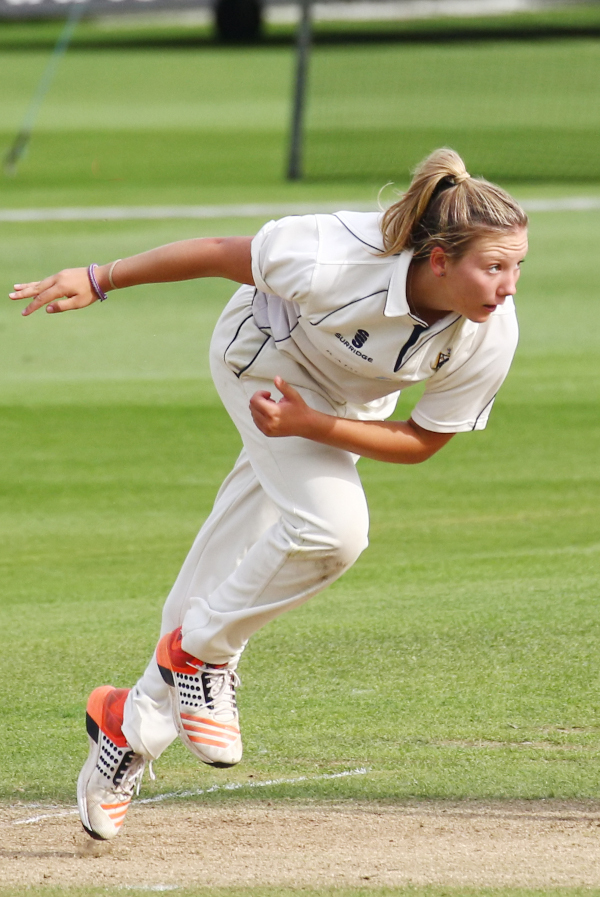
THE HUNDRED: Southern Brave v Birmingham Phoenix – Brave Victorious But Perrin Welcomes “Small Wins”

On Wednesday, Birmingham Phoenix released a new poem to celebrate the team, written by the Birmingham Poet Laureate Ayan Aden: “This is Birmingham, where it’s your turf, your team. This is Birmingham, where we rise.”

Presumably rising from the bottom of the table wasn’t quite what they had in mind. Nevertheless, that is the position Phoenix now find themselves in, having lost Thursday’s match to Southern Brave by 24 runs.

This was a match which Phoenix really should have won – or more accurately, one which Brave should have lost. Brave’s batters went for 30 balls without scoring a boundary. They dropped three catches. They failed to take a single Phoenix wicket for 55 balls.

But Brave’s bowling depth once again proved the key factor, preventing Phoenix from accelerating across the final 30 balls, despite having 9 wickets in hand. “I think they were trying [to go harder]”, Sarah Glenn said. “The intent was there for sure. But we shut it off really with our bowling.”

Put in to bat, Southern Brave had earlier reached 140 for 3, though it should really have been more after a rollicking start from Lizelle Lee. Lee might not be the most adept at moving her feet these days, but she has enough heft in her arms to make up for it, smashing 43 from 28 balls.

In the end the pace-off approach from Alice Capsey worked – there wasn’t quite enough velocity on the ball for Lee to clear the rope at deep midwicket and Linsey Smith took the catch.

Brave’s run-rate had actually fallen off a cliff prior to Lee getting out – they had a poor early-middle phase. Slow spin was most effective on this wicket, which meant that Capsey was particularly useful, bowling her full allocation of 20 balls (she only bowled 10 in Phoenix’s first match of the comp).

Brave 140-3 v Phoenix #The100 🏏

CRICKETher (@crickether.com) 2026-07-30T15:23:00.488Z

As an aside, I still think making Capsey back-up keeper for England’s World Cup campaign was a bit silly. But it was always pretty obvious it was a temporary move, while Lottie tries to figure out who is Amy Jones’s long-term replacement, and that Capsey remains committed to her off-spin. In fact, she told me so when I interviewed her at the start of the tournament: “I really enjoy bowling. It’s still a massive priority of mine. It just means my training days are slightly longer than they used to be. Instead of doing bat, bowl, field I’m doing bat, bowl, field, keep.”

Maia Bouchier looked dangerous until she got out in unnecessary but sadly typical fashion, trying to reverse-ramp Lauren Filer five runs short of a half-century. Enter Laura Wolvaardt, who limped to 11 off 15 balls before being dismissed in two different ways off the same ball, simultaneously caught behind and stumped (yes I know this isn’t technically possible in the Laws).

Wolvaardt has just come off the purplest patch of her career, but for some odd reason looks a shadow of her former self since she arrived in England for the start of the World Cup, with a highest score of 45 against Netherlands. From the peakiest of peaks to the troughiest of troughs – it’s not clear quite what’s gone wrong or why?

Thanks to some punches from Jemi Rodrigues in the final set, Brave did eventually get up to a total which was towards the high end of a “typical score” in this competition according to the Ghost:

Brave 140-3 v Phoenix #The100 🏏

CRICKETher (@crickether.com) 2026-07-30T15:17:10.493Z

In reply, Davina Perrin played an innings dominated by wild hacks, offering up three chances – on 30, 32 and 34. Each time, Rodrigues dashed 100 yards across the field to comfort the culprit – Bouchier, Wolvaardt and Bell – before finally getting so fed up / exhausted that she decided to take a catch herself, running in from deep midwicket; although the batter out was Tammy Beaumont, not Perrin.

Heading into the last 35 balls, WIN-her had both teams neck-and-neck:

Brave 140-3 v Phoenix 92-2 #The100 🏏

CRICKETher (@crickether.com) 2026-07-30T16:24:17.314Z

But then Alice Capsey chewed up nine balls for eight runs, and chipped a catch straight to Sophie Molineux at cover. It was the death knell for Phoenix, and Capsey knew it – she was so annoyed at herself that she threw her bat in the air, tried to catch it with the other hand, dropped it, and suffered the added indignity of having to bend down and pick it up before walking off.

Perrin did go on to get fifty, but was reluctant after the match to take any credit for an innings which was ultimately in a losing cause and perhaps wasn’t quite quick enough to make up for slow-ish scoring at the other end. “Missing the Blast and being injured, and having a lot of the season out, obviously means that when you come back to play, you’re just sort of finding your feet,” she said.

She admitted, too, that it feels like these days she is trying to live up to her magical Eliminator innings every time she is at the crease. “I’d be lying if I said it doesn’t cross my mind. But I think I’m also reminding myself, it’s the small things at the minute. Being back out on the pitch, having a healthy body, they’re the small wins for me at the minute.”

For now, the bigger wins will have to wait.

THE HUNDRED: MI London v SunRisers Leeds – Money Makes The World Go Round

Just three weeks ago (it feels like an eternity), Hayley Matthews was here at The Oval, playing in a World Cup semi-final and unleashing a brilliant, heartfelt critique of cricket’s financial inequities.

On Tuesday she was back at the same ground (well, sort of: apparently we have to refer to it as The My London Stadium for the next four weeks… or do we?). This time, she was opening the batting for MI London in shiny new blue kit. She will earn £120,000 for four weeks work: a small cog in a big tournament which has itself become part of the problem.

Money from overseas investors (£520 million to be more specific) can buy you a lot of things. Judging by Tuesday’s opening match in The Hundred, that includes very big, very noisy fireworks. At least some of that money also trickles down to (some of) the players. Take a moment to compare the 2026 Hundred with the first franchise cricket in England, the Kia Super League, which got underway almost exactly a decade ago up in Headingley – incidentally now home to SunRisers Leeds. Matthews played in that, too, representing Lancashire Thunder. Her take-home pay was about £600.

Interesting, then, that when she decided to call out cricket’s haves and have-nots, Matthews was actually nostalgic for that period. “The reason we were so successful back in 2012 and 2013 and 2015 and 2016 is because women’s cricket was based off pure talent at that time,” she said. “The minute that investment comes into the picture, we’ve seen the gap widen a lot because of that.”

Perhaps without even realising it, Matthews was expressing a certain wistfulness for times gone by when women’s cricket didn’t revolve around making a bunch of Indian (and American) businessmen richer. And as I watched the match on Tuesday at The Oval The My London Stadium on Tuesday, I was wistful too.

Matthews herself finished as top-scorer for MI London, with 33 from 22 balls, looking good until she popped up a return catch to Deepti Sharma. The music which the powers-that-be insist “makes the Hundred experience” was still blaring when Deepti delivered the ball, which didn’t seem ideal if you were the batter trying to to focus on the actual cricket. MI head coach Lisa Keightley put it best after the match: “That’s just The Hundred, isn’t it? You’ve just got to roll with it.”

From there, though, MI got stuck, and the runs stopped coming, as they limped along to finish on 107-8.

MI London 107-8 v SunRisers Leeds 109-3 #The100 🏏

CRICKETher (@crickether.com) 2026-07-21T16:45:58.181Z

SunRisers Leeds (don’t forget that all-important capital R) then strolled to a 7-wicket victory with 31 balls (almost a third of the innings) remaining, led by their two star Aussies Phoebe Litchfield and Annabel Sutherland, who were both part of the previous iteration of the Popchips who won The Hundred in 2025.

That did, though, leave time for John Newman to perform a longer gig between matches – either a bad thing or a good thing, depending on if you have heard of him like his music or not.

One fascinating aspect of this opening encounter was the number of spectators who turned out for the women’s game – 8,532. Of course, in the days of the Kia Super League, we would have given our right arm for a crowd like that. But, for comparison, that’s almost 2,000 less than the 10,249 people who attended the opening match of the 2024 Women’s Hundred at The Oval, which was also on a Tuesday, against Birmingham Phoenix.

It’s early days, but does this maybe reflect a slight wariness on behalf of the British public, who don’t quite trust that this iteration of fake plastic teams will stay around long enough for them to bother caring about?

A final word on Dani Gibson, she of the £190,000 price tag, who hit the winning runs on Tuesday. I’m told that we aren’t supposed to talk about money – let alone compare salaries – because it makes the players uncomfortable. Certainly, SunRisers head coach Adrian Birrell refused to admit that it might have been on Gibson’s mind as she led her team out onto The Oval on Tuesday: “I don’t think she’s thinking about it for one second. She’s trying to win matches. I don’t think it’ll be a factor at all.”

“No one’s mentioned anything about who earns what. It’s just purely cricket, and everyone’s getting down to playing cricket and doing what they do,” he added.

Given that SunRisers’ Lauren Winfield-Hill, whose salary dropped from £50,000 in 2025 to £27,500 in 2026, has previously described the auction process as “awful” and an “ego bruise”, I find that hard to believe.

Either way, the honest truth is that we don’t talk about money anything like enough in women’s cricket – who has it, who doesn’t, and what are the problems when a whole load of it suddenly gets concentrated in a few places.

That press conference by Hayley Matthews was memorable precisely because she DID talk about money. And maybe in the age of The Hundred 2.0, we need to start talking about it a little more.

FEATURE: South Asian Cricket Academy Addressing Tier Two’s “Postcode Lottery”

Next week is a big week for the South Asian Cricket Academy. In January, SACA launched their first ever women’s programme after receiving funding from ECB; after a rigorous recruitment process, the first cohort of 15 will take to the field for their first match, against Warwickshire.

SACA is a non-profit organisation designed to tackle the lack of British South Asian representation in professional cricket across the UK. For the first four years, it was a male-only undertaking – but given that SACA founder Tom Brown has a strong connection to women’s cricket, it was clearly only a matter of time before that changed.

“All my coaching journey was in the women’s game,” Brown says. “I was one of the senior coaches at Warwickshire and I met my partner Marie Kelly there, who’s at The Blaze. And I’m the lead scout for England Women as well. I’ve always had quite a big interest in the women’s game.”

Research undertaken by PhD student Hina Shafi has revealed that the representation of South Asian women drops drastically between involvement in the recreational game and entry into / retention in professional cricket. SACA’s programme aims to provide bespoke support, helping address those barriers.

Isa Guha’s Take Her Lead charity are collaborating with SACA to deliver the programme. “They take care of the coaching, but we’re there to give them the additional support that they need to be able to take those next steps in cricket,” Guha said.

“We’ve got a mental health practitioner on our board, Kay Baig. We’ve got some players & former players – myself, Sonia Odedra and Abtaha Maqsood, so there’s intersectionality across the board. There’s nutritional support, with Krushmi Chheda, the Rajasthan Royals nutritionist, who ran a few workshops which have been incredible. They did a session with Alison Mitchell around media training, because they recognise their role as role models in the sport.”

Originally, the idea was to recruit 6 to 8 women for the programme – but the calibre of applicants was so high that Brown and his team changed their minds. “We realised there was a lot of talent out there. We’re still getting applicants through at the minute but we’re going to keep it smaller to start with, because we want to give a lot to these girls, rather than be spread too thin – that’s a lesson we learned from the lads.”

It means that as well as workshops and coaching, the players have a full programme of fixtures against Tier One second XIs to look forward to this summer. For Nayma Sheikh, a leg-spinner and left-hand batter who represents Scotland and Leicestershire, that’s crucial.

“In Scotland, you don’t get that many games,” she says. “For me the reason I applied to SACA was to showcase my skills to major counties, for them to see that I am there.”

She adds that the environment is second to none in terms of support: “You have that connection with the other girls straight away. I’ve had loads of opportunities for one-on-one coaching sessions, and the coaches know so much about leg-spin.”

For now, the programme is a pilot, funded by ECB – but the hope is to be able to expand beyond this initial intake. Brown says one thing which has already become clear is that the new tiered women’s domestic set-up is falling short in delivering consistent opportunities for female players across the country. SACA is filling that gap.

“Tier Two is a little bit of a postcode lottery. Some of these girls, if they were just living in a different county, would be playing in Tier Two,” he says. “For some of them, this is their first experience of being in an environment where it’s built for them and it’s not a turn-up and have a net, it’s a real high performance environment. They’re quite green but they’re taking to it well.”

The aim, he says, is to replicate the success they have achieved in the men’s game: there are now 18 graduates of the SACA programme with pro contracts at first-class counties. “A couple of these girls are good enough for Tier One now. And therefore it’s on us to make sure that our networks are good and that we’re getting them the right opportunities.”

Here are the 15 players in the programme:

  • Bhoomika Bhat
  • Anusha Chauhan
  • Kashish Choudhary
  • Imaan Effendi
  • Maryam Faisal
  • Iqraa Hussain
  • Amarah Imran
  • Anjali Ketan
  • Sanya Khurana
  • Riva Pindoria
  • Zaynah Rehman
  • Rhia Sedha
  • Nayma Sheikh
  • Asmi Shembekar
  • Regina Suddahazai Khan

INTERVIEW: Scotland Coach Craig Wallace Relishing Kirstie Gordon’s Return

Kirstie Gordon
Image: © Cricket Scotland

On the day Scotland announced their squad for the forthcoming T20 World Cup, Scotland head coach Craig Wallace spoke to CRICKETher about the long-awaited return of a certain Kirstie Gordon – who is available for selection for Scotland for the first time since 2017.

Back in February, Raf interviewed Kirstie for The Observer (paywalled link); the Blaze captain explained that a conversation with Craig had been instrumental in her decision to return to her home nation. So we got his side of the story!

He recalled: “The last time I was in Nottingham, seeing Kathryn and Sarah [Bryce], I messaged Kirstie saying, ‘shall we have a little catch-up?’ 

“I tried not to be too intense. We had a drink. I literally said, ‘what is your plan?’ And I managed to outline the next year and a half to her.

“And I could see in her eyes, she was like, ‘wow, I want to do that’. I left that meeting quite happy!”

We asked exactly what he said to persuade Kirstie that the time was right to return. “It’s the team,” he said. “It’s how well we’re playing, how well we’re acting as human beings and as people. For me that was the easiest sell – we are going to this World Cup, we are going hopefully to many more World Cups, and we will keep improving and playing a brand of cricket that I can be proud of, that she wants to be part of.

“It’s not the team it was when she made her debut – it’s so much bigger and better than that,” he added.

He apparently messaged Kirstie when the England squad was released to check in, concerned that there might be doubt or regret bubbling up. “But there was literally nothing. She just said, ‘I cannot wait to get started’.”

As for how Kirstie is feeling about facing her old team, England, at Headingley on 20 June?

“She’ll be excited to take them on. That day will be me trying to calm her down, more than anything! And try and make sure that we get the best out of her.”

A fired-up Kirstie Gordon? It should be a cracker of a match!

The full Scotland World Cup squad is below:

  • Kathryn Bryce (captain) – Blaze
  • Chloe Abel – Gunnersbury / New Town
  • Olivia Bell – Lancashire
  • Sarah Bryce – Blaze
  • Darcey Carter – Lancashire
  • Priyanaz Chatterji – Surrey
  • Gabriella Fontenla – Yorkshire Academy
  • Katherine Fraser – Durham
  • Kirstie Gordon – Blaze
  • Ailsa Lister – Lancashire
  • Maisie Maceira – Carlton
  • Abtaha Maqsood – Essex
  • Megan McColl – Glamorgan
  • Rachel Slater – Yorkshire
  • Pippa Sproul – Hampshire

ONE DAY CUP: Surrey v Durham – Filer’s Flurry in Surrey

Rumour has it* that Charlotte Edwards was at The Oval today (Ed: is she following us around?) although she didn’t actually prove visible to the naked eye – much like some of the balls in Lauren Filer’s opening spell.

After winning the toss under blue skies at The Oval, Durham had posted 256 for 8. A skipper’s knock of 106 from Hollie Armitage, a nifty half-century from Mady Villiers and a handy back-end cameo of 18 not out off 10 balls from Sophia Turner all played a role.

But it looked to be well light of a competitive total on a belter of a wicket at The Oval. That is, until Filer began her work.

Surrey v Durham at The Oval 🏏

CRICKETher (@crickether.com) 2026-04-18T13:09:01.389Z

It’s a bit of an open secret that Edwards has not yet settled on her World Cup Fifteen – hence pulling all the England contracted players out of the One-Day Cup earlier this week for an intra-squad camp. Some big decisions lie ahead, including what is likely to be a three-way fight for one spot in the World Cup squad between Filer, Issy Wong and Em Arlott.

Over in Chelmsford, Wong (0-21 off 4 overs) was being pummelled by Grace Scrivens, while Arlott (2-14 off 5) was economical but unspectacular.

Meanwhile here in Surrey, Durham’s powerplay bowling exactly epitomised Edwards’s dilemma: go with the safe option of Arlott, or throw caution to the winds and opt for the ferocity of Filer?

Filer started with an erratic no-ball beamer which hurtled over the fine leg boundary, costing a sum total of five runs. She also fell over in her follow-through three times in as many overs – a worrying habit which England confidently claimed last year that they had cured her of.

“The first couple of overs was a bit of a pick and mix,” Filer said afterwards. “I said to Hollie [Armitage], ‘I’m sorry mate, I’ve probably not bowled as straight as I can’ – but the balls that did go straight were wickets. So it was just taking the confidence from those balls into future overs.”

She blamed her falls on “a big divot in the foot holes” and joked: “It’s not Lauren Filer if I don’t fall over.”

In fact, the Surrey top-order looked genuinely frightened of her pace: a fear which translated into figures of 3 for 13 in her first three overs. Paige Scholfield and Alice Davidson-Richards both had their middle stumps pegged back; in between, Alice Capsey was hurried into a drive and got an edge behind – albeit reliant on a fantastic diving catch from Tahlia Wilson to pouch it.

Just how quick was Filer bowling in the powerplay? There was no speed gun in operation, but Filer reckoned: “There were a few balls that were pretty up there.” (A reminder that for Filer, that means high 70s – she’s apparently been clocked at 80mph in training.)

Kira Chathli fought fire with fire, pulling and crunching Filer’s next over for 14 runs. But when the England quick returned for a second spell, Armitage tapped Filer on the shoulder and indicated that she should put in a deep square leg. Sure enough, Chathli sent one down her throat, handing Filer a fourth wicket and Armitage some field-placement bragging rights.

Filer often only looks dangerous when fresh, so perhaps the most interesting part of today was that her third spell (which consisted of two overs, the 29th and 30th) proved almost as threatening as her first. She basically bounced out the 19-year-old Jemima Spence, who tried to keep her body out of the way while waving her bat around, and was bowled.

The upshot of it all was that Filer finished with 5-59 – a List A best.

Of course, a typically aggressive innings from Danni Wyatt-Hodge eventually saw Surrey win by 3 wickets, picking up a bonus point in the process. But if Filer earns selection in a home World Cup on the back of today, maybe she’s the real winner?

The question, as ever, is whether the guaranteed risk is worth the possible reward. Only one woman knows the answer – and for now, she is keeping her counsel.

*Later confirmed by Filer after the match.

INDIA v AUSTRALIA – TEST DAY 3: India Crushed as Healy Goes Out on a High

Helen Maynard-Casely at the WACA

Australian captain Alyssa Healy contemplates the pitch decoration as she walks out to shake hands with the Indian team. Image credit Andy Casely

It took less than 100 minutes today for Australia to wrap up the Test with a bow. Even as they strode out to the middle the Indian batters knew that this was a tough day at the office. That said, returning batters Pratika Rawal and Sneh Rana set to business in the first 30 minutes, and Rawal turned her 43 overnight into a half century. The batters worked past the 125 run deficit from the first innings and began to build a lead. But they faced the spin of Ashleigh Gardner and Alana King, and with a WACA pitch starting to crack in after the high heat that was never going to end well.

Just as we were thinking of looking up the records for India 7th wicket partnerships, Gardner’s bowling beat Rana’s outside edge and she was wandering back to the sidelines. The nameless* Kashvee Gautam came and went for a duck – not able to replicate her heroic 34 runs from the first innings when Alyssa Healy plucked a ball in the slips from Alana King’s delivery. Soon after Sayali Satghare fell similarly to close fielding off King’s bowling. The Indian innings was dealt its final blow when Annabelle Sutherland made an insane amount of ground to take a diving catch sent sky high by Rawal off of Garner’s delivery. India were only 24 runs ahead.

The change of innings was rapid, and Australian openers Phoebe Litchfield and Georgia Voll were perhaps impatient to get into their ice baths. A small wobble of a LBW challenge on Voll hardly seemed to phase the pair, and in the 4th over the innings it was the Queenslander who swept a classy shot through the close field to the boundary to bring up the total, the match and the series.

Beth Mooney hugs Alyssa Healy, and we can only interpret quite how much went into that hug. From shared experiences, to the passing of the gloves, a tender moment to witness. Image credit Andy Casely

And so ended the 152nd Women’s Test, not perhaps a classic of the genre, but notable for Australia as they have now won three test matches in a row, well and truly reversing the spate of drawn Tests. Despite the team only playing on average one Test a year, they have found the tactics to force a win, and with this exerted dominance on the multi-format series that they have played.

One can use this juncture to wax lyrical on the departure of Alyssa Healy from both captaincy and the international game. On reflection it is not so much that she was an innovator of the women’s game, but she was the most stalwart of ambassadors. Having worked in the game through the advent of professionalism and overseeing the transition, she was the ultimate advocate in nudging space and visibility for the women’s game. This was of course coupled by her fierce determination to never be anyone’s niece, or wife, but very much a cricketer to excel in her very own right. We are glad we got to watch her play, and because of her impact many more will grace a similar stage.

*OK, this should be explained, the author is still rather fuming that ON INTERNATIONAL WOMEN’S DAY (of all occasions) the Indian cricket team can send a player into the TEST field without the dignity of including her name on her shirt (she literally had duct tape covering over another’s name on her shirt). Though such actions should never detract from the players themselves it is a reflection of how the administration that oversees them views them.

Helen (Crystallised Cricket) is a writer based in Dharug and Gundagarra country, and here is writing about a game played on Whadjuk country. She acknowledges the traditional owners of the lands that she writes from.

INDIA v AUSTRALIA – TEST DAY 1: Australian Smiles as India Struggle

Helen Maynard-Casely at the WACA

Australia have the upper hand after the first day in their one off Test against India. India batted first and despite several batters getting good starts, the visitors struggled to 198 runs in their first innings. Today not only marked the start of the Test, but also the first game since the West Australian Cricket Association ground’s upgrades were completed. The players greeted not only new stands and manicured grass hills, but also the novelty of people spectating as they queue for a water slide that snakes down one of the light towers. (The opportunity to actually watch the cricket from within a swimming pool will definitely be indulged by this author at some point in the proceedings).


As the floodlights started to dominate the WACA twilight, Australia contemplate how to finish off the Indian tail.

The teams took on the WACA pitch and heat today in the 152nd Women’s test. To put that into context, the most experienced Test player competing today, Ellyse Perry, was contesting her 15th Test match. In the time since she made her Test debut in 2008, the Australian men’s side have played 196 Test matches.

So this rare contesting of the format inspires much joy, always coupled with a little trepidation. The joy was apparent with the awarding of a baggy green to Lucy Hamilton, and the trepidation evident in both sides batting form.

Harmapreet Kaur led a side changed somewhat from the ODI series, adjusting for injuries and looking for players to suit the conditions. Australian captain Alyssa Healy won the toss and put the visitors into bat, with Hamilton’s excitement extending to the first wicket of the match, when she took out Smitri Mandhana’s middle stump in the 5th over. Shafali Verma capitalised on a cautious start to her innings, but with 35 runs on the board, she nicked an Annabelle Sutherland delivery to the waiting gloves of keeper Beth Mooney. By the first break of the day India were on shaky ground at 4/99 with captain Kaur and Pratika Rawal also out.

Into the late afternoon diminutive Jemimah Rodrigues worked to push the looming Australian field out and away from her. With both Georgia Voll and Phoebe Litchfield fielding under the lids close in, she seemed surrounded and isolated from Deepti Sharma at the other end. They weathered this close field that accompanied Ash Gardner’s bowling waiting for their chances. As crowd favourite Alana King was brought in midway through the second session, Rodrigues took her chance – putting several boundaries away. This accelerated her towards her half century, bringing that up in the 57th over – off 70 deliveries. But this was to be the only milestone reached by the Indian batters – with Sharma, Richa Ghosh then Rodrigues all sending shots into the waiting hands of the Australian fielders.

As shadows lengthened in the middle session of the day-night match, the Indian tail fought on, Kashvee Gautam in particular hitting a number of good boundaries. But this wasn’t to last, and as night fell so did the final Indian wickets, resulting in a first innings total of 198. Sutherland was the most successful of the Australian bowlers with 4 wickets for her 17 over, conceding only 46 runs; plus three wickets for debutant Lucy Hamilton.

Under lights the Australian openers Georgia Voll and Phoebe Litchfield strode out. Neither looked comfortable in the conditions, and seemed rattled early by India’s pace openers. Voll’s wicket, bowled for only 2 runs by Sayali Satghare, brought the sun-faded helmet of its owner Ellyse Perry to the crease. After weathering some attritional deliveries, Perry released tension by cracking an on drive to the boundary to the delight of the crowd. But the home team were not to find comfort for too long – a lightning quick diving effort from Rodrigues snatched a seemingly impossible catch to dismiss Litchfield.

Suddenly Healy and Pez were at the crease together, and as much as many of us hoped it would never end, the classic partnership was relatively short-lived with Healy getting dismissed by Sayali’s bowling forcing her to hit an uppish shot for an easy catch by Rodridges. The day was seen out at the crease by Pez and Pez 2.0 (aka Sutherland), with both settled under the floodlights and with Indian bowling in the last part of the day’s play. Australia will return tomorrow with two previous double centenarians wanting to build on what India may already be viewing as an ominous partnership.

Helen (Crystallised Cricket) is a writer based in Dharug and Gundagarra country, and here is writing about a game played on Whadjuk country. She acknowledges the traditional owners of the lands that she writes from.

WNCL: NSW Breakers Dodge Thunder to Secure Finals Spot

By Helen Maynard-Casely

In the Southern Hemisphere the cricket season is getting to the pointy end. Those out of the running for finals are probably looking towards the off-season. It’s now round 6 (the penultimate) of the WNCL and it is down to only a few teams in the hunt for the two final spots. NSW Breakers, current table leaders by a margin, came into the round in pole position only needing one more win to secure their spot, but the chase for who will join them is on. WA have already continued their bid for this, with a double win over Victoria in this round. SA will be visiting ACT later in the round, needing two wins in Canberra to keep their final hopes alive. QLD Fire have a bye this round, so can only wait it out for now.

But eyes today were to NSW who were hosting Tasmania at Cricket Central. The Breakers, wanting to consolidate the top of the standing and punt towards hosting rights for the final; vs Tasmania, unfortunately not in the hunt for finals, but looking to regain form after a challenging middle part of the season.

Tasmanian ranks were bolstered by the return of both Lizelle Lee from the WPL and Kathryn Bryce from Scotland duties. NSW retained Alyssa Healy in the side, but Ellyse Perry’s spell for her state is over now, as she is with the Australian squad for the international series against India already in full swing. In her place NSW bought in young gun Lucy Finn for her first state cap – last seen with her heroic-but-unsuccessful 49 not out for Sydney Thunder in the WBBL, the tall pace bowler would add to the NSW attack.

Not only did the sides today have to battle each other, but the heat was oppressive especially in the first innings. Tasmania won the toss and put NSW in to bat in a humid 33 degrees Celsius, but with the humidity it felt more like 37 in the middle.

The Breakers had a good powerplay, getting 57 runs on the board and only losing Healy, who flighted the second delivery by Courtney Sippel to the short mid-wicket fielder. With Tahlia Wilson following her a few overs later, this brought together Katie Mack and Anika Learoyd at the crease. From here the two of them formed a partnership to anchor the innings, weathering spells of tricksy bowling from the Tasmanians. Spin in particular seemed to tie them both down, and during the middle overs runs were hard to come by. But they persisted, and by the time the partnership was broken as Learoyd played an ill-advised ramp shot in search of the boundary and her fifty, NSW were at a healthy 195 runs for three wickets in the 34th over.

Katie Mack continued, supported by both Claire Moore then Maitlan Brown, but she fell one run short of her century, caught by Emma Manix-Geeves off Bryce’s bowling as she pulled a shot over her shoulder. A clatter of wickets at the end had NSW all out as they completed their overs, posting 274 runs – which included 5 penalty runs incurred when the ball hit Lizelle Lee’s discarded helmet during the innings.

With 275 to chase down, Tasmania would have hoped that openers Lee and Rachel Treneman (currently the leading run scorer in the competition) would put a good dent in the total. That was not to be the case, with Breakers captain Lauren Cheatle bowling Trenaman in the opening over, the ball finding middle stump to send the bails flying. The second over saw Lizelle Lee caught amazingly by a sprawling Sam Bates at deep fine leg for a duck. With Elyse Villani and Ruth Johnston following them back to the pavilion soon after the Tasmanian innings was in disarray at 4/22 in only the 6th over. But like the NSW innings, Tasmanian batters Emma Manix-Geeve and Kartyn Bryce formed an anchor partnership to bring themselves back into contention for the game. Manix-Geeves took a while to get runs, but suddenly in the 10th over worked out Maitlan Brown’s bowling and got three boundaries off consecutive balls, frustrating Brown’s tight bowling spell.

Manix-Geeves reaches her century, but ultimately in vain as Tasmania had a hard day out against NSW

From there Manix-Geeves and Bryce built a good partnership, going toe-to-toe in run accumulation. NSW started to change up the bowling in an effort to remove one of the pair, bringing Bates, Sarah Coyte, Lucy Finn then Frankie Nicklin into the mix. Nicklin made the breakthrough, trapping Bryce LBW, and seeing off the 85-run partnership.

As the Tasmanian innings progressed the temperature eased, and the light started to change as sun was filtered through building storm clouds. To the West threatening clouds were bubbling, and conscious that a lightning strike within 10 km would see players off the park eyes started to dart to the DLS runs required. Tasmania were tantalisingly getting towards DLS par a number of times, with NSW taking wickets to keep this jumping ahead. Though thunder was heard in the 31st over, the storms never quite broke into the Sydney basin, and the game continued to its conclusion. Manix-Geeves was able to go one run better than Katie Mack and reach 100 runs, only to be caught the next ball as she tried to push the run rate. From here Tasmania’s batters slipped more and more behind which in turn forced them to try and push the runs. This, coupled with a series of good catches held by NSW fielders, meant that by the time the 10th wicket fell Tasmania were 44 runs short.

So, for the 26th time in the WNCL NSW Breakers are in the final, on the back of an all-round team effort in the season so far. They will be looking for the double win when they host Tasmania again on Monday, which would secure them a home final.

Helen (Crystallised Cricket) is a writer based in Dharug and Gundagarra country, and here is writing about a game played on Dharug country. She acknowledges the traditional owners of the lands that she writes from.

WNCL: The season so far… and what to expect when it restarts on Sunday

By Helen Maynard-Casely

After a long pause for the 20-over season, the Women’s National Cricket League (WNCL) – Australia’s professional 50-over competition – restarts on 4 January. Not the quietest period of the cricketing calendar, the upcoming third and fourth rounds will overlap with the Women’s Premier League (WPL) in India, critically drawing away some key players from their state sides. After the amuse bouche of rounds 1 and 2 back in September/October, the majority of the season is still to play. And, while some teams have raced ahead in match points, a few have stumbled and will be keen to get their season back on track.

Standings of the WNCL after two rounds

TeamPlayedWonLossTiedN/RNRRDeductionsBPPoints
Queensland Fire440000.7940218
NSW Breakers440001.0770117
Tasmanian Tigers431001.5280315
South Australia21100-0.494004
ACT Meteors20200-0.802000
Western Australia40400-1.165000
Victoria40400-1.59510-1

After only a few games, it is already looking tight at the top of the table – with teams that have snaffled batting bonuses (from achieving victory with a run rate 1.25 times that of the opposition) at a critical advantage in the chase for the two finals spots. In the bottom half of the table, yes you’ve read that correctly, poor Victoria are actually in negative points after receiving deductions for slow over rates in their match against Tasmania.

Round 3 will see NSW taking their bye for the season, Tasmania will be hosting Queensland at Bellerive, ACT taking on Victoria at EPC Solar Park (Phillip Oval) and West Australia v South Australia at the WACA.

Tasmania v Queensland is likely to be the most important of this round to watch for the overall standings: with more bonus points in the bag from their trip to Victoria, the Tasmanians could jump to the top of the table even with a one win/loss combo. However, they have a frighteningly strong run of form at home in Hobart. Since 2022, Tasmania’s Women have only lost 3 out of 21 matches played at Bellerive. To top this, numbers 1 and 2 on the season run chart are currently held by Tasmanian players Lizelle Lee (323) and Rachel Treneman (241), reflecting the formidability of their batting attack. Queensland, in contrast, will be without gun youngster Charli Knott, who has taken a call up to the WPL, and reliant on Lauren Winfield-Hill to get runs on the board.

After a successful start at home at Karen Rolton Oval back on 26 September, South Australia will be keen to add to wins away at the WACA. They will have a significant boost in having a certain Australian vice-captain Tahlia McGrath back in the side for the next couple of rounds. McGrath has decided to sit out the WPL, presumably with a mind to find form in Australian conditions in advance of the Australia vs India multi-format series coming up in February.

ACT, a team very much in a rebuilding phase, will be keen to go for a win at home against the flailing Victorian side. The Meteors very nearly pulled off quite the surprise win away to Queensland in October’s round 2, only stopped by the indomitable Winfield-Hill’s gutsy century. That said, Victoria are a side with much to make up, having lost the opening four matches – and may hope that some of their contracted Cricket Australia players may be up for taking to the field in Canberra next week to help pull them into the points.

Round 3 WNCL matches

All matches will be streamed via the Cricket Australia app.

DateDayHomeAwayGroundStart (AEDT)Start UTC
04/01SundayTASQLDBellerive Oval, Hobart10:3023:30
06/01TuesdayACTVICEPC Solar Park, Canberra10:0023:00
06/01TuesdayTASQLDBellerive Oval, Hobart10:3023:30
08/01ThursdayACTVICEPC Solar Park, Canberra10:0023:00
08/01ThursdayWASAWACA, Perth17:0006:00
10/01SaturdayWASAWACA, Perth17:0006:00

Helen (Crystallised Cricket) is a writer based in Dharug and Gundagarra country and acknowledges the traditional owners of the lands that she writes from.

WORLD CUP: England v Pakistan – A Hard Rain’s A-Gonna Fall

To be fair to the ICC, no one really “decided” to co-host a World Cup in Sri Lanka in October. Given the political situation between India and Pakistan, they needed somewhere in the vicinity of India, and there weren’t too many other options. (The UAE was one I guess, but the heat was almost too much for 20-over cricket during the T20 World Cup last year, so it would not have been a good one for 50-over games.)

Nonetheless, if you were going to pick a month not to host these matches in Colombo, this would have been it: Colombo gets an average of 19 rainy days during a typical October – more than any other month of the year. For comparison, Manchester typically gets 17 rainy days in October – we’d literally have had less chance of rain if we’d scheduled these games at Old Trafford!

After England’s match against Pakistan was rained off, we’ve now had 3 “No Results” from 7 games so far in Colombo in this World Cup. The “winners” on this occasion were England, who you’d imagine would almost certainly have gone on to lose a 50-over game, having been reduced to 79-7 – totally unable to cope with Pakistan’s military-medium-paced seamers keeping the stumps in play.

With England’s openers dismissed cheaply again (Tammy Beaumont didn’t play a shot, while Amy Jones might as well not have done, to balls that nipped back in) social media was alive with calls for one or both of them to be dropped / dropped down the order. But given what subsequently transpired, with all 7 of England’s top order batters dismissed bowled or LBW, I’m not sure shooting Jones and / or Beaumont really solves the problem.

From a Pakistan perspective, they were robbed blind. Their tactics were simple but effective – keep the seam and the stumps in play, and let the ball do the rest – and the high-fives the coaches were giving each other in the dugout as each wicket fell, were well deserved. I predicted… admittedly slightly mischievously… that Pakistan could actually be the “4th” side in the semi-finals at this World Cup – partly due to not having the punishing travel schedule everyone else has; but also because they can be an effective side in the right circumstances – they are well-drilled in the basics, and sometimes that’s all you need. They didn’t deserve to come out of today with just a single point.

Women's World Cup – Qualification Analysis 🏏

CRICKETher (@crickether.com) 2025-10-15T16:40:32.129Z

As it stands now, England  remain unbeaten and atop the table. The “Magic Number” for qualification is now 9 points (India and New Zealand are yet to play each other, so they can’t both get 9) meaning England need to win just one of their 3 remaining matches to guarantee a semi-final spot. They barely deserve it, but baby… that’s show-business cricket for you.