After a long pause for the 20-over season, the Women’s National Cricket League (WNCL) – Australia’s professional 50-over competition – restarts on 4 January. Not the quietest period of the cricketing calendar, the upcoming third and fourth rounds will overlap with the Women’s Premier League (WPL) in India, critically drawing away some key players from their state sides. After the amuse bouche of rounds 1 and 2 back in September/October, the majority of the season is still to play. And, while some teams have raced ahead in match points, a few have stumbled and will be keen to get their season back on track.
Standings of the WNCL after two rounds
Team
Played
Won
Loss
Tied
N/R
NRR
Deductions
BP
Points
Queensland Fire
4
4
0
0
0
0.794
0
2
18
NSW Breakers
4
4
0
0
0
1.077
0
1
17
Tasmanian Tigers
4
3
1
0
0
1.528
0
3
15
South Australia
2
1
1
0
0
-0.494
0
0
4
ACT Meteors
2
0
2
0
0
-0.802
0
0
0
Western Australia
4
0
4
0
0
-1.165
0
0
0
Victoria
4
0
4
0
0
-1.595
1
0
-1
After only a few games, it is already looking tight at the top of the table – with teams that have snaffled batting bonuses (from achieving victory with a run rate 1.25 times that of the opposition) at a critical advantage in the chase for the two finals spots. In the bottom half of the table, yes you’ve read that correctly, poor Victoria are actually in negative points after receiving deductions for slow over rates in their match against Tasmania.
Round 3 will see NSW taking their bye for the season, Tasmania will be hosting Queensland at Bellerive, ACT taking on Victoria at EPC Solar Park (Phillip Oval) and West Australia v South Australia at the WACA.
Tasmania v Queensland is likely to be the most important of this round to watch for the overall standings: with more bonus points in the bag from their trip to Victoria, the Tasmanians could jump to the top of the table even with a one win/loss combo. However, they have a frighteningly strong run of form at home in Hobart. Since 2022, Tasmania’s Women have only lost 3 out of 21 matches played at Bellerive. To top this, numbers 1 and 2 on the season run chart are currently held by Tasmanian players Lizelle Lee (323) and Rachel Treneman (241), reflecting the formidability of their batting attack. Queensland, in contrast, will be without gun youngster Charli Knott, who has taken a call up to the WPL, and reliant on Lauren Winfield-Hill to get runs on the board.
After a successful start at home at Karen Rolton Oval back on 26 September, South Australia will be keen to add to wins away at the WACA. They will have a significant boost in having a certain Australian vice-captain Tahlia McGrath back in the side for the next couple of rounds. McGrath has decided to sit out the WPL, presumably with a mind to find form in Australian conditions in advance of the Australia vs India multi-format series coming up in February.
ACT, a team very much in a rebuilding phase, will be keen to go for a win at home against the flailing Victorian side. The Meteors very nearly pulled off quite the surprise win away to Queensland in October’s round 2, only stopped by the indomitable Winfield-Hill’s gutsy century. That said, Victoria are a side with much to make up, having lost the opening four matches – and may hope that some of their contracted Cricket Australia players may be up for taking to the field in Canberra next week to help pull them into the points.
Round 3 WNCL matches
All matches will be streamed via the Cricket Australia app.
Date
Day
Home
Away
Ground
Start (AEDT)
Start UTC
04/01
Sunday
TAS
QLD
Bellerive Oval, Hobart
10:30
23:30
06/01
Tuesday
ACT
VIC
EPC Solar Park, Canberra
10:00
23:00
06/01
Tuesday
TAS
QLD
Bellerive Oval, Hobart
10:30
23:30
08/01
Thursday
ACT
VIC
EPC Solar Park, Canberra
10:00
23:00
08/01
Thursday
WA
SA
WACA, Perth
17:00
06:00
10/01
Saturday
WA
SA
WACA, Perth
17:00
06:00
Helen (Crystallised Cricket) is a writer based in Dharug and Gundagarra country and acknowledges the traditional owners of the lands that she writes from.
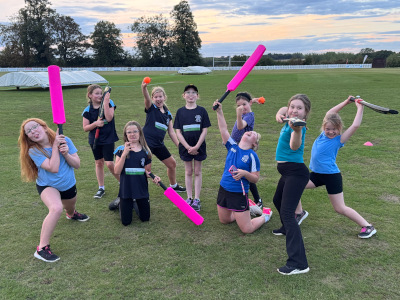
Congratulations to the Under 11 Girls of Rushden & Higham Town, whose first season has just concluded. It was certainly an eventful one, including helping provide a guard of honour at the Northamptonshire County Ground, growing from 4 members to 12, and winning their last game of the season (against Earls Barton CC) by a single run!
The girls’ section was formed by Ben and Lisa Hodges. Ben had been coaching the under-9s for a couple of seasons and volunteering as an All Stars Activator, and could see that more girls were coming through but could also see that they were sometimes intimidated by the loud and over-confident boys. It was clear that there were girls with talent, but they needed their own space to find it.
The girls play at Short Stocks in Rushden, featuring an astroturf wicket, an astroturf net and a nice bar – always appreciated by parents during the Friday night training sessions!
Ben and the girls threw themselves into the deep end by entering a league in their first season, playing in the Corby and District Youth U11 League (East). Sadly one of the teams dropped out and fixtures were a bit erratic this season, but they held their own.
“Music and dance play a big part in the team!” says coach Ben Hodges. “Cartwheels in the outfield between overs can often be seen. We are fortunate (or unfortunate sometimes when we are trying to get the girls to focus) that six of our girls all dance together at Starlight Dance in Rushden. So, whatever the latest song is that they are dancing to, you can guarantee that it will be heard and the six will be doing their best to teach the others the moves.“
“Special mention to Jennifer, who during one training session was practicing singing her part as Anne Boleyn for her school’s performance of the musical ‘Six’ while bowling at her teammates.”
They were fortunate to be mentored by the Northants County Cricket Club Steelbacks in the Community Team who assisted with putting on the fixtures, including providing some of their girls from the Young Leaders programme to act as scorers and umpires.
They were also lucky to be successful in bidding for a Metro Bank Girls in Cricket Fund award this season, which funded 20 hours of mentoring from community coaches from Steelbacks in the Community. A big thanks to Liam, Patricia, Beth and Louise.
Meanwhile Ben continues to coach and manage the team and has secured funding through Northamptonshire Sport to top up his coaching qualifications before next season.
Ben says that his season highlight was the team’s first victory, which came against Earls Barton when Jess Hambleton-Clark hit a six in the final over: “It was the last game of the season and the victory felt incredible. Seeing how chuffed the girls were and seeing how hard they had worked all season, and it was finally paying off.”
He also wants to give a shout out to the Committee at Rushden & Higham Town Cricket Club for supporting and embracing the girls team this season, and to all the parents for ferrying their daughters to matches, helping set up, and adding to a great family atmosphere at the club.
Aims for 2026 include developing a women’s softball team, doubling the number of girls playing, and perhaps playing some hardball cricket. Good luck to all involved!
If anyone is interested in joining the club, they should contact Ben Hodges on womenandgirls@rushdenhighamtowncc.com
Two weeks ago, Lauren Winfield-Hill faced a decision: Yorkshire were through to the final stages of the Tier 2 One-Day Cup, which directly clashed with the Women’s Caribbean Premier League that she was due to play in.
Guyana or a freezing cold, rainy September day at New Road? What a choice!
Except that Winfield-Hill is Yorkshire through-and-through – to the extent that, even when it became apparent 18 months ago that they had lost their bid for Tier 1 status to Durham, she still chose to remain with her home county (presumably their automatic promotion into the top tier in 2026 helped sweeten the pill, but even so).
So she stayed in England, and kissed goodbye to something in the region of $16,000.
But in Sunday’s final at Worcester, she made no mistake, racing to a 27-ball half-century as Yorkshire rode roughshod over Glamorgan to win a shortened 20-over match by 9 wickets with 8.4 overs to spare. One-sided isn’t quite the word.
When I asked Winfield-Hill about the WCPL afterwards, she was pretty unequivocal: “I’ve got a long-term contract with Yorkshire, and I’m very loyal to them. And to be honest it was a no brainer – Yorkshire is my priority, that’s why I wanted to stay.”
Minutes after lifting the trophy, surrounded by her Yorkshire teammates and about to crack open the champagne, she added: “It’s a blessing because I get to share these moments with the girls.”
Three years ago, at Lord’s, Winfield-Hill won the Rachael Heyhoe-Flint Trophy with Yorkshire Northern Diamonds. How does this compare?
“It’s a different feeling, it’s a very different group and a different occasion, but it’s really special. Today was about being able to do it when it mattered,” Winfield-Hill said.
Back in June, Yorkshire lost their T20 Blast final to Middlesex by 10 wickets, after putting just 101 on the board. (As a reminder, they were full strength, with both Winfield-Hill and Sterre Kalis in their XI.) Agreeing to foreshorten a 50-over game therefore felt, to me, like something of a gamble.
Winfield-Hill, though, described it as “common sense”: “It was probably going to be one of those where you win the toss, you bowl 50 overs, then you didn’t get to bat, which as a batter really sucks.”
“So it just made sense to make it a T20. Both teams were very much in agreement that we wanted to get a game on today and get a result. You don’t want to share a trophy.’
I must say, I feel slightly uncomfortable about the decision. Yes, it hosed it down at New Road about 10 minutes after the match ended – and it was still raining when we left the ground at 2pm.
But if you aren’t going to follow the playing conditions, what’s the point of having them in the first place?
Once the decision was taken, and agreed by the ECB, the toss became all-important: with heavy rain forecast from 1pm, making it likely that the second innings would be cut short, the team batting second would know exactly what they needed to do to stay ahead of DLS.
In fact, the toss was so critical that when the umpires oversaw it prematurely, and the commentators requested it be repeated so that it could be shown on TV, Winfield-Hill put her foot down and said she wouldn’t redo it “because I’ve already won it” – fair play to her!
As it turned out, Glamorgan’s batting effort – which started so positively – eventually fizzled out, allowing Yorkshire to get ahead of the DLS from the second ball of their chase and stay miles out in front of it the whole way through. Winfield-Hill was in her element: “I strangely quite like the pressure of DLS to frame a chase.”
For Yorkshire, the eventual result was an important one in countering some of the embarrassment felt by both the players and the ECB when they failed to win the Tier 2 Blast back in June.
“A lot of these girls were hurting from that T20 loss,” Winfield-Hill said. “There’s a bit of subconscious, ‘you’re being invested in so you should be producing the goods’. And to be honest, on reflection, in that T20 final, maybe that was a bit of the added pressure as well, that people turned up and, ‘oh Yorkshire are here, they’re paid’. I think a lot of girls felt the pressure of that.”
“Whereas today was just a really nice continuation of what we’ve been doing. I couldn’t wait to rewrite our wrong.”
Middlesex Director of Cricket Alan Coleman has told CRICKETher that the club intend to self-fund professional contracts by 2029, in order to ensure they are best-placed to progress into Tier One.
Last year, Middlesex failed in their bid to host a Tier One side, meaning they will be locked out of the top tier of women’s domestic cricket for at least the next 4 years.
But the club have embarrassed the ECB with their results this season, winning 18 of their 21 matches, beating Yorkshire twice, and finishing as inaugural champions in the Tier Two Women’s Vitality Blast.
“The game at Northants where we won the T20 was an astounding effort – I’ve never seen a team go through a whole Finals Day without losing a wicket,” Coleman said.
“It’s a challenge that the team have embraced, being amateurs, against professional teams – not only Yorkshire but Glamorgan, who are going to be Tier One in 2027.”
Middlesex’s challenge now is how best to keep together and develop a team of amateurs, many of whom are doing demanding full-time jobs – as typified by all-rounder Gaya Gole, who works long hours as a Management Consultant in the City.
For Coleman – who was present at Middlesex’s semi-final against Yorkshire on Sunday – the answer is for the club to directly invest in their women’s squad.
“Middlesex are incredibly ambitious and desperately want to invest in our women’s team,” he said. “There’s no greater deserving team for that investment.”
“Our challenge is to keep improving and keep developing across this period to ensure that we are as ready as possible for Tier 1 cricket as and when hopefully the ECB decide to open it up.”
“This is year 1 of a 4-year plan to be professional at the end of that period. And we almost want to, without sounding arrogant, take it out of the ECB’s hands and say, ‘You have to make us professional because of the performances that our players have put in, in Tier 2’.”
“So that’s the plan, and a part of that will be ensuring that our players are rewarded for the cricket that they play.”
The club are still working out exactly what that looks like, but we shouldn’t be surprised if we see the first tranche of part-time contracts awarded ahead of next season.
“We need to continue to invest in this very, very talented group of players to ensure they get the opportunity they deserve,” Coleman added.
Our first experience of the new Women’s County Cup takes place on a blustery, bright day in Northampton and concludes with something of an upset, as hosts Northamptonshire beat Worcestershire by 5 wickets.
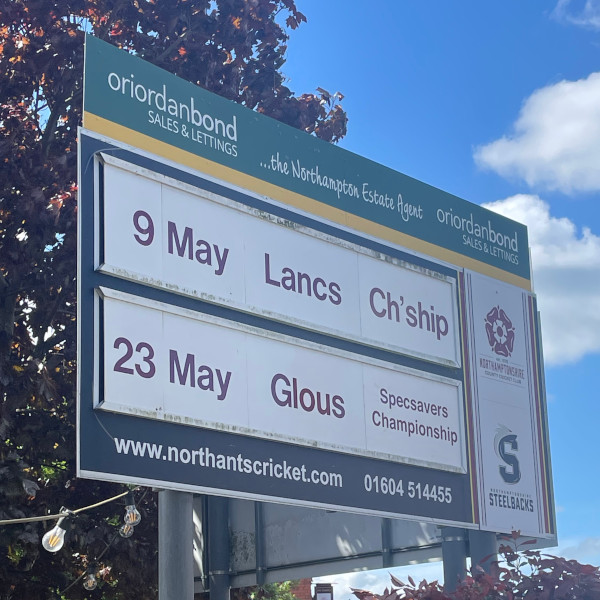
We have an inauspicious start to the day when we arrive at the Northamptonshire County Ground 2 hours before play, to find the gates locked and the fixture board outside the ground merrily suggesting that this match was merely a figment of our imagination.
It turns out that we’re at the wrong gate. Once we find the right entrance, things improve: we are able to easily park at the ground, find the press box open, listen to the PA warming-up, and go to watch Chloe Hill batting ferociously in the nets. The only other person inside Wantage Road at this point is a particularly loyal Northants member in a tartan cap, tucked away at the top of the Turner Stand eating his sandwiches.
This is cricket’s first all-inclusive, all-levels knockout competition, involving 37 teams from across all 3 of the new “tiers” – a brave new world for player, spectator and journalist alike. Syd and I have perhaps got a bit complacent of late, having got used to watching players who we know well, with a live scorecard which always has the correct information, and a stream which at the very least allows you to watch all the wickets back.
But this? This is right back to the Golden Days of the Women’s County Championship, of scrambling for binoculars to see who just fielded the ball, of turning to each other to ask: “I missed that – did you see it?”
I also do something I haven’t done in years: count the number of spectators. I reckon 130-odd – presumably, that’s what happens if no one knows that a match is actually happening.
Worcestershire certainly win the “most confusing team for scorers” award, with 2 Davies’s (Gwen and Poppy) and 1 Davis (Ruby), as well as a Beech (Sophie) and a Beach (Jess). We enjoy a delightful, unofficial running commentary from two of the Northants old-handers (“Clare Boycott?” “No relation”, etc, etc), as Worcestershire unhelpfully collapse to 11 for 3 within the opening 3 overs. This is the team who made the early running in Tier 2 by beating Yorkshire on the opening weekend of the season, so it’s something of a surprise to see them struggling.
Seamer Bethan Robinson is zippy and accurate, clean bowling Bryony Gillgrass second ball before returning at the death to do the same thing to Phoebe Brett with a perfect yorker. There’s a smart piece of fielding from Abby Butcher on the deep backward square leg boundary, which not only saves four but results in the run-out of Poppy Davies, before off-spinner Lenny Sims tempts a leading edge from Hill up to mid-off and the Worcestershire batting effort gradually fizzles out.
Northants are left chasing just 97; and the county’s proactive approach to recruitment over the winter ultimately pays off, as former Hertfordshire duo Gemma Marriott (24) and Amelia Kemp (23) lay the foundations with some well-placed boundaries for an easy win.
Afterwards, I go pitch side and manage to speak to the winning skipper, Marriott, who is delighted with both the result and the entire concept of the County Cup.
“It’s a great idea,” Marriott says. “It gives exposure to so many more teams to play against different levels. We know next week we’ve got Shropshire, so it’ll be interesting to see what a Tier 3 team is like now, and then if we win that, we know we’re going to get a Tier 1 team to play against which, if we get there, is going to be a great experience.”
She admits, though, that it is a little strange to not actually know where they will be playing in just 5 days time. “The Steelbacks will play Shropshire in the next round. Please check the website for details of the fixture,” says the ground announcer, helpfully, as we depart.
Welcome to the era of the Women’s County Cup, where uncertainty and opportunity sit hand in hand.
After all the kerfuffle of last year’s domestic restructure, we’re about to find out what it is all going to look like in practice. There has been a reasonable amount of player movement in the off-season (Durham, after all, had to build an entire team from scratch!) so for some teams, it will also be a chance to see how these new squads are hanging together… or not, as the case may be.
Our Big Plan here at CRICKETher Towers is to try to attend at least one home game of each of the eight Tier 1 counties this season, partly to try to get a genuine sense of how well teams are being supported behind the scenes. So watch out for a more even geographical spread of match reports than usual!
In the meantime, here are some predictions for the season (full squads at the bottom of the page):
Who’s going to win the One-Day Cup?
Raf: Counties were told by the ECB that they had to offer contracts to a minimum of 15 players. The deep pockets at Surrey decided that wasn’t good enough and have offered out 17 full contracts – that’s in addition to the 4 contracted England players in their squad, who as we now know will be available for the first 6 rounds of the One-Day Cup. There could be a lot of thumb-twiddling going on, but it’s also hard to look past such a well-stocked team (which is almost identical to last year’s Stars squad) for silverware.
Syd: Don’t ask me… ask the data! I carved-up the impact stats (full data here and here) from the regional era and added up the scores for the best 11 players in each squad.
That brought a clear winner to the surface: The Blaze. With their England players likely to be available for the key fixtures at the start of the season, I’m backing them to build up a sufficient head of steam to power them through the group stages. There will still be the knockouts to come in September of course, but assuming the Bryces are not off to the World Cup (which unfortunately looks unlikely at the time of writing) I think they can still do it.
Who’s going to win the T20 Blast?
Syd: The data above shows the squads with their England players included, but of course they aren’t going to be available for a chunk of the season, which particularly affects the Blast. So I took the England players out and re-ran the numbers:
This paints a very different picture, with Surrey and serial-underperformers Lancashire at the front; so I’m backing Surrey’s power-batting lineup, led by Bryony Smith, to knock the Blast out of the park.
Raf: The Blaze are the reigning champions [Ed: are you still reigning champions when the competition changes its name?] and I can see them pulling it off again this year. Similarly to Surrey, they have the same core squad as 2024 – and this time they will have both Bryces available for the whole season. The only question is whether the trophy will be emblazoned (gettit??!) with the name “Blaze”, or whether Notts might put their foot down at that point!
Who will get the wooden spoon?
Raf: Rumour has it that negotiations were a bit tricky behind the scenes at Central Sparks / Warwickshire last year, with the upshot that the squad they’ve ended up with isn’t necessarily the one they thought they would get. That’s always a difficult dynamic to negotiate – players may feel aggrieved or anxious to prove themselves – so while they’ve got some brilliantly talented young players (I’m excited to see what Dav Perrin does this season), I think they might struggle overall.
Syd: The numbers don’t look good for Warwickshire, but they look a lot worse for Somerset especially without their England players. A lot depends though on what Charlotte Edwards decides to do with a certain Heather Knight – I think she’s likely to continue playing ODIs, but if she gets dropped from the T20 format she’ll play a lot more domestic cricket and could single-handedly haul Somerset to something like respectability.
Who’s our one to watch?
Raf: I’m intrigued to see how Rhianna Southby gets on for Hampshire. We got a sneaky peek at her in their warm-up against Surrey at the Utilita Bowl last week (she hit a run-a-ball 42) and her batting looks to have come on leaps and bounds over the winter. Her keeping has always been top-notch; it’s been her batting which has kept her out of contention as a possible Amy Jones successor – could this be the season where she defies those expectations?
Syd: The wicket-keeping succession battle is certainly an interesting one, and I’ll be keeping a close watch on two of the other contenders – Seren Smale and Bess Heath. Heath’s move to Durham is a sensible one, ensuring she is their first-choice with the gloves for the first time in her professional career, having played second-fiddle (second-glove?) to Lauren Winfield-Hill at Diamonds previously. Smale, though, still has that problem with Ellie Threlkeld playing first-glove at Lancashire, so will really need to kick on with the bat to nudge the eyes of England’s soon-to-be-appointed new selector.
Who’s our golden oldie?
Raf: Hilariously, Sophie Luff was already considered a “golden oldie” by Syd last time we wrote one of these previews in 2021. To be fair, she does seem to have been a mainstay of women’s domestic cricket for eons (despite only being 31), and has been the face of most of the “revolutions” we’ve seen in the past decade (the KSL, regionals, The Hundred… phew!) Even after the ECB tried to abolish county cricket via the back door in 2019, Luff continued to spearhead Somerset, so it seems only fitting that she now leads them into the professional era.
Syd: Let’s go back all the way to 2010 – Berkshire are playing in the final of the T20 Cup against mighty Yorkshire. The top scorer for Yorkshire is one Dani Hazell (you might have heard of her) but Yorkshire can’t overhaul Berkshire’s 1st innings total of 173, of which 61 (off 46 balls) were scored by an exciting young player called “Alice” Macleod. Arguably, Lissy (she’s a mononym these days, like Elvis with a cricket bat!) didn’t quite fulfill her potential. She never played for England, but she went on to win the KSL with two different teams, and when Sunrisers won the RHF Trophy last season, she was a big part of that too. Now in her 30s, she’ll be wearing an Essex shirt this season, and playing a valuable role there as the “senior pro” as well as skippering the side if / when Grace Scrivens gets her England call-up.
Who’ll be the overall MVP?
Syd: Possibly my most left-field cricket take (yes… even more left-field than that Grace Scrivens one!) is that Katie George could still end up with 50 England caps… but as a batter rather than a bowler! I agree with Raf that Warwickshire are likely to struggle this season, but if they don’t then George will have been a big part of why they didn’t. She has been much more in control of her bowling in the last couple of years, both in terms of consistency and looking less like a lower-back injury waiting to happen; and her batting is starting to develop from “late-middle-order” to “proper middle-order”. If she can fulfil that promise, it will make her a very valuable asset indeed as she enters her peak years between 26 and 30.
Raf: From a marketing perspective, you’d have to say Ellyse Perry! As the most high-profile signing ever in the history of women’s county cricket, she’s certainly going to get the punters flocking to the Utilita during July, which is why Hampshire are (we assume) paying her the big bucks…
And what about Tier 2?
Raf: Well, it’s going to be quite embarrassing for Yorkshire if they don’t manage to finish on top, given that they are meant to be joining Tier 1 in a year’s time! They are also the only Tier 2 county who are actually handing out paid contracts to their players this year (thanks to the, ahem, largesse of Colin Graves).
Syd: Tier 2 is going to be… interesting. Which, as the apocryphal proverb about “interesting times” implies, isn’t always a good thing. Yorkshire aside, the standards are not going to be anywhere near professional, because these aren’t professional cricket teams. That doesn’t mean it can’t be competitive and exciting, and huge for the players involved; but I worry that fans that come to watch Tier 2 expecting the kind of women’s cricket they’ve seen on TV at the WPL or the World Cup are going to experience a reality-check that could leave them with a bitter aftertaste on the way home.
Raf: One thing which is still very much TBC is how the dynamic will work between Tier 1 and Tier 2 counties. Will “benched” Tier 1 players be permitted by their counties to go out on loan? Even if they are, will Tier 2 counties get parochial and promote their own players ahead of loaned-pros? Hopefully the counties can find a way to work together to present the best face of the women’s game to “new” spectators lending their support from men’s teams.
Imagine you ran a small restaurant business and planned to expand. You might have a vision to have twenty or fifty restaurants across the UK in 5 years and a strategy for how to achieve your goal. But you’d also recognise that things won’t always go as planned and consequently you’d need to review progress and revise along the way.
Two factors: the public’s appetite for your product, and your ability to maintain standards as your business grows, will primarily determine how things turn out – hopefully better, possibly worse.
However, provided you’ve not expanded ahead of demand and you’ve maintained the quality (to keep existing customers happy), the end state will be a viable business. Conversely, if supply exceeds demand or if quality is compromised by being spread too thin then you risk the whole chain going bust, taking with it any viable sites and any loyal customer base.
In this example, for the entrepreneur to ordain exactly how many restaurants they’ll have in 2 years and where they’ll be – based on speculative future demand and requiring expansion beyond their hitherto-proven ability to maintain quality – would clearly be madness.
The ECB has mandated that there will be eight Tier 1 counties in 2025. Each will employ 15 full-time professionals. There will be 9 Tier 1 counties in 2026 and 10 in 2027. Can you see the problem?
In fact, the only thing which could make this scenario worse would be not to know (or to deliberately obfuscate) the current state of your business.
In my example, the aspiring restaurant owner will know how successful their business is. Beyond overall sales and profit figures, they will also understand how loyal their customers are, the impact and effectiveness of promotions, pricing flex points, etc.
Unfortunately, women’s cricket has very little equivalent data – and the ECB has prioritised positive optics and narratives over every opportunity to collect it. Marketing spin prevails to the exclusion of anything which challenges their messaging, notwithstanding that to plan effectively for growth obviously requires an honest and objective assessment regarding the current popularity of the women’s game.
Attendance at international matches? There were good crowds at many of the international matches, particularly at those venues with a tradition of strong support for women’s cricket. But, let’s be honest, ticket prices were much lower than for a Blast match (with thousands of free tickets also given away). The result may have been a great atmosphere and good optics – but the ECB has no idea as to what value these spectators place on attending these games.
Viewing figures? The ECB and Sky were eager to publicise record viewing figures for last year’s WAshes, but similar press releases haven’t been forthcoming for this year’s Pakistan and New Zealand series and it’s reasonable to assume they did less well.
Broadcast rights? Historically, the broadcasters haven’t had to pay for women’s cricket separately. This is beginning to change and ICC and several boards plan to run separate auctions for men’s and women’s cricket going forward. Having to pay for something which was previously ‘free’ (or almost free) will force broadcasters to put a price on the product – and these figures won’t be determined by good intentions but by a hard-nosed assessment of how much a broadcaster’s advertisers and subscribers will pay. Looking for positives, Viacom paid $112m for 5 years of the WIPL (although any read-across from the Indian market might be limited?) whilst, less encouragingly, FIFA hoped to get over $300m for the recent Women’s World Cup but in the end narrowly avoided broadcast blackouts when it settled for a figure around $50m.
The Hundred? This is the ECB’s principal platform for promoting women’s cricket. Virtually every game this year seemed to be accompanied by announcements for new record attendances at a women’s game. But viewing figures for the Hundred were down across both men’s and women’s games (except for the men’s final) – a dramatic 41% for the women’s matches on Sky (and 2% overall for the women’s games shown by the BBC but with the women’s final down 20%). A widely-touted explanation was the lure of the Olympics, but the Olympics were on throughout the day and evening and so this doesn’t explain the relatively-sharper decline in viewers for the women’s matches. Moreover, if this argument is true, it shows a worrying lack of loyalty amongst cricket spectators when presented with other options.
And, how accurately does the number of people in the ground halfway through the women’s game reflect an interest in the women’s game which could be monetised? A cynic might posit that you wouldn’t use a similar metric to determine the popularity of a men’s game. Surely a true fan wants to see every ball?
So, whilst there were unquestionably good numbers from the first ball of the women’s game at many grounds this year, many spectators arrived later. Why was this?
Were they genuine fans of women’s cricket unable to make the start time?
Were these people who enjoyed watching some of the women’s game and appreciated the skills on display, but watching the men’s game was the primary reason for attending?
Compared to The Blast many fans have to travel further to Hundred host grounds and a single match (completed in under three hours) might be too short to justify the journey, whilst a double-header constitutes a ‘good day out’?
Some might have no interest in the women’s game, other than as a backdrop to eating, drinking or meeting friends? Or they wanted to ensure they got to the ground in good time?
I obviously have no idea what the respective percentage for each category is, but more importantly nor does the ECB – nor seemingly does it want to. Because if they did, it would be easy to design a series of matchday scheduling / pricing permutations [combined with spectator surveys] to better establish “Where We Are Today” in terms of the fanbase for women’s cricket, their loyalty and their willingness to pay. The downside is that establishing these data points could be expensive, could result in some negative optics and would probably be opposed by both Sky and the host clubs who risk losing viewers and footfall respectively.
Some of the considerations could be:
Ticket prices for Hundred matches during the Commonwealth Games weren’t reduced – even though spectators only got to watch a men’s game. This created a cognitive anchor that the women’s game is a ‘free’ bonus.
Hundred tickets could be sold providing access to either both games or just the second game. (Obviously, a stadium couldn’t be cleared of people who only wanted to watch the first match.) This would thus allow a separate value to be assigned to the first match.
Grounds could host 2 men’s games or 2 women’s games (rather than the current double headers).
The women’s game could be played second more often. (Although past evidence suggests this impacts attendance and viewing figures especially for weekday games; reducing ticket revenue and impacting on-site food and drink sales, in addition to not looking good.)
Whilst these different permutations still wouldn’t generate a comprehensive data set, it would be far better than what we have today. And it would be real-life data, not PR nor the projections of a marketing consultancy, with no consequences for whether they’re right or wrong as to the popularity of the women’s game and the value which viewers and spectators assign to it.
Now, there’s talk of hosting double headers for the T20 Blast next year. (NB Whilst it would be possible to align the home teams, the women’s opposition would often be a different team.) Why do this? This would simply replicate the issues seen in The Hundred. At some stage, the women’s game needs to become financially sustainable – and core to this is growing a loyal fan base which is attractive to sponsors, advertisers and broadcasters. This is a chance for everyone who complains how the women’s game is currently marketed to come forward with their proposals. Women’s double headers? Weekend festivals (4 games over a weekend)? Selling the broadcast rights to a different company with a compelling vision for women’s sport? Focussing on the digital aspects and engaging with younger, new customers in a different way?
To end, let’s return to our example of the ambitious restauranteur.
It’s good to have dreams. And to aim to be better and bigger.
But it’s stupid to pre-ordain outcomes. Be flexible. Be good at what you do. Leave customers wanting more. Never lose control of quality control. Understand what differentiates you from your competitors. Don’t just copy another chain which offers a similar product. And (eventually) revenue must always exceed costs.
If you do all those things, the outcome will be the best it can be. A sustainable product with customers who love it.




 CRICKETher