ANALYSIS: England Women Domestic Form Guide

The women’s Ashes starts in just a few days time – but how have the England squad been shaping up this season for their counties? Here at CRICKETher we’ve created a handy Form Guide, based on performances in the county championship this season, to tell you everything you need to know.

Charlotte Edwards (Kent): Runs: 220; Average: 55.00; Wickets: 1 at 50.00

Has been (unsurprisingly) prolific with the bat, and with a highest score of 88* against Yorkshire is currently the leading run-scorer in division 1 of the championship. Her running between the wickets has also looked particularly solid, which is a positive for England as it suggests that her knees will hold up well during the forthcoming series.

Heather Knight (Berkshire): Runs: 311; Average: 44.43; Wickets: 3 at 57.00

Has played county cricket more recently than any other England player due to Berkshire’s rearranged fixture against Middlesex last weekend, in which she made 28. Hasn’t performed spectacularly with the bat, aside from one score of 65 against Surrey back in May, but has opened the bowling several times and still seems to have the ability to beguile county players with her new-found talent for spin – suggesting we might well see Edwards utilising her against the Aussies.

Katherine Brunt (Yorkshire): Wickets: 6 at 9.83; BBI: 3-23

The amount that Brunt is allowed to bowl is still being carefully controlled – she hasn’t got through her full allocation of 10 overs in any game yet this season – which suggests that England might not want to risk her in the Test. However, her economy rate (2.64) has been exceptionally good, and her 3-23 in Yorkshire’s recent win against Middlesex (who had previously been unbeaten this season and were looking like challengers for the title) showed she is getting back to her best.

Kate Cross (Lancashire): Wickets: 3 at 30.00; BBI: 2-15

Having been promoted at the end of last season, Lancashire have struggled hugely to compete in division 1 – they haven’t won a single game this season – and Cross’s poor showing reflects that. She’s had to bear the brunt of the batting for her side, and has often had very low totals to bowl at to boot. Whether this will affect her England chances remains to be seen.

Georgia Elwiss (Sussex): Runs: 57; Average: 19.00; Wickets: 3 at 26.33; BBI: 2-43

Were the England selectors basing their choices on county performances alone – something which we at CRICKETher find rather doubtful! – it’s unlikely that Elwiss would have made it into the squad. Opening the batting for Sussex this season, her highest score has been 27, and even that looked scratchy. Her bowling has also been expensive and yielded little in the way of wickets. However, her recent showings for the Academy might still save her when it comes to selection for the ODIs.

Lydia Greenway (Kent): Runs: 106; Average: 35.33

With scores of 13*, 8, 23*, 57 and 5, it’s been a mixed season for Greenway. Nonetheless, her 57 against Nottinghamshire – made when her team most needed it, coming in at 3 after both Edwards and Tammy Beaumont had been dismissed cheaply – showed her quality. Her fielding is also still far and away the best in the championship.

Becky Grundy (Warwickshire): Wickets: 6 at 21.33; BBI: 2-24

2-24 against Surrey is Grundy’s best performance to date, which helped take her team to victory. However, she’ll be disappointed both with her lack of wickets and the fact that her bowling (usually so tight) has been relatively expensive.

Jenny Gunn (Nottinghamshire): Runs: 125; Average: 31.25; Wickets: 8 at 15.12; BBI: 2-18

Has bowled a lot of overs for Notts and done so in her usual economical fashion (her economy rate to date is 2.95). Has also looked every inch the all-rounder, top-scoring for Notts twice in 5 matches, including 52* against Berkshire as the rest of her team collapsed around her.

Amy Jones (Warwickshire): Runs: 35; Average: 11.66

As the stats suggest, it’s been a bit of a poor season for Jones, whose highest score is only 19. It makes her chances of playing in the ODIs look remote, barring an injury to Sarah Taylor.

Laura Marsh (Kent): Runs: 63; Average: 31.50; Wickets: 9 at 8.22; BBI: 5-15

Marsh’s 58 and 5-15 against Notts at Canterbury back in May well illustrate the reasons for her inclusion in the England squad: a bowler who can also be trusted with the bat. 5-15 also happens to be the second-best bowling performance in the top division of the championship this season (the best, though, was the non-selected Dani Hazell’s 6-28 against Berkshire…ahem).

Natalie Sciver (Surrey): Runs: 111; Average: 22.20; Wickets: 17 at 19.28; BBI: 5-27

Has had a mixed season with the bat – with two golden ducks (against Warwickshire and Berkshire), but a top score of 67 against Sussex back at the start of May. Her bowling has been better – though it’s questionable whether her performance with the ball actually matters to the selectors, given that England seem to now see her as a batsman who bowls, rather than a true all-rounder.

Anya Shrubsole (Somerset): Wickets: 9 at 6.33; BBI: 4-18

As the only player in the squad currently playing in division 2, we perhaps need to look upon Shrubsole’s bowling figures with caution. Nonetheless, you can only bowl at the batsmen in front of you, and you can’t ask for much more than figures of 2-9, 3-30 and 4-18, at an economy rate of 2.28.

Sarah Taylor (Sussex): Runs: 216; Average: 54.00

With 216 runs at a strike rate of 99.53, this season has gone exactly as we would have expected for the supremely talented Sarah Taylor. Watching her bat at Billingshurst against Notts (she made 39, and Sussex won by 5 wickets) was an absolute delight.

Lauren Winfield (Yorkshire): Runs: 205; Average: 205.00

Yorkshire’s brilliant (and somewhat unexpected) recent performances in division 1 of the county championship – with mammoth victories against Middlesex (by 9 wickets), Berkshire (also by 9 wickets) and Warwickshire (by 86 runs) – have been largely a result of their explosive captain. Her average is simply ridiculous, particularly for an opening batsman. She may be disappointed to have finished on 99* against Middlesex in her most recent championship innings – but she’s unlikely to be so when the team sheet is announced for the first ODI next week.

ANALYSIS: How Australia’s Top Batsmen Get Out

Australia’s leading batsmen – Jess Cameron, Meg Lanning, Ellyse Perry, Alex Blackwell, Alyssa Healy and Elyse Villani- have collectively been dismissed over 400 times in limited overs internationals*. We run the numbers showing how Anya Shrubsole and the rest of England’s bowling attack will be looking to get them out in this summer’s Women’s Ashes.

Player Caught Bowled LBW Run Out Stumped
Blackwell 38% 17% 15% 23% 7%
Cameron 57% 20% 8% 9% 7%
Healy 54% 17% 10% 13% 6%
Lanning 60% 16% 9% 13% 3%
Perry 52% 14% 5% 23% 7%
Villani 63% 25% 8% 4% 0%
TOTAL 51% 17% 11% 16% 6%

As with England (and as we would expect) the most common mode of dismissal is caught. For individual players the statistically significant figures are highlighted in red.

Jess Cameron and Alyssa Healy (like England’s Heather Knight) have fairly average profiles, and are not particularly susceptible to getting out in one way any more than another.

In contrast, Southern Stars captain Meg Lanning and opener Elyse Villani get caught a lot! (Although Villani hasn’t played that many matches, her % Caught is well beyond any doubts regarding its statistical significance.)

Like England’s Sarah Taylor (who also gets caught more than average) both players like to play their shots; but their style is very different to Taylor’s. Where Taylor tries to go elegantly over the infield, Lanning and Villani are looking to smash it to – and often over – the boundary rope. Tellingly, Taylor’s boundary rate is much lower – 10% of balls faced, while Villani’s and Lanning’s are at 14% and 15% respectively.

The other side of Villani’s game is that she doesn’t get Run Out very often at all – just 4% of her dismissals; probably because… who needs to run when you are hitting it to the rope?

By contrast, Australia’s vice-captain Alex Blackwell is significantly susceptible to being Run Out. Stylistically, she is quite a careful, conservative and unflashy player, at both domestic and international level, so in a way she is the antithesis of Villani, and she just doesn’t play the kind of shots that get Villani caught.

Also, she bats at a similar position in the order to England’s Lydia Greenway, who suffers the same Run Out problem; and so part of the explanation may well be the same too – coming in later on, when the pressure is on to take all the singles that might be on offer, however tight; and more often than not batting with less experienced tail-enders.

Ellyse Perry’s stats look pretty standard at first glance, but hidden behind the numbers shown above is actually something very interesting – compared to her peers, Ellyse Perry doesn’t get out – not very often, anyway! In fact, of all the world’s leading batsmen, she has far and away the highest Not Out % – 40% of her innings ending undefeated.

The underperformance of Australia’s top batsmen was a key reason for their downfall in the 2013 Ashes series in England; it’ll be interesting to see how they fare this time around.

ANALYSIS: Ellyse Perry & Not Outs

Last week we looked at how some of England’s leading batsmen get out. While researching a similar article on Australia’s top order, we noticed something else interesting: Ellyse Perry – the word’s number 12 ranked ODI batsman – doesn’t get out… or not very often anyway! A staggering 40% of her (limited overs) innings end Not Out.

Intrigued, we ran the numbers for the rest of the Top 20 ranked ODI batsmen, plus threw in some other leading names for good measure. Across the group, the Not Out average is 18%. Meg Lanning (admittedly coming in earlier in the order) ends just 9% of her innings Not Out; and even for more comparable players, the numbers max out in the high 20s. Dane van Niekerk, often batting at a similar spot in the order, is 2nd in the list, and her N.O. is 29% – way, way behind Perry.

This raises the question of whether Perry’s cross-format limited overs average of 30 is distorted by this? To an extent it is. If her N.O. was the same as van Niekerk’s (29%) Perry’s average would fall to a somewhat less impressive 25. So if we are using the average as an indication of how many runs Perry might score, it is distorted. But that doesn’t mean to say it isn’t a fair indication of her value to the Southern Stars – after all, you only have one wicket, and giving it away as little as Perry does is clearly a big part of what makes her one of the world’s most extraordinary players.

The Not Out List

Name N.O. %
Perry 40%
van Niekerk 29%
Priest 29%
Raj 28%
Sciver 27%
Greenway 27%
Kapp 26%
Gunn 25%
Knight 20%
Blackwell 19%
du Preez 18%
Cameron 17%
Maroof 16%
Dottin 16%
Kaur 16%
Taylor, SR 15%
Devine 14%
Edwards 14%
Taylor, SJ 13%
McGlashan 12%
Kahn 12%
Lanning 9%
Satterthwaite 9%
Bates 6%
Atapattu 1%

ANALYSIS: How England’s Batsmen Get Out

England’s 4 leading batsmen – Charlotte Edwards, Heather Knight, Sarah Taylor and Lydia Greenway – have collectively been dismissed over 500 times in limited overs internationals*. We take a look at the numbers showing how they got out.

Player Caught Bowled LBW Run Out Stumped
Edwards 49% 19% 19% 9% 5%
Greenway 45% 16% 13% 17% 9%
Knight 47% 20% 12% 16% 6%
Taylor 56% 17% 10% 11% 6%
TOTAL 49% 18% 15% 12% 6%

With the usual caveats about lies, damned lies and statistics, what does this tell us?

Collectively, the most common mode of dismissal is Caught. This is the case throughout all international cricket, men’s and women’s – though the men tend to be caught behind rather more often than the women.

For individual players, the statistically significant numbers (see An Aside on Statistical Significance below) are highlighted in RED.

Sarah Taylor tends to get caught rather more than her peers. She likes to go over the infield, with lofted drives particularly over mid on. It is a tactic which has brought her enormous success, but it isn’t without its risks if she doesn’t actually clear the fielder.

Charlotte Edwards is particularly susceptible to being out Leg Before Wicket; and although the frequency of LBWs has fallen slightly, from 20% earlier in her career to 18% more recently, it remains significant. Is it because she opens the batting? In doing so, she faces the best bowlers at their freshest, swinging it in at pace towards her legs; and if they’ve done their homework, they are probably looking for that decision too! Maybe the England captain also suffers slightly from the man at the other end not having got his eye in yet? (Perhaps that’s the reason for those trade-mark looks of withering disbelief as the ump’s finger is raised!)

Lydia Greenway gets Run Out a lot. Is this because, batting a bit further down the order, England are more likely to be under pressure and chasing every run when she comes to the crease; and so Lydia finds herself taking more risks than her peers? Or perhaps it’s because she finds herself batting more often with all-rounders and tail-enders? Either way, it’s a particular concern this summer given that the fielding of the Aussies is top-notch, and won’t leave much room for confusion between the wickets.

Finally, Heather Knight is… Heather Knight – balanced in dismissals, as she is in life. While it is true that 16% of her dismissals are Run Outs, compared with a group average of just 12%, this is not statistically significant! Why? Well, read on…

An Aside On Statistical Significance

Statistical significance is a complex science, but Heather’s dismissals are actually an interesting case here, helping to explain it in simple terms. As we’ve seen, 16% of her dismissals are Run Out – shown in PURPLE above. This looks like a lot compared with the average of 12%, but actually she has only been Run Out 8 times. Had she been run out just 2 times fewer, her percentage would fall right down to 12% – i.e. the average for the group. So her 16% Run Outs are not considered statistically significant.

——————

* ODI + T20I

Alex Blackwell (R) With Heather Knight

Alex Blackwell speaks to CRICKETher: on playing for Berkshire, the women’s Ashes – and seeing the ball like a watermelon!

With less than 5 weeks to go until the start of the women’s Ashes, Australian vice-captain Alex Blackwell is quietly confident about her team’s chances. “We know we performed well in the last series in Australia in the shorter formats. We’re feeling very positive about it.”

Her confidence is understandable. Though England are the current holders of the women’s Ashes – having won back-to-back series’ in England in 2013 and Australia in 2014 – it was Australia who came out on top in both the ODI and T20 legs in the last series, winning 4 out of 6 of the limited-overs games. Only England’s early victory in the Test – worth 6 points (compared with 2 for each ODI and T20) – saw them home.

Since then, Australia have whitewashed both West Indies and Pakistan in ODI series’ – and more to the point they resoundingly beat England in the World Twenty20 final last April, by 6 wickets.

This time around, too, the multi-format points system has been rejigged. The Test match will be worth only 4 points, and will also be played mid-series, between the ODIs and T20s – a move Blackwell thoroughly approves of.

“The 4 points for the Test is really positive, because last Ashes to lose the Test and then win more of the limited overs games than England was really tough for us. To have the Test in the middle probably helps that scenario. If someone does take the Test match, the series is still very much alive.”

Blackwell herself is likely to be one of Australia’s key threats in the forthcoming series. Now aged 31, she has been a mainstay of Australia’s middle-order batting since her debut against England back in 2003, and since 2011 has averaged over 50 against England in ODIs.

And by the time the series begins on July 21 at Taunton, she will already have been in the UK for over 2 months, playing for Berkshire in the Women’s County Championship.

It’s meant time in the middle adjusting to English conditions, and the chance to face England bowlers Dani Hazell, Danni Wyatt, Jenny Gunn, Laura Marsh, and Tash Farrant (in matches against Yorkshire, Notts and Kent).

“It’s been a big advantage to see how the England girls are progressing,” Blackwell says. “Everyone goes about adding to their game and improving, so to see where they’re at now is really good.”

For Blackwell, too, who previously spent a season with Berkshire back in 2008, it’s been a chance to reconnect with her roots. She says Berkshire was always a natural choice for her when deciding to spend time in the UK this summer:

“I have family from Berkshire. My aunt and uncle are here, and my Dad is from Berkshire as well. He was born here. So for me to be able to represent my home county (if I was going to have one over here) is really special.”

Additionally, both Blackwell and fellow Aussie Erin Osborne – who has also been playing in England this season, representing Sussex – have enjoyed the unique opportunity to train with the Elite International Cricket Academy, based at the Ageas Bowl, alongside male cricketers from Australia and New Zealand.

“We’re getting to play in some really high-level practice matches. We actually played the New Zealand ODI squad the other day. I faced Grant Elliott and Mitchell Santner, and Santner tied me down pretty well! I found him more difficult than the fast bowlers.”

“These opportunities are incredible. It’s all an experience. That’s something new for us, and it’s made us very excited about cricket. Obviously the ball comes quicker to us in the field, so hopefully when it comes to the Ashes we can see that ball like a watermelon cos it’s coming a bit slower!”

Blackwell and Osborne’s early arrival in England might be thought to be simply a clever tactic on behalf of Cricket Australia to ensure that two of their top players have experience of English conditions before the biggest event in women’s world cricket kicks off in July, but Blackwell says that both she and Osborne wanted the experience for themselves as much as anything else.

“Both of us were searching for the best way to prepare for us, and we felt that playing matches and being over here in a new environment was something very worthwhile. Both of us have been in the team for a long time – I’ve been around since making my debut at 19 and I’m now 31. So you’re always looking for new ways to prepare better and stay enthusiastic about the game.”

Nonetheless, Blackwell stresses that her time in England has been crucial Ashes preparation: “I know that every match I get to play is part of my preparation. I’m not going to be warming up in the Ashes. I would have had all those ups and downs, working out how to best play in these conditions, and I think there’s probably no better way to prepare.”

Having recently hit a solid 42* for Berkshire against Ireland – an innings in which Blackwell did indeed appear to be seeing the ball like a watermelon (!) – there’s no doubt that England’s bowlers had better watch out this summer.

CLUB OF THE MONTH: North Maidenhead Women’s CC

Here at CRICKETher, we’re passionate about women’s cricket at all levels, including club cricket. It’s our mission to offer coverage of women’s (and girls’) club cricket wherever we can! So – we’re starting a new feature. ‘Club of the Month’ will focus on one women’s or girls’ club every month, giving you the lowdown on their highs, lows, and everything in between.

If you’d like to see your club featured here, get in touch – we’d love to hear from you!

North Maidenhead Women’s CC (Berkshire)

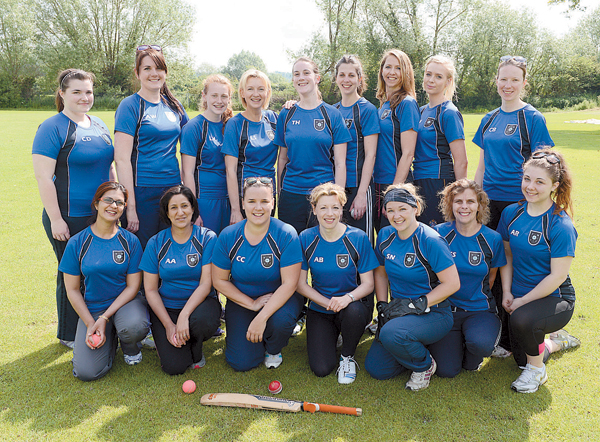
The women’s section of North Maidenhead CC was formed in November 2013. The club chairman, Tony Drake, had been approached earlier that year about the possibility of starting a ladies side by current player Tameena Hussain, after she decided she’d rather be playing cricket than netball! Tony then partnered with Jon Stewart from Thames Valley Cricket Academy, and Jon led a 6-week indoor taster session, attended by 26 women each week. The decision to form the club was made from there.

They play at the beautiful North Maidenhead CC ground at Summerleaze Park, Maidenhead, Berkshire. Chairwoman of the section Laura Higgins describes North Maidenhead as being “very committed to providing excellent facilities”.

North Maids

In fact, support from the men at North Maidenhead has been crucial to the club’s development. Jon Stewart is still their main coach, and they have also enjoyed coaching from the NMCC men’s coaches. Club chairman Tony remains one of their biggest supporters.

They’ve also been inspired by local England star and Berkshire captain Heather Knight, who has been down to the club to coach them. Berkshire are playing several of their fixtures this season at the North Maidenhead ground, and a strong North Maidenhead club contingent was present earlier this season for the Berkshire-Surrey match, to witness Heather making 65 and cheer on their county!

This season they are facing a new challenge, as the club will be participating in the inaugural Thames Valley Women’s League. Their first League fixture of the season is this Sunday (31st May) against Oxford. (Full fixture list here.)

“We’re really looking forward to it,” says Laura. “We’re not sure how we’ll get on but we know everyone will give it their best shot.”

While some of the club’s players have been invited to try out for Berkshire this season, the focus of North Maidenhead is clearly on participation, and making sure everyone feels they can get involved. Many of the current players were total beginners to cricket when the club formed in 2013. Laura describes the highlight of the last 18 months as: “Winning our first match and seeing how happy everyone was! The team bonding has been awesome.”

Laura says the club are always keen to welcome new members: “we are happy for anyone to be part of the team – we are a very welcoming and social club!”

Anyone interesting in joining North Maidenhead Ladies should contact Social Secretary Ali Wetherall (alexandrawetherall@gmail.com) or Laura herself (NMCCladies@gmail.com).

We hope to keep you updated with how North Maidenhead Ladies perform over the coming season. Good luck girls!

Batwoman: Heather Knight Rises!

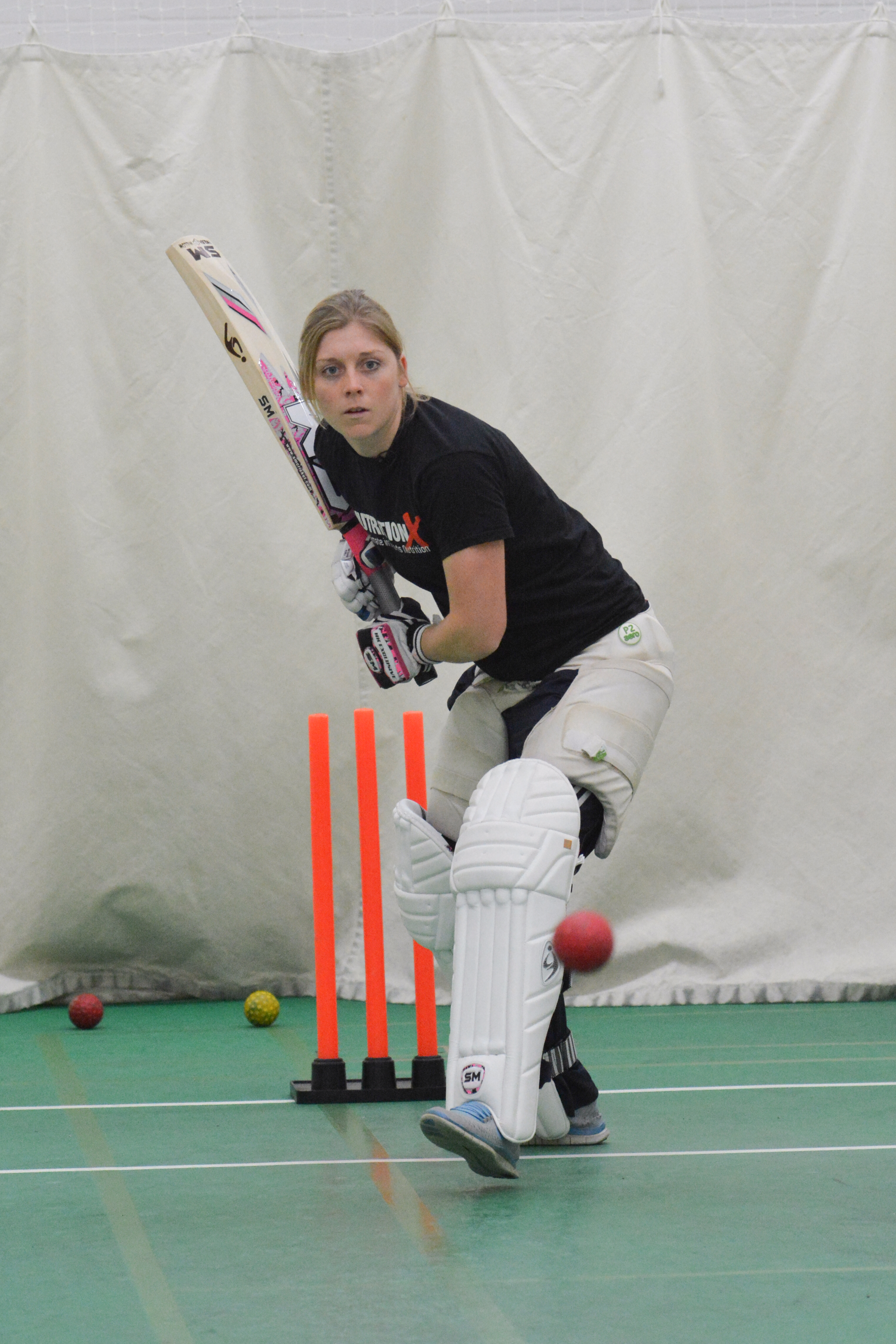
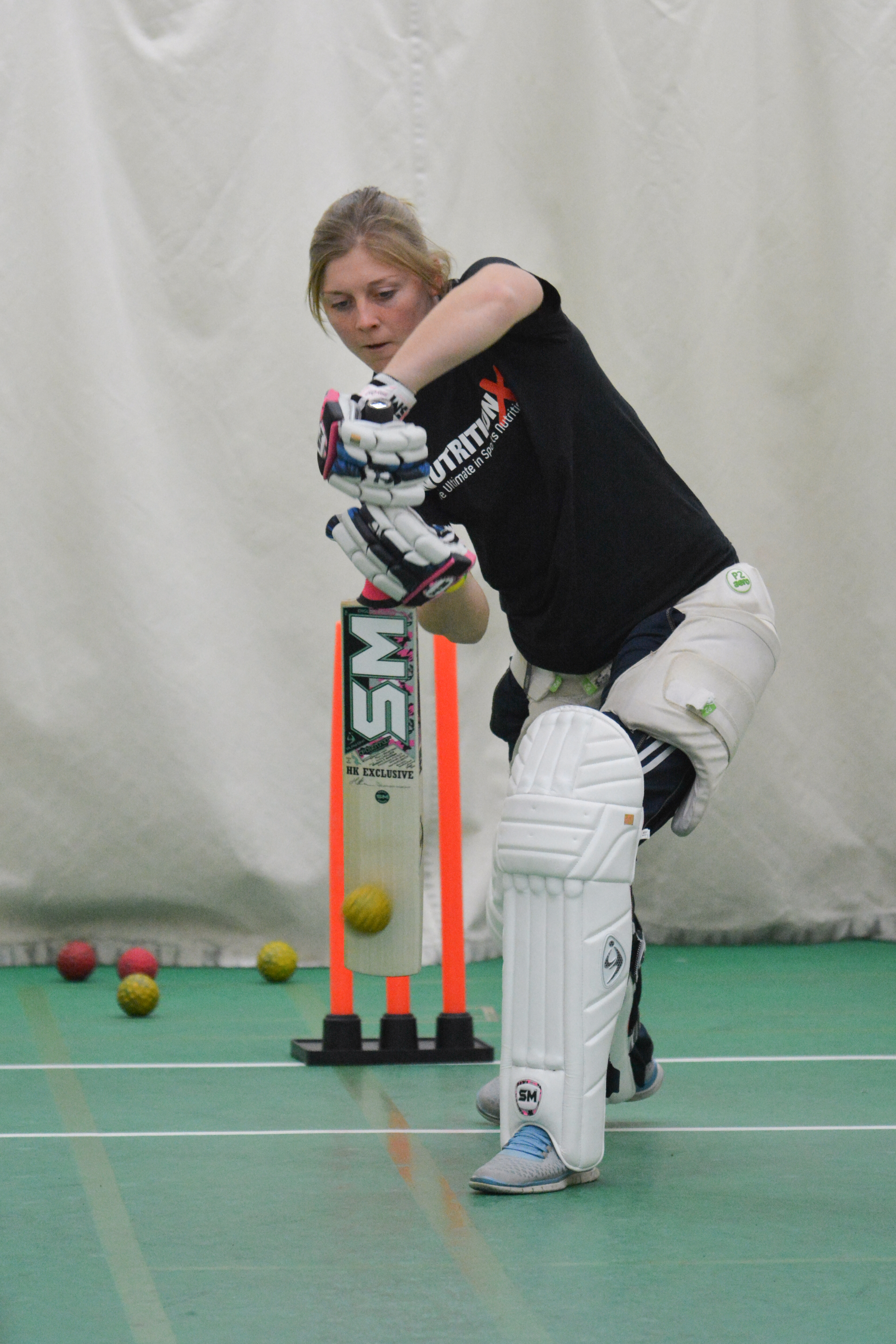
CRICKETher was excited to be present at Finchley Cricket Club last Friday, April 17, for the official launch of the UK’s first ever range of women’s cricket gear – Cricket Deal Direct’s Heather Knight Cricket Collection.

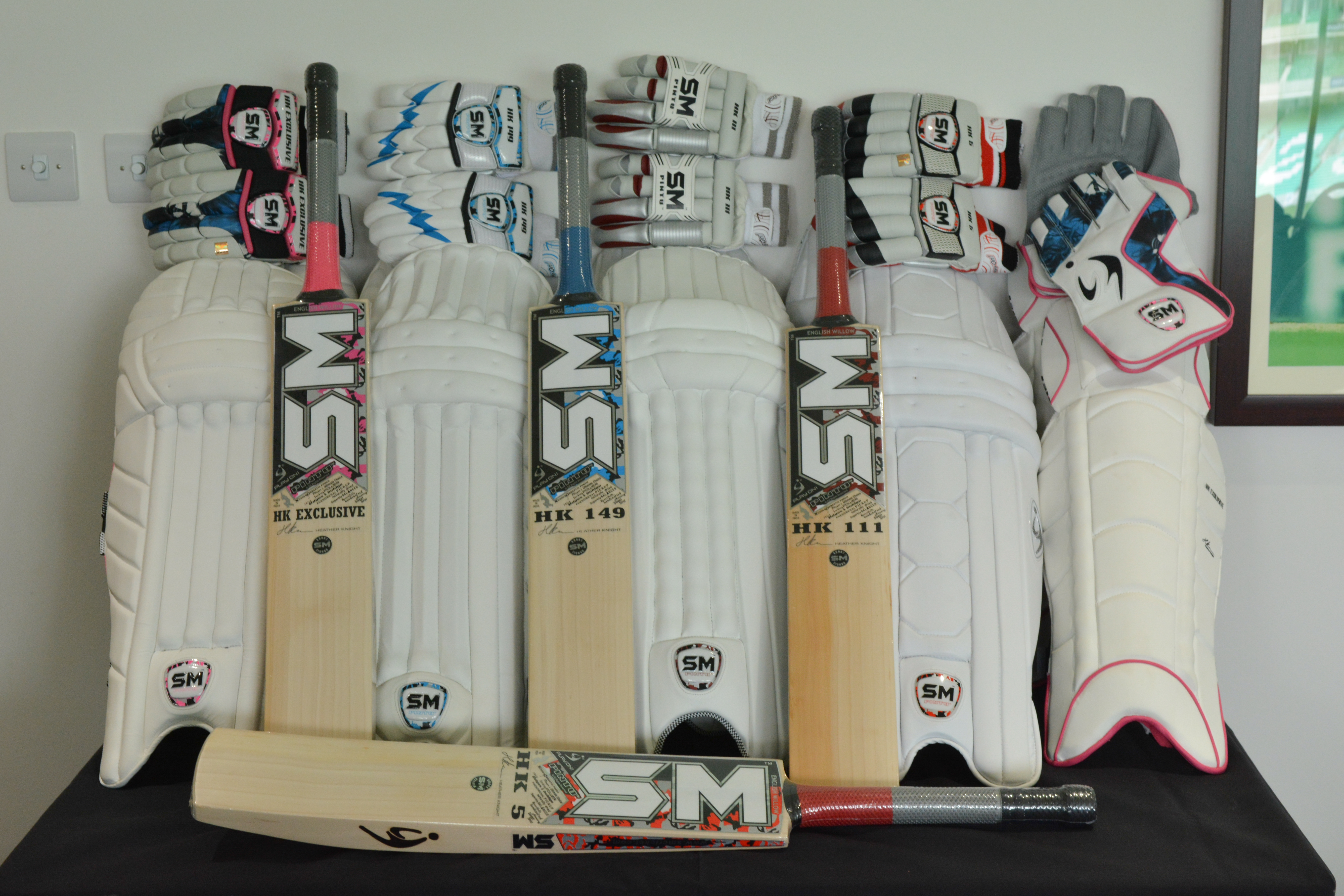
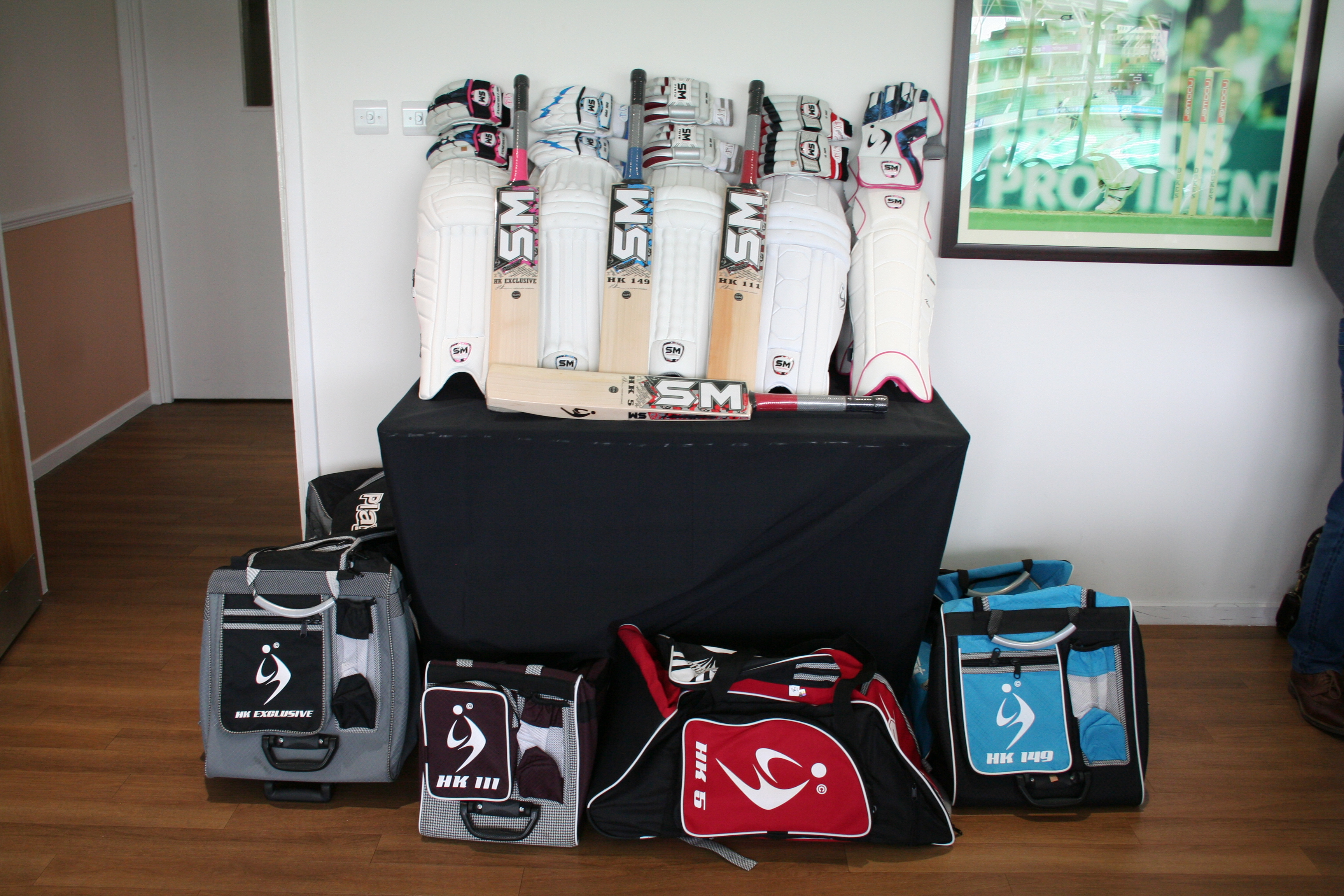
The exciting new range features bats, batting pads, gloves, wicket-keeping pads and gloves, as well as kit bags. These high-quality products have all been designed and manufactured specifically for girls and women by SM.

ACS_0229 IMG_5294

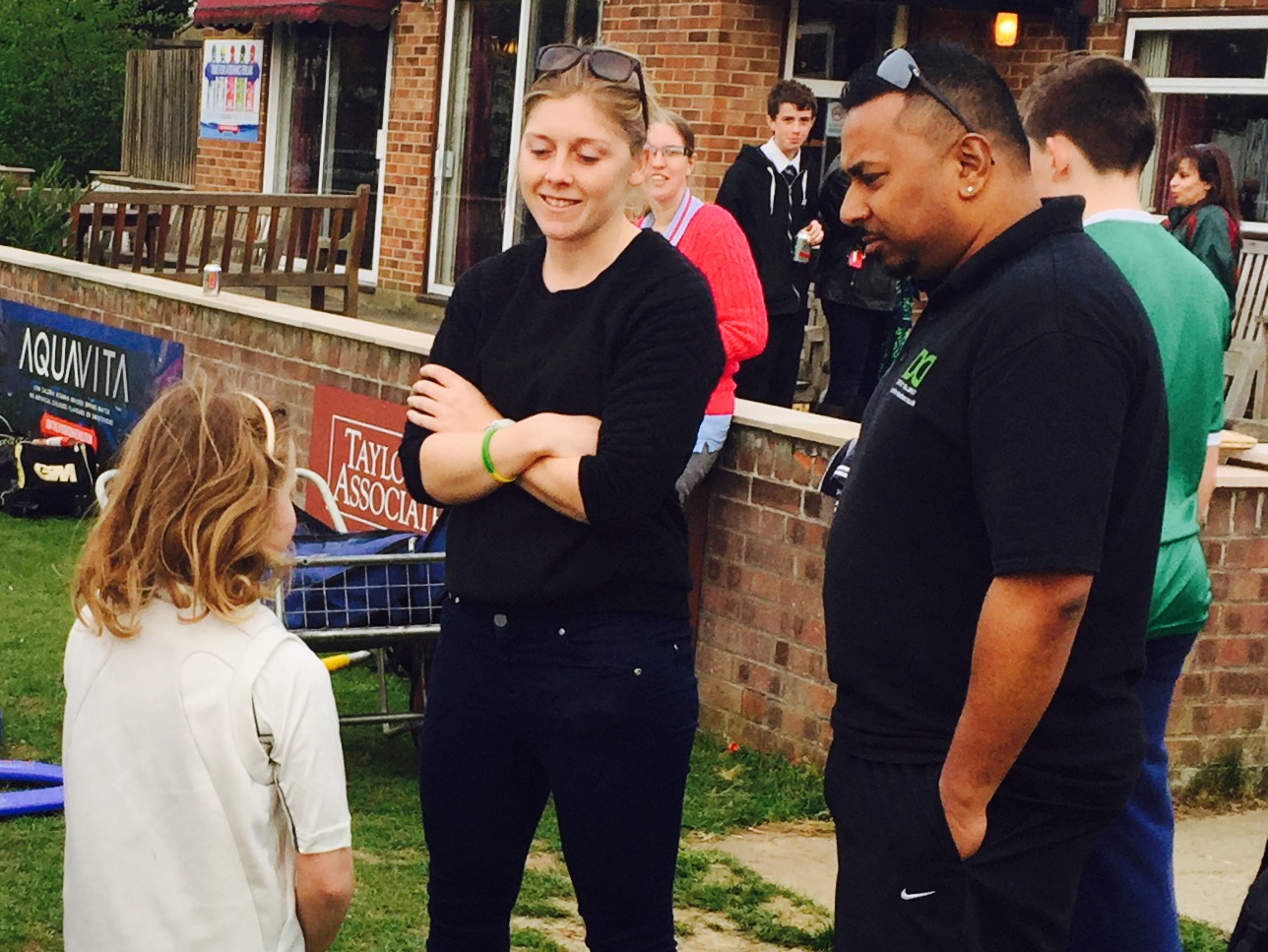
England vice-captain Heather Knight is the face of the new collection, and was present at Finchley for the launch. Speaking exclusively to CRICKETher, she expressed her enthusiasm for the range:

“It’s quite novel to me to be the face of a brand, but it’s really cool to have my name on the bats! And it’s brilliant that SM and Cricket Deal Direct have chosen to invest in women’s cricket. They’ve noticed the growing game, and brought out a specialised range to represent that growth.”

There was certainly a buzz of excitement at Finchley on Friday, as Heather signed bats from her new range, then conducted a Q&A session with a group of eager young girls, who might yet be the England stars of the future.

FullSizeRender

England’s Heather Knight conducting a Q&A at Finchley

Here at CRICKETher, we loved the look and feel of the new range. And it’s great to see products which are aimed specifically at women, given that many female cricketers are still struggling with kit that’s been designed for use by men. Heather agreed:

“The bats are great. They’re not too different to your standard ranges, but a little bit on the lighter side, and the pads and gloves are slightly smaller.

“I remember when I was playing under-11s, playing with these massive pads and not being able to run! It’s massively important to get kit that’s right, and I’d always choose small men’s pads previously. So to have a specialised women’s size is ideal. I’ve tried them out and they’re the perfect size for me. I’m not that tall, so it’s good to have that need for women met.”

ACS_0420 ACS_0457

Another great thing about the HK Collection is the price. Cricket Deal Direct source their equipment directly from the manufacturer, which means they are able to offer customers extremely competitive prices; the HK Collection is no different. Bats, for example, start from £125 for the HK5 range; the top-of-the-range model which Heather herself uses, the HK Exclusive, costs £245.

And it’s pretty clear that Cricket Deal Direct know what they’re talking about when it comes to women’s cricket. They’ve proved themselves keen supporters of the women’s game since the company was established in 2012, providing sponsorship for several county players, including Middlesex’s Sophia Dunkley and Cath Dalton, who both used their SM bats to great effect last season.

This season they will be supplying the shirts, balls and stumps for the new Middlesex Women’s Cricket League, which is being hosted at Finchley CC on Friday evenings throughout the season, and is especially aimed at women who are new to cricket. They are also helping to launch a new women’s league based in Northants.

And, as Managing Director Ian Anderson explains, they are committed to expanding the Heather Knight Collection over the coming months. In particular, working closely with Heather herself, they hope to develop a range of cricket clothing specifically for women to complement the current products. CRICKETher will be following developments with interest, and will of course keep you informed when the new range hits the marketplace – hopefully by the start of the 2016 season.

For now, the Heather Knight Cricket Collection will be available to order online from early May, from www.cricketdealdirect.co.uk.