How do you persuade 600 people to pay up to £8 to come and watch a domestic women’s cricket match, at an out-of-the-way ground, in a small, non-cricketing Midlands town? Rob Knott – Sports PR Officer for Loughborough Lightning – spoke to CRICKETher about making the Super League a super success, even without the backing of a traditional First Class setup.
Loughborough is of course the place where the Super League was first announced, just over a year ago, and Knott tells us that the university were quick to see the opportunity:
“We as a university took a serious look at it. The fact that we know we are renowned for sport and that we have some of the best facilities in the country for cricket, made a good reason to bid for it. As part of the bid, myself and the marketing team looked closely at ‘How could we attract an audience to come and watch cricket here?’ and we looked at some of the things we’ve done in the past with the other franchises that we’ve worked on.”
The most successful of those franchises is the Loughborough Lightning Superleague netball team:
“Probably the biggest thing for us is trying to create a bit of a buzz through social media, and with Loughborough Lightning netball we’ve managed to do that quite successfully and grow our database and interest in the sport. The netball team has been running for 11 years and we’ve slowly built that up, year on year. We are now selling over 1,000 tickets for every match; and we were successful in remaining as a Netball Super League franchise for the 2017 season going into the next cycle.”
But women’s sport at Loughborough has always been more than netball, and the cricket team builds on that:
“We host two international athletics events on campus every year, where we’ve had the likes of Jessica Ennis-Hill competing, and also we are one of 7 franchises in the National Badminton League, so we were always quite confident because although women’s cricket would be a new opportunity for us, we’d had some good success in previous ventures”
There is an old adage in product marketing: If you can’t fix it; feature it! And that seems to be what Loughborough are trying to do with the cricket:
“We are not a Test match venue – we don’t have the infrastructure that some of the other teams have – so we are trying to create a similar experience that you’d have at an out-ground for county cricket. So we’ve got gazebos in purple and pink, and we’ve got [pink!] deck chairs – we are working hard to create a carnival atmosphere.”
Interestingly, Loughborough have decided on a ticket price-point a little higher than the other teams. The Vipers, for example, charged adults just £3 at the Ageas Bowl last week, but at Loughborough it is £8 for adults and £5 for kids:
“We didn’t want to devalue women’s sport – we think this is a fantastic product and a fantastic opportunity for women’s sport to be showcased, so we wanted to price it at a certain level that didn’t undervalue it. It is more expensive than the other counties, but for me it is still good value for money.”
Loughborough have also gone down a non-traditional route by not producing a scorecard, but instead offering a beautiful souvenir poster, with space on the reverse for autographs:
“This is a great opportunity for children and young people to get really close up to some of the biggest names in the world and get their autographs – they are very accessible, so that is encouraged – and we want to make sure that some of the fantastic players we have on the team become their heroines in the future, by putting the posters up on their wall.”
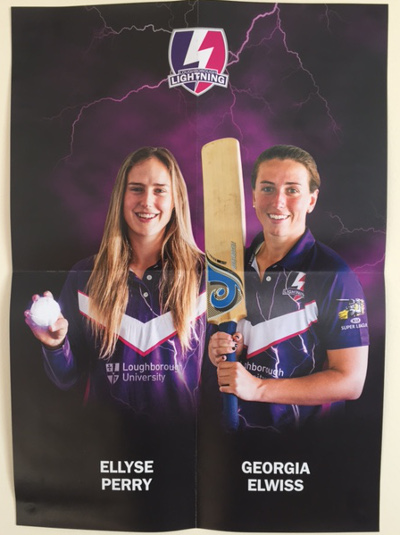
Lightning A3 Souvenir Poster
Loughborough have clearly tried very hard to understand how kids tick in the 21st century, and Knott even has his own case study – a 10-year-old “sports-mad” son:
“He loves all sports. For him watching women’s sports fixtures is no different to watching men’s football, and he has posters of Loughborough Lightning women’s netball team and cricket team alongside his football heroes from Leicester City.”
Getting (and keeping) a good crowd in for the cricket, in a town with no cricketing heritage, was therefore partly about doing something a little bit different, but it was also partly about doing the “hard yards” and literally getting out and pounding the streets:
“We did some very old school, traditional marketing – we produced flyers and just went out into the town – going around bars and restaurants and community centres, just trying to get the message out to the local community.”
And while there is no official First Class county behind Loughborough Lightning, the local county clubs nevertheless offered important support:
“Leicestershire, Derbyshire and Nottinghamshire have all pushed out 10% discount offers to their members; and we’ve run articles through their channels and promoted through their social media.”
For all the hard work the marketing team at Loughborough had put in though, the real test would be “bums on deck-chairs”? They had built it; but would they come? That was the question! On Wednesday, a full house of 600 people turned up to give us the answer!
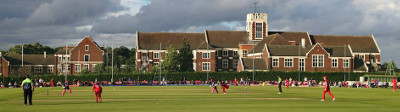
A Full House at Loughborough
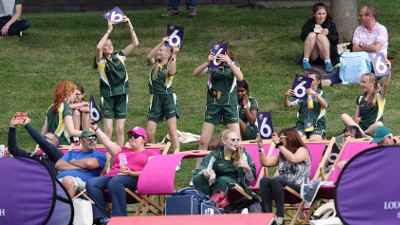
Girls in the Crowd Celebrate a Six